
JUKI SMT Nozzles 500-508: Tip Material Guide
Choosing a JUKI nozzle by catalog number alone is how worn tips, lost vacuum and off-pad placements creep into a line. This guide from Southern Machinery explains the SM-508 series, models 500 to 508, for JUKI pick-and-place machines, from 0201 chips to large BGA and connectors. It shows a three-step model for matching package, tip material (steel, ceramic or PEEK) and format, lists the source-verified parameters including the ±0.02 mm orifice tolerance and 99.99% rated pick rate, and explains custom orifice and odd-form options, so engineering and purchasing teams can plan nozzle supply with fewer surprises.
Oct 23, 2026 · Updated Oct 23, 2026 · Southern Machinery
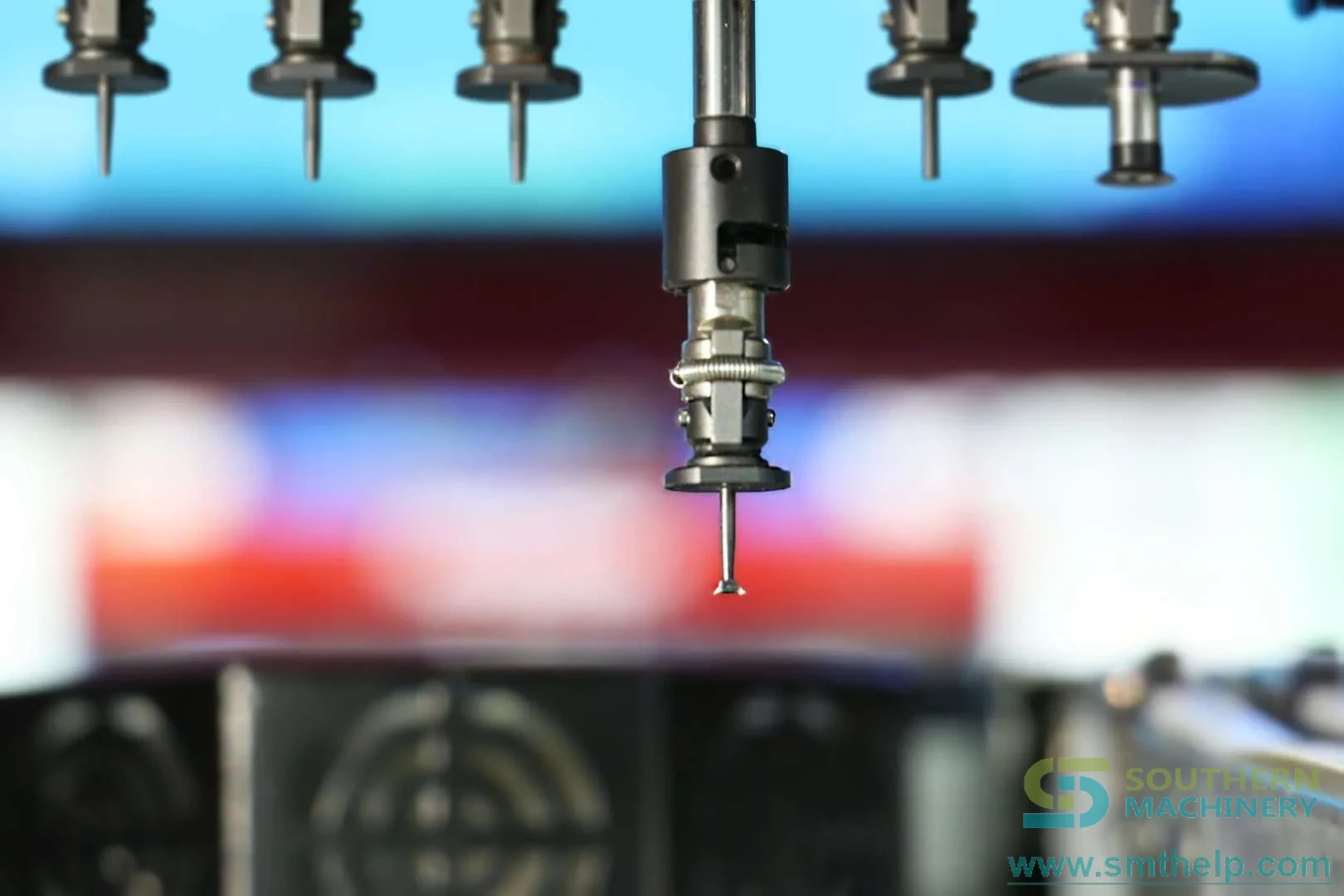
JUKI SMT Nozzles 500-508 Tip Guide by Southern Machinery
What are the SM-508 JUKI Series SMT nozzles used for? They are replacement nozzles for JUKI pick-and-place machines, models 500 through 508, covering packages from 0201 chips up to large BGA and connectors. The source specifies steel, ceramic and PEEK tip materials, a 99.99% rated pick rate and ±0.02 mm orifice tolerance, with every nozzle factory tested.
Why does the cheapest nozzle quietly cost the most?
The nozzle is the last thing that touches a component before placement. An off-center or worn orifice loses vacuum at full cycle speed, and every miss costs a pick cycle. Low-grade tips whiten and wear, and vacuum leaks develop exactly where vision checks least. Poor concentricity places parts off-pad, so AOI flags rise with no process change to blame.
What is the real problem: the nozzle or the way you choose it?
Most teams buy by catalog number and never ask which tip material suits the job. Stock sizes then drop odd-form parts or mark delicate surfaces. Original nozzles also bring long lead times when one worn tip stops a placement head. The issue is a fit decision made without a framework.
How do I choose between steel, ceramic and PEEK tips?
Use a three-question model: what is the package, how many cycles will the head run, and how sensitive is the surface?
Step 1: Match the package to the model
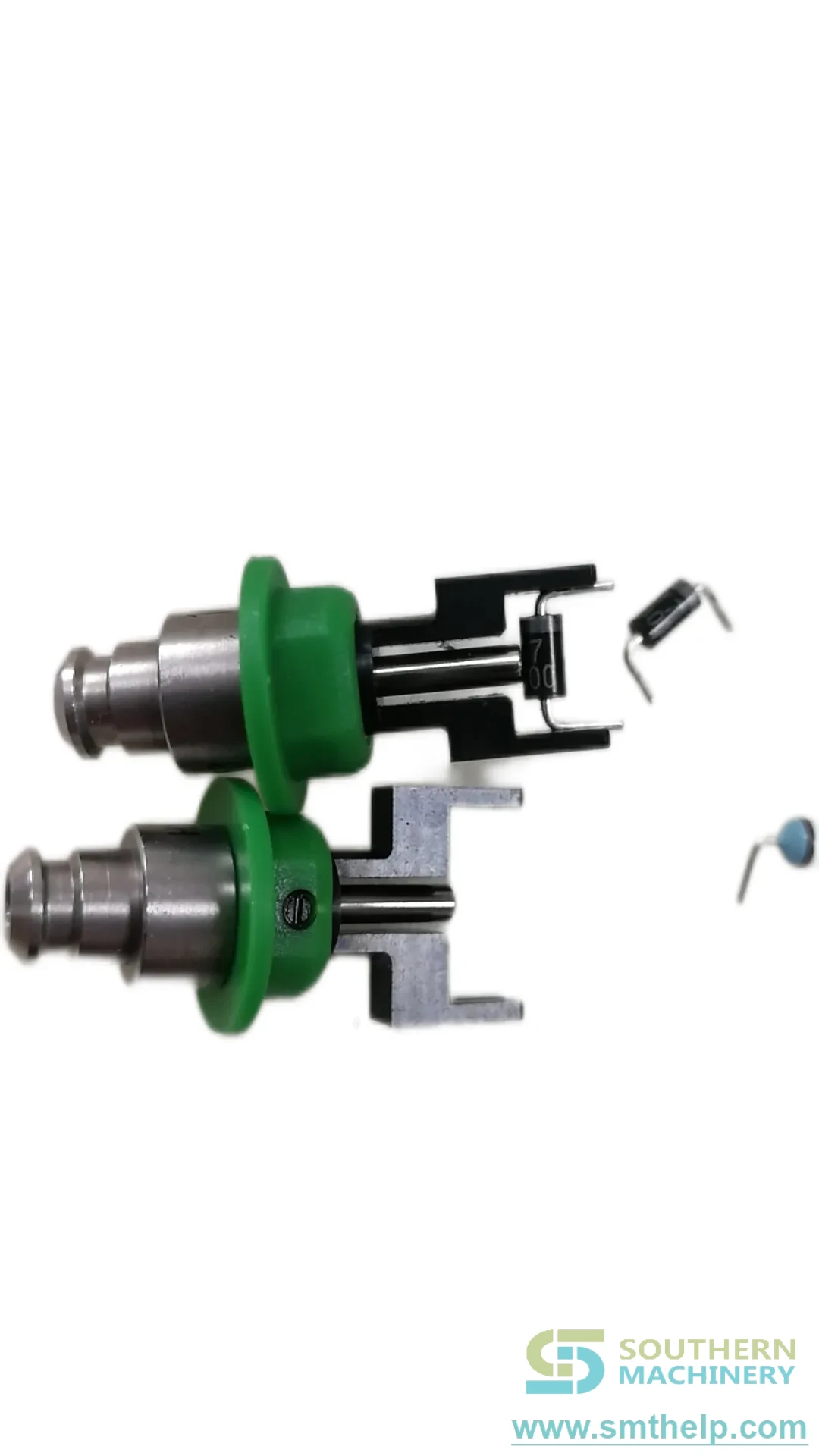
Per the source's package map: 500 for 0201; 502 for 0204; 503 for 0402/0603; 504 for 0603/0805/1206/SOP8/SOT23; 505 for SOP8/SOT/QFN; 506 for QFN/TQFP/BGA up to 20 mm; 507 for QFN/TQFP/BGA over 20 mm; 508 for the largest packages and connectors.
Step 2: Match the material to the duty
- Steel tips: precision orifices from 0.5 mm OD for the smallest chips.
- Ceramic tips: wear resistance for high-cycle placement heads.
- PEEK tips: gentle contact for marked and delicate surfaces (models 503-506 per source).
Step 3: Decide the format
Full assemblies (500-508) or two-pack replacement tip cores. The source notes that most lines run assemblies on the heads and keep tip cores as shelf stock.
Which selection parameters should I compare?
| Parameter | Source value |
|---|---|
| Compatible machines | JUKI pick-and-place SMT lines (nozzle series 500-508) |
| Quality rating | 99.99% pick rate, high concentricity, factory tested |
| Tolerance between nozzles | Within 0.02-0.03 mm |
| Model 500 | OD 1.0 x 0.5 mm, two 0.3 mm ID holes, 0201 |
| Model 503 | OD 1.0 mm, ID 0.6 mm, 0402/0603 |
| Model 506 | OD 5.0 mm, ID 3.2 mm, QFN/TQFP/BGA up to 20 mm |
| Model 508 | OD 9.5 mm, ID 8.0 mm, largest packages and connectors |
| Steel custom orifices | OD 0.5 to 5.8 mm, IDs down to 0.25 mm |
| Options | Anti-rotation pin-hole machining, odd-form custom nozzles |
| Anti-static | Standard tips are not anti-static; ESD variant confirmed at quotation |
How does Southern Machinery turn this into a supply plan?
Southern Machinery was founded in Shenzhen in 2011 and serves 237+ global customers with SMT and THT PCB assembly automation. The nozzle process is simple: send your component mix and head stations for a fit check, confirm material, run sample nozzles on your own line, then move to volume supply. Custom orifice machining is quoted against your component drawing or a sample part. Nozzles sit beside our board handling systems, 3D SPI/AOI inspection and THT lines, with spare parts support and training.
How do I estimate the value of a better nozzle?
Formula (example only, depending on configuration, subject to final technical confirmation):
Monthly cost of misses = missed picks per month x cost per lost cycle
Example: if a line logs 2,000 missed picks a month at an assumed 0.05 per cycle, that is 100 per month. Substitute your own figures; this is not a guaranteed saving.
FAQ
Which nozzle fits my components? Follow the package map above and send your board mix so we can confirm the full set.
What materials are available? Steel custom-orifice nozzles, ceramic tips in seven OD/ID combinations, and PEEK versions of models 503-506.
Do you sell just the tips? Yes, replacement tip cores come as two-packs for every model.
Can you make odd-form nozzles? Yes, from a drawing or sample part, with optional anti-rotation pin-hole machining.
Are the nozzles anti-static? The standard series is not. Tell us at quotation if you need ESD-safe nozzles.
What about price and lead time? Not specified in source: contact Southern Machinery to confirm.
What to read next, and what to do now
Next in the series: how to build a nozzle shelf-stock plan for mixed-package lines. Meanwhile, send your component list, head configuration and monthly consumption to Leon@smthelp.com, or request a quote.
Comments