
JUKI RS-1 Stick Tube Feeder for SMT Assembly by Southern Machinery
For EMS factories placing tube-packed components on JUKI RS-1 lines, a vibration stick feeder can turn a manual feeding bottleneck into a repeatable SMT pickup process. Based on the Southern Machinery S-JVF02 example, th
Jul 4, 2026 · Updated Jul 4, 2026 · Southern Machinery
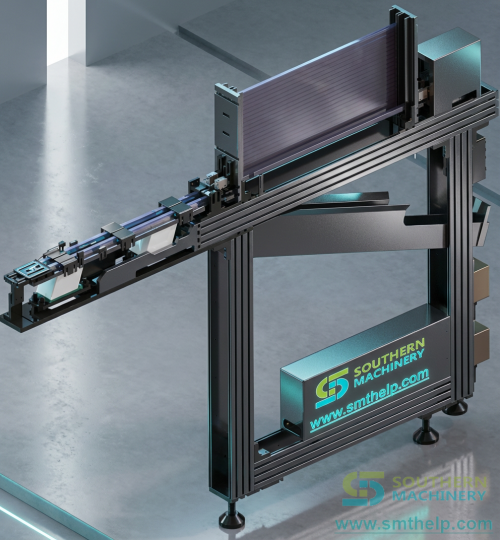
JUKI RS-1 Stick Tube Feeder for SMT Assembly by Southern Machinery
Tube-packed components can still create a practical bottleneck in SMT production. Standard tape feeders handle most passives efficiently, but some multi-pin parts, legacy packages and lower-volume components still arrive in tubes or sticks. For a JUKI RS-1 pick-and-place process, a vibration stick feeder helps present those parts to a repeatable pickup point so the placement head can pick them with less manual handling.
Southern Machinery, founded in Shenzhen in 2011, focuses on high-efficiency and cost-effective SMT/THT PCB assembly automation equipment. For factories that need more than a single feeder, we can support complete line planning across SMT placement, THT insertion, wave/selective soldering, board handling, inspection, traceability, spare parts and operator training. We have served 237+ global customers and can help match feeder configuration to your actual component package and production target.
What is this machine used for?
A stick tube feeder is used to deliver electronic components packaged in tubes, also called sticks, to a stable and repeatable SMT pickup position. In the source page, the JUKI RS-1 compatible S-JVF02 example is described as a vibration stick feeder for components such as DIP parts, SOICs, PLCCs and other components that may not be available in tape or tray formats.
Instead of an operator manually preparing individual parts, the feeder uses vibration or mechanical advance to move components forward inside the tube and present one component at the pickup coordinate. The placement machine nozzle can then retrieve the part in a more controlled way.
Why tube feeding matters in EMS production
Many EMS and ODM factories want to reduce manual touch points, but not every component arrives in the ideal SMT packaging format. A product may use mostly taped resistors and ICs, then still include several tube-packed components. If those parts are handled manually, the factory may face three common problems:
- Placement flow is interrupted by operator-dependent feeding.
- Component orientation and pickup position become harder to keep stable.
- High-mix production needs more changeover discipline and component control.
A vibration stick feeder does not replace every feeder type. It is a practical solution for specific packages where tube input is still the correct or available packaging method.
S-JVF02 example for JUKI RS-1 lines
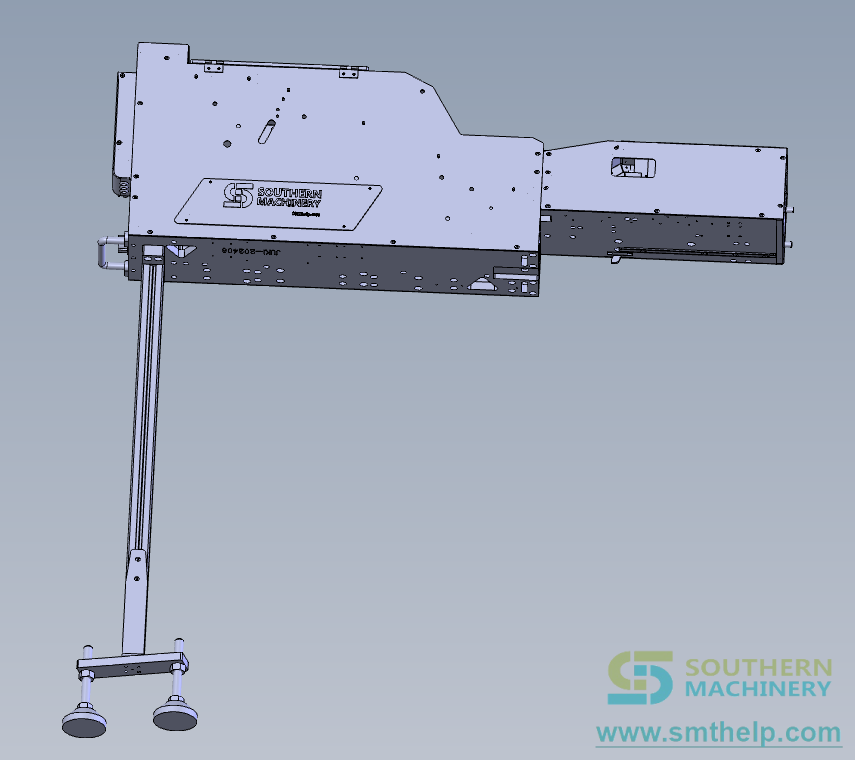
The selected source document uses the S-JVF02 model as an example for JUKI RS-1 applications. The stated details are:
- It is compatible with the JUKI RS-1 context described in the page.
- It supports tube-packed components.
- The example component size range is from 3 x 3 mm up to 30 x 10 mm.
- The example feeder has 4 input channels.
- The source page states 24V DC power.
These are source-document details, not a universal promise for every component. Final feeder selection still needs confirmation based on the real tube size, component body, lead form, pickup face, nozzle clearance and machine interface.
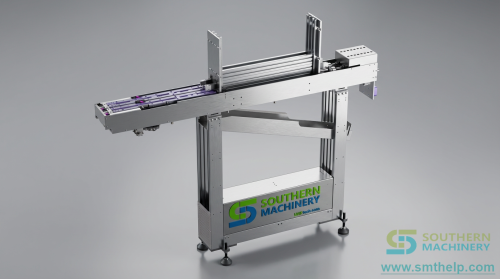
How the stick tube feeder works
The basic process is straightforward:
- Components are loaded in tubes or sticks.
- The tube is fixed in the feeder so the component path remains stable.
- Vibration or mechanical drive advances the component column.
- The next component is indexed to a fixed pickup position.
- The JUKI RS-1 placement head picks the component from that position.
The source page also notes several practical loading points: the tube end should be positioned above the support frame and secured by a locating ring, the middle section is held under a leaf spring, the front end is fixed by a locating piece, and the top face above the nozzle pickup area should be opened so the placement head can access the components.
Typical applications
A JUKI RS-1 stick tube feeder is most relevant when the board uses components that are still supplied in tubes. Typical examples from the source page include:
- DIP components.
- SOIC components.
- PLCC components.
- Other multi-pin parts that are not supplied in tape or tray format.
In real factory planning, this can be useful for industrial controls, power electronics, appliance electronics, medical electronics, automotive subassemblies and other high-mix boards where part packaging is not fully standardized.
How it fits into a complete PCB assembly line
A feeder decision should not be isolated from the full line. For a JUKI RS-1 SMT line, the typical process can be arranged like this:
- PCB loader or magazine loader.
- Solder paste printing.
- SPI if paste control is required.
- Pick-and-place with tape feeders, tray feeders and stick tube feeder positions as needed.
- Reflow oven with a profile matched to the solder paste and PCB thermal mass.
- Post-reflow AOI for quality control.
- Buffer, unloader or NG/OK sorting.
- THT insertion, wave soldering or selective soldering if the product also uses through-hole components.
Southern Machinery can support the broader automation scope around the feeder, including SMT peripheral equipment, THT insertion, wave soldering, board handling, inspection options and traceability planning.
Buyer checklist before selecting a stick tube feeder
Before selecting the closest Southern Machinery feeder configuration, confirm these points:
- Component package type: DIP, SOIC, PLCC or other tube-packed part.
- Body size and pickup surface.
- Tube size, tube material and component orientation in the tube.
- Whether the tube must be cut or opened above the nozzle pickup area.
- Number of channels required for your production mix.
- JUKI RS-1 interface requirements and available feeder positions.
- Nozzle or gripper requirement for stable pickup.
- Target output per shift and changeover frequency.
- Whether the same line also needs tray, tape, radial, axial or odd-form feeding.
If the component geometry is unusual, feeder customization and nozzle selection should be reviewed together. A stable feeder with the wrong pickup tooling will still create line stoppages.
ROI, quality and capacity value
The main value is not only labor saving. The stronger business case is more stable component presentation and fewer manual process interruptions. For high-mix factories, that can mean cleaner changeovers, less operator dependency and better repeatability during placement.
A realistic ROI estimate depends on your component count, manual handling time, hourly labor cost, current mis-pick or rework rate, and production schedule. Southern Machinery can help calculate this once you share your PCB, component list and shift target. Any saving estimate should be treated as an example until confirmed with your process data.
FAQ
Can a stick tube feeder replace all SMT feeder types?
No. It is for tube-packed components. Tape feeders, tray feeders, radial feeders, axial feeders and customized odd-form feeders may still be needed depending on the BOM.
Is this only for JUKI RS-1?
The selected source page focuses on the JUKI RS-1 context and uses the S-JVF02 example. For other platforms, the feeder interface and mechanical fit should be checked before confirming the configuration.
What component size can it handle?
The source document states an example range from 3 x 3 mm to 30 x 10 mm for the S-JVF02 example. Final suitability depends on actual component shape, tube dimensions, pickup surface and nozzle access.
How many channels does the example feeder have?
The source page states 4 input channels for the S-JVF02 example.
Does it need special power?
The source page states 24V DC power for the S-JVF02 example. Final electrical and interface details should be confirmed before ordering.
What information should I send for a feeder recommendation?
Send component photos, datasheets, tube dimensions, PCB placement location, required output, machine model, nozzle information if available, and a short video of the current manual process if possible.
CTA: Send your tube component details
If you are using JUKI RS-1 and still feeding tube-packed components manually, send Southern Machinery your component photos, tube dimensions and target output. We can review whether a standard stick tube feeder is enough or whether you need customized feeding and nozzle support. The goal is simple: reduce manual handling, keep pickup repeatable and integrate the feeder into a practical SMT or SMT/THT line configuration.
Comments