
JUKI RS-1 Vibration Stick Feeder: Southern Machinery S-JVF02 for Smart EMS PCB Assembly
Tube-packed components can stall an otherwise efficient SMT line. Southern Machinery's S-JVF02 vibration stick feeder presents DIP, SOIC, PLCC and connector parts from tubes to the JUKI RS-1 pickup point with stable, repeatable positioning, cutting manual handling and changeover friction in high-mix EMS production. This buyer guide explains what a vibration stick feeder is used for, typical applications across power supply, LED and automotive electronics, how the feeder fits a complete PCB assembly line with insertion, wave soldering and board handling, the key selection parameters to verify, and the labor, quality and ROI case for automating tube feeding.
Sep 11, 2026 · Updated Sep 11, 2026 · Southern Machinery
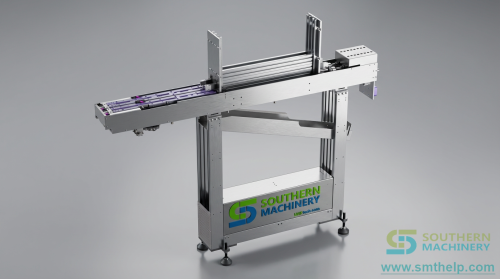
JUKI RS-1 Vibration Stick Feeder: Southern Machinery S-JVF02 for Smart EMS PCB Assembly
Watch the short S-JVF02 vibration stick feeder demo on a JUKI RS-1 line
Tube-packed components are the quiet bottleneck of many otherwise lean SMT lines. Standard tape feeders handle passives and taped ICs efficiently, but DIP parts, SOICs, PLCCs, connectors and low-volume legacy packages still arrive in tubes or sticks — and someone has to feed them. The S-JVF02 vibration stick feeder from Southern Machinery is built to present those parts to a JUKI RS-1 placement head at a stable, repeatable pickup point, so tube feeding stops being an operator-dependent manual task.
Southern Machinery has supplied SMT and THT PCB assembly automation from Shenzhen, China since 2011 and supports 237+ global customers with machines, feeders, nozzles, spare parts, retrofit kits, training and line planning. This guide explains what the vibration stick feeder does, where it fits, how to specify it, and what to weigh before you buy.
What is this machine used for?
A vibration stick feeder delivers electronic components packaged in tubes — also called sticks — to an SMT placement head at a controlled, repeatable pickup position. Instead of an operator manually loading parts one at a time, the feeder uses vibration or mechanical advance to move components along the tube and present a single part at the pickup coordinate for the nozzle.
On a JUKI RS-1, the S-JVF02 addresses a specific production gap: components that simply are not available in tape or tray format. Common examples include:
- DIP and multi-pin through-hole style parts used on mixed-technology boards
- SOIC and PLCC packages sourced in tubes rather than reels
- Connectors, headers and other odd-form parts supplied in stick packaging
- Low-volume, high-mix components where creating a dedicated tape format is not economical
In practical terms, the feeder turns an intermittent, manual feeding step into a repeatable machine pickup — which is exactly what an EMS factory needs when running many product changeovers per week.
Typical applications
Vibration stick feeders earn their place in mixed-technology and high-mix environments. Representative scenarios include:
- Power supply and adapter manufacturing: feeding tube-packed ICs and DIP devices alongside taped passives on JUKI RS-1 lines.
- LED driver and control boards: presenting SOIC and PLCC components that arrive in tubes, keeping placement flow continuous.
- Industrial control and instrument PCBs: handling connectors, headers and legacy packages that are not available on reel.
- Automotive and vehicle electronics: feeding odd-form and multi-pin parts in medium-volume runs where changeover discipline matters.
- EMS / contract manufacturing: supporting high-mix production where a flexible feeder reduces per-job setup and operator load.
How it fits into a complete PCB assembly line
The stick feeder is one component of a coordinated SMT/THT line, not a standalone machine. Southern Machinery plans and supplies the surrounding ecosystem so the feeder does not become an island:
- SMT printing and placement: stencil printers, pick-and-place platforms and the JUKI RS-1 placement stage that the feeder supplies.
- THT and odd-form insertion: radial, axial and odd-form insertion machines for components that belong in through-hole assembly.
- Soldering: wave soldering and selective soldering systems for the through-hole and mixed-technology joints.
- Board handling: loaders, unloaders, buffers, conveyors, turnovers and magazine handling that keep boards moving without manual lifting.
- Inspection and process control: SPI, AOI, X-ray and rework stations tied into the same quality loop.
- Material supply and support: feeders, nozzles, spare parts, training and retrofit services that keep the line running.
The correct feeder configuration is decided by the component list and the placement sequence — not by the feeder alone. That is why it is worth sharing your BOM and board mix before selecting a stick feeder.
Key selection parameters
When evaluating a vibration stick feeder for a JUKI RS-1, buyers should confirm the following categories with the supplier. Specific values depend on your component set and should be verified against a real sample, not assumed:
- Component package compatibility: which tube-fed packages the feeder supports (for example DIP, SOIC, PLCC and connectors) and the component body size range.
- Machine interface and fit: compatibility with the JUKI RS-1 feeder slot, bank position and bank count on your machine configuration.
- Tube / stick geometry: tube cross-section, length and reload method compatible with your packaging.
- Feed control: whether vibration amplitude and advance are adjustable to suit different component masses and lead styles.
- Pickup stability and repeatability: how consistently the part is presented at the pickup coordinate over a full tube.
- Changeover and reload ergonomics: how quickly an operator can swap a tube or change a program on a high-mix line.
- Integration and support: programming fit with your placement process, plus spare parts availability, documentation and service response.
Treat any claimed performance figure as something to validate on your own components — the only number that matters is throughput and yield on your board.
ROI and quality perspective
The business case for a vibration stick feeder is rarely about headline speed. It is about removing an unstable manual step from an otherwise automated line. In buyer terms, that shows up in three places:
- Labor and attention: Parts fed by hand pull operators away from higher-value work and add variability to the line. A stick feeder reduces that manual touch point and its associated error rate.
- Quality and consistency: When component orientation and pickup position are machine-controlled, mis-picks, reversed parts and damage from handling become less likely — which supports first-pass yield and reduces rework.
- Flexibility in high mix: For EMS factories running many short jobs, a feeder that clearly handles tube-packed parts shortens setup friction and makes those jobs economic to accept.
Because every factory's component mix is different, the honest answer on payback depends on your volumes, labor cost and current defect rate. Southern Machinery can walk through your component list and estimate where the feeder pays back — including what to pair it with across placement, insertion, soldering and board handling.
FAQ
What is a vibration stick feeder used for?
A vibration stick feeder feeds components packaged in tubes or sticks to an SMT placement head. It advances the parts using vibration or mechanical motion and presents one component at the pickup position, so tube-packed parts can be placed automatically instead of being handled manually.
Is the S-JVF02 compatible with the JUKI RS-1?
Yes. The S-JVF02 vibration stick feeder is designed for JUKI RS-1 platforms. Confirm your specific machine configuration, feeder bank positions and component packages with Southern Machinery before ordering.
Which components can a stick feeder handle?
Typical tube-fed components include DIP and multi-pin through-hole style parts, SOIC and PLCC packages, connectors, headers and other odd-form parts that are not supplied on standard tape or trays. Always confirm the exact package and body size against the feeder specification.
Does a stick feeder replace tape feeders on an SMT line?
No. Tape feeders remain the standard for taped passives and ICs. A stick feeder complements them by covering components that only arrive in tubes, so the line can handle a broader component mix without manual feeding.
How do I choose the right vibration stick feeder configuration?
Start with your BOM and identify every component that arrives in tubes, then match the feeder to those packages, the machine interface and your changeover frequency. Southern Machinery can recommend bank counts and feeder combinations based on your board mix.
Where can I get the catalog and product images?
Request the feeder catalog through Southern Machinery at jasonwu@smthelp.com, browse the file portal at file.autoinsertion.com, and view product images at ph.smthelp.com.
Talk to Southern Machinery
If tube-packaged components are slowing down your JUKI RS-1 line, Southern Machinery can help you specify the right vibration stick feeder and the surrounding SMT/THT equipment to match. Founded in Shenzhen in 2011 and serving 237+ global customers, we support complete PCB assembly automation — placement, insertion, soldering, board handling, inspection, spare parts and training.
- Email: jasonwu@smthelp.com
- Catalog and files: file.autoinsertion.com
- Product images: ph.smthelp.com
- Website: smthelp.com
Send us your component list and board mix, and we will recommend a practical feeder and line configuration.
Comments