
How Plug-in Machines Work: The Basic Principles of THT Auto Insertion
How do plug-in machines insert THT components? A look at radial, axial and odd-form insertion principles, clinching and line integration, from Southern Machinery.
Sep 12, 2026 · Updated Sep 12, 2026 · Southern Machinery
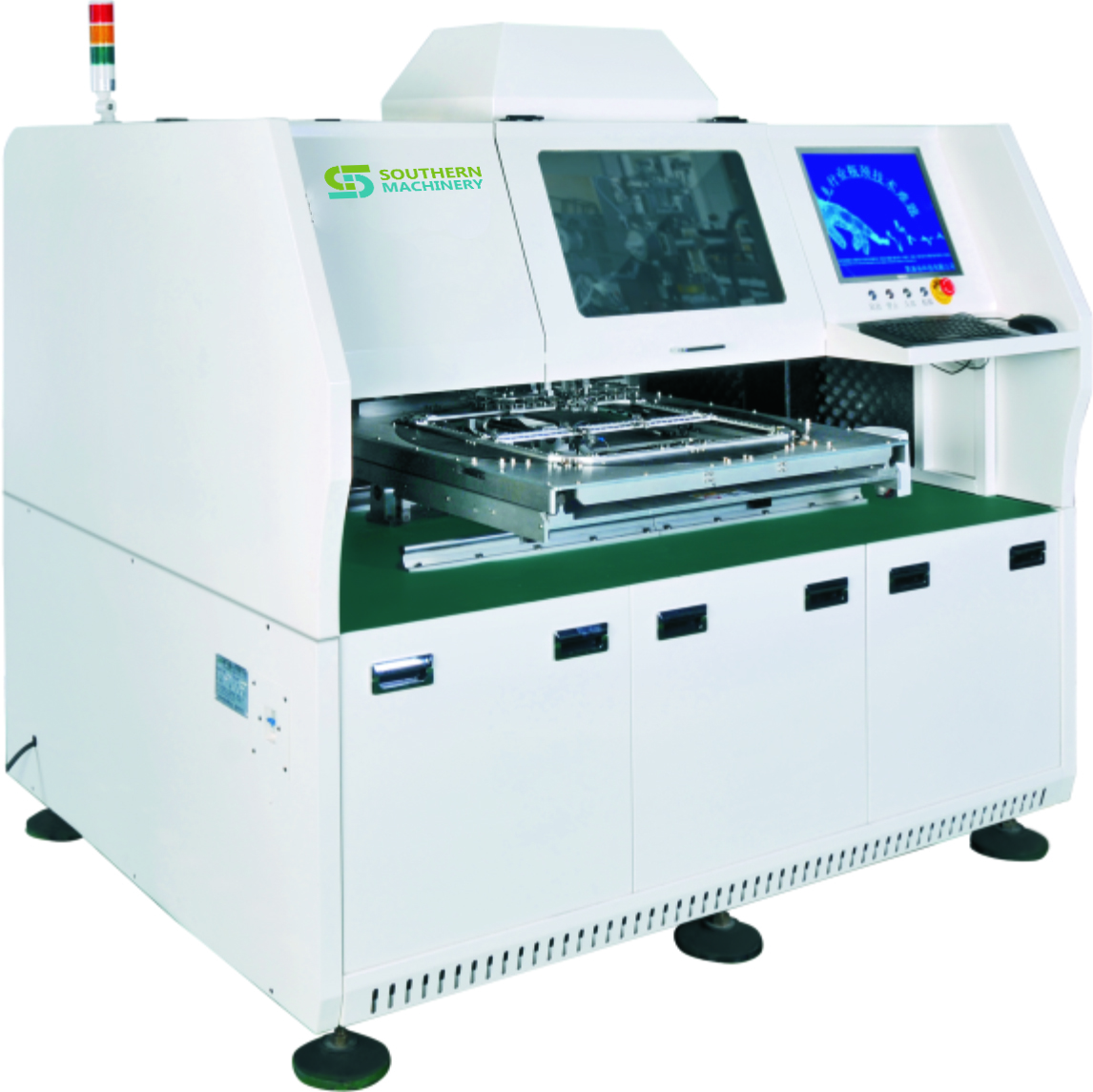
How Plug-in Machines Work: The Basic Principles of THT Auto Insertion
A plug-in machine — also known as a THT auto insertion machine — is the equipment that places through-hole components into a printed circuit board and clinches their leads underneath, replacing rows of manual insertion stations. This article walks through the working principles behind the machine, the three main families Southern Machinery builds, and how a plug-in machine is selected and integrated into a complete PCB assembly line.
Watch the reference video from Southern Machinery: Revealing the basic principles of plug-in machines.
What Is a Plug-in Machine Used For?
A plug-in machine automatically inserts through-hole (THT) components — resistors, capacitors, transistors, LEDs, connectors, relays, transformers, terminals, pins and eyelets — into the plated holes of a PCB, then bends and clinches the leads so the board can move on to wave soldering or selective soldering.
It exists for one reason: manual DIP insertion does not scale. As Southern Machinery notes in its own DIP-line analysis, manual insertion lines depend entirely on operator skill and attendance. Operators are increasingly mobile, training costs keep rising, and the classic manual defects — floating components, missed insertions, misinsertion and reverse insertion — follow the operator, not the process. A plug-in machine converts that manual variability into a programmed, repeatable cycle.
The Basic Principles of a Plug-in (Auto Insertion) Machine
Whatever the component type, every plug-in machine repeats the same five-step cycle.
1. Component Presentation and Sequencing
Components must arrive at the insertion head in the correct order, correctly oriented, one at a time.
- Radial components are presented from taped reels through a sequencer. On the Southern Machinery S-3000, the expandable sequencer offers over 100 available inputs and can be configured in-line or straight-back, so a single machine covers a wide component mix.
- Axial components arrive as taped bands or from bulk, and the machine cuts, forms and inserts them.
- Odd-form components arrive from tape, tube, bulk or bowl feeders, because odd-form parts are rarely standardised.
Good sequencing is what makes component replenishment possible without stopping the machine — a core design goal of the S-3000.
2. Pick-Up, Orientation and Centering
The insertion head picks the component, rotates it to the programmed angle, and centres the leads over the PCB holes.
On the S4000 axial machine, the positioning system uses imported precision ball-screw and AC servo drives with positioning accuracy under 0.001 mm, and a vision system handles positioning and insertion alignment. Insertion angles of 0°, 90°, 180° and 270° are supported, which matters when jumpers and horizontal components are mixed on the same board. A second-level component centering mechanism is available as an option for tighter lead-to-hole alignment.
3. Lead Forming and Span
Radial and axial components are supplied with a fixed lead span, so the machine's forming tooling has to match the board's hole pitch. Span capability directly defines which boards a machine can build:
- S-3000 radial: lead span capability up to 10 mm, with single-, dual-, triple- and quad-span insertion variants.
- S4000 axial: component lead span from 5 mm to 22 mm.
4. Insertion and Clinching
The insertion head pushes the leads through the plated holes; a clinching (bending) mechanism underneath folds the leads so the component stays in place through transport and soldering. Clinch geometry is adjustable — on the S4000 the clinch lead angle is adjustable from 0° to 45° and the clinch lead length is adjustable from 1.28 mm upward, with multiple clinch options available on the S-3000. Clinch quality is what determines whether the board survives wave soldering without fallout.
5. Vision, Verification and Program Control
Modern plug-in machines verify what they have just placed. The S-3000 includes a component verifier, so a wrong or missing component is detected rather than discovered after soldering. Programming is handled through a graphical product editor with diagnostics and data management, and the S4000 supports USB data transfer with Excel-compatible files, so programs can be built offline and loaded at the machine.
The Three Plug-in Machine Families
Radial Insertion Machines
Used for vertically oriented components with radial leads: electrolytic capacitors, transistors, power resistors, LEDs. The Southern Machinery S-3000 radial auto insertion machine runs at up to 18,000 CPH, supports manual PCB load/unload or a fully automatic load/unload configuration, and is specified for high reliability in volume production.
Axial Insertion Machines
Used for horizontally oriented components with leads at each end: axial resistors, diodes, and jumper wire. The Southern Machinery S4000 axial auto insertion machine runs at up to 22,000 CPH and can insert axial components and jumper wire simultaneously, or insert jumper wire independently. It also handles the classic cost problem in through-hole assembly — the jumper wire: by routing jumpers as a program step instead of a board feature, roughly a third of the jumper wire can be saved. The S4000 is available in off-line or in-line configurations and eliminates data transmission errors through a protected program and data path.
Odd-Form Insertion Machines
Odd-form parts — connectors, relays, transformers, terminals, pins, eyelets, fuse holders — cannot be standardised onto reels. The Southern Machinery S-70LD odd-form insertion machine is built specifically for DIP lines that are still hand-inserting these parts, replacing the manual station rather than the whole line.
How Plug-in Machines Integrate into a Complete PCB Assembly Line
A plug-in machine is rarely installed alone. A typical configuration places it between the SMT section and the soldering section:
- SMT section — stencil printing, SPI, pick-and-place, reflow.
- THT / plug-in section — radial, axial and odd-form insertion machines, linked by PCB conveyors (SMEMA-compatible) or PCB magazines.
- Soldering section — wave soldering or selective soldering.
- Post-soldering — inline lead cutting, AOI or X-ray inspection, PCBA cleaning, depaneling, and board handling/unloading.
Southern Machinery supplies this full chain: SMT and THT equipment, wave soldering, board handling, inspection and cleaning, plus spare parts, training and retrofit kits. That matters in practice, because a plug-in machine's real constraint is usually what happens immediately before and after it — infeed buffering, board orientation and clinch quality.
Typical Application Scenarios
- EMS and ODM providers — mixed, high-mix boards where manual DIP insertion consumes labour hours and squeezes margin.
- Home appliance electronics — TV, washing machine, air conditioner, rice cooker and induction cooker control boards.
- Power supplies — vehicle power supplies, energy-saving power supplies, ballasts.
- LED products — LED lighting, displays, traffic signals and control systems.
- Automotive electronics — car audio and vehicle power boards with terminals, relays and connectors.
- Industrial control and instrumentation — relays, transformers, terminal blocks and connectors.
Key Selection Parameters
When configuring a plug-in machine, confirm the following with your supplier (categories only — exact numbers must come from the actual machine specification):
- Component families to be inserted: radial, axial, jumper wire, odd-form, pins/terminals/eyelets.
- Lead span range required by your board designs.
- Throughput class the line needs, and whether one machine or several parallel machines are planned.
- Line configuration: off-line (standalone with magazines) or in-line (SMEMA conveyor link).
- Clinch specification: lead angle and clinch length required for your wave/selective soldering process.
- Feed inputs needed: how many components must be sequenced, and whether feeders can be replenished without stopping the machine.
- Program/data workflow: offline programming, Excel-compatible data, graphical editor, diagnostics.
- Vision/verification and centering options required for your quality targets.
- Facility requirements: power, air and floor space (confirmed against the machine datasheet).
ROI, Quality and Throughput Perspective
The business case for a plug-in machine is labour displacement plus defect reduction.
- Labour displacement. On the S4000 axial platform, Southern Machinery specifies that one operator delivers the production capacity of forty people doing manual plug-in work. Even discounting for your own product mix, the arithmetic is straightforward: insertion stations stop scaling with headcount.
- Quality consistency. A programmed insertion cycle removes misinsertion, reverse insertion, floating components and missed insertions — the manual defect modes driven by operator fatigue and turnover. Component verification catches errors at the machine instead of at AOI or after soldering.
- Line balance. Continuous replenishment without machine stoppage keeps the THT section from starving the wave solder.
- Material savings. Treating jumper wire as a machine-inserted element rather than a board feature saves jumper material — roughly a third, per Southern Machinery's specification — and reduces board cost.
- Service economics. Spare parts availability, installation and operator training, and retrofit/upgrade paths protect the investment over the machine's service life. Southern Machinery supports its equipment with 7×24 worldwide support, free installation and training, and short spare-part lead times.
FAQ
What types of components can a plug-in machine handle?
Radial components (capacitors, transistors, LEDs), axial components (resistors, diodes), jumper wire, and odd-form parts such as connectors, relays, transformers, terminals, pins and eyelets. Radial and axial parts are normally fed from taped reels; odd-form parts may arrive from tape, tube, bulk or bowl feeders.
Does a plug-in machine integrate with an existing SMT line?
Yes. Plug-in machines are available as off-line standalone units fed by PCB magazines, or in-line units linked by SMEMA-compatible conveyors between the SMT section and the wave or selective soldering section.
What is the difference between radial, axial and odd-form insertion?
Radial machines insert vertically mounted components with radial leads; axial machines insert horizontally mounted components with a lead at each end, plus jumper wire; odd-form machines insert irregular parts that cannot be standardised onto reels.
How does auto insertion improve quality compared with manual insertion?
Manual DIP insertion produces floating components, missed insertions, misinsertion and reverse insertion, and its output depends on operator skill. A plug-in machine repeats a programmed cycle and can verify components at the machine, so errors are caught before soldering.
Why is clinching important?
Clinching bends the leads under the board so the component stays seated through conveyor transport and soldering. Clinch angle and clinch length are adjustable on Southern Machinery insertion platforms, and they must match your wave or selective soldering process.
What support does Southern Machinery provide?
Southern Machinery has supplied SMT and THT assembly equipment since 2011 from Shenzhen, China, serving 237+ customers worldwide. Support covers installation, operator training, spare parts, retrofit and upgrade kits, and machine overhaul — alongside full-line SMT, THT, wave soldering, board handling, inspection and cleaning solutions.
Contact Southern Machinery for Configuration Advice
Tell us your component list, board span and target throughput, and Southern Machinery will recommend the right radial, axial or odd-form plug-in machine configuration for your line.
- Email: jasonwu@smthelp.com | Phone / WhatsApp: +86 13602562576
- Machine catalogs and 3D models: file.autoinsertion.com
- Machine photos and albums: ph.smthelp.com
- Website: www.smthelp.com
Southern Machinery — SMT & THT PCB assembly automation equipment, Shenzhen, China.
Comments