
Fully Automatic Selective Wave Soldering Machine: Fixture-Free THT Soldering by Southern Machinery
The fully automatic selective wave soldering machine from Southern Machinery brings fixture-free, programmable THT soldering to high-mix EMS and electronics factories. Boards are programmed directly in software and soldered with spot, drag, continuous spot or continuous drag modes, so changeover is a programming step instead of a tooling change. Reference configurations offer 100 mm and 200 mm preheat zones, automatic solder feed and non-standard customization, with a 5.0/5.0 rating and 24-hour continuous operation on the reference listing. Founded in Shenzhen in 2011, Southern Machinery supports 237+ customers with complete SMT/THT, wave soldering, board handling and inspection line solutions, including training, spare parts and engineering support. Send your board size and joint count for a configuration within 24 hours.
Aug 15, 2026 · Updated Aug 15, 2026 · Southern Machinery
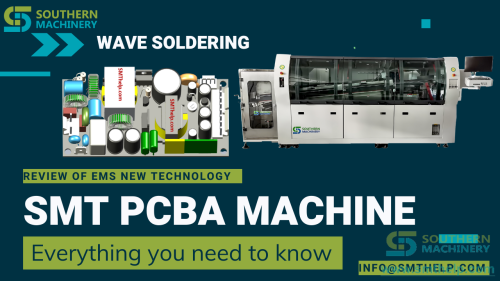
Southern Machinery's fully automatic selective wave soldering machine is a floor-standing, fixture-free THT soldering solution for high-mix electronics manufacturing. Instead of tooling a new pallet for every board variant, the machine holds and programs the board directly in software, then applies molten solder only where the program specifies — in spot welding, drag welding, continuous spot welding or continuous drag welding mode. For EMS, ODM, automotive electronics, medical electronics and industrial control factories, that combination removes fixture budgets, cuts changeover to a programming step and keeps solder joints consistent shift after shift.
What is this machine used for?
A fully automatic selective wave soldering machine is used to solder through-hole (THT), leaded and odd-form joints on PCBs without per-board pallets or fixtures. The board is programmed directly and passes through a single solder wave; the machine applies solder selectively to the joints you define, using one of four welding modes — spot welding, drag welding, continuous spot welding or continuous drag welding. Typical work includes connectors, PCB components, LED strings, circuit boards and general electronics processing, making it a practical replacement for hand soldering and a flexible alternative to whole-board wave soldering in mixed-batch production.
Why fixture-free selective soldering changes the THT cost equation
Traditional THT soldering decisions usually come down to three expensive options: run small boards through a full wave line, tool a new fixture for every variant, or solder by hand. Each one carries a hidden tax.
- Fixture cost and changeover time. Every board variant needs tooling, and every tooling change stops the line. A fixture-free machine turns changeover into a software step.
- Complex programming. Industrial soldering equipment that needs specialists blocks small and mid-size factories. This machine is designed around simple programming.
- Inconsistent joints. Manual or poorly controlled soldering produces dull, incomplete joints and rework. Selective application keeps joints consistent.
- Long runs only. Traditional wave lines are built for volume, not for the mixed batches most factories actually run.
- Heat on sensitive components. Whole-board soldering exposes temperature-sensitive parts to unnecessary heat. Selective soldering applies heat where it belongs.
- Downtime and support gaps. Machines that cannot run continuously, and vendors without follow-up, stall output. A solid build with 24-hour continuous operation is reported on the reference listing (subject to final technical confirmation against your configuration).
Typical applications for a fully automatic selective wave soldering machine
- Connector soldering — through-hole connectors and terminal blocks with repeatable joint quality.
- PCB components — leaded components and small assemblies that need controlled, selective joints.
- LED strings and lighting PCBs — long, mixed boards where whole-board soldering risks heat damage.
- Circuit boards and electronics processing — general THT/leaded work in EMS and electronics factories.
- High-mix, low-to-medium volume production — where fixture-free changeover makes small batches economical.
How it integrates into a complete PCB assembly line
The machine is designed to sit inside a full PCB assembly flow, not replace it. A typical line from Southern Machinery looks like this:
- SMT stage — solder paste printing, component mounting and reflow for surface-mount work.
- THT stage — axial, radial and odd-form insertion or feeding for through-hole components.
- Soldering stage — the fully automatic selective wave soldering machine applies solder to the programmed THT joints, with 100 mm or 200 mm preheat zone lengths on reference configurations.
- Board handling and inspection — conveyors, loaders/unloaders and inspection stations move boards through and verify quality.
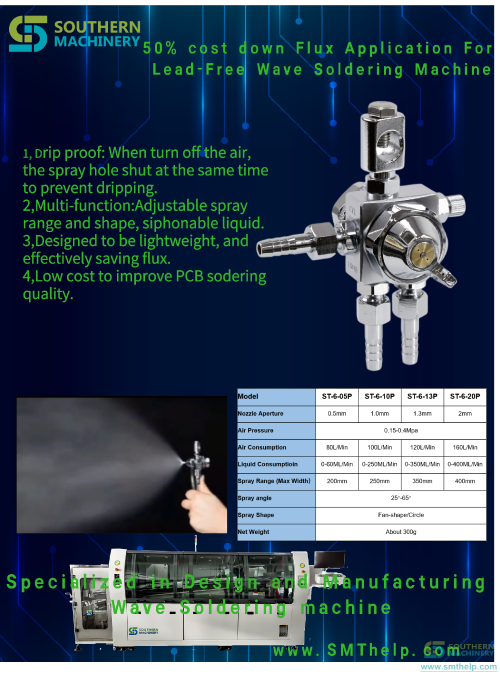
Because Southern Machinery supplies SMT, THT, wave soldering, board handling and inspection equipment as one line solution, the selective wave machine can be matched to your existing rail height, transfer pitch and upstream/downstream handling from the start. The reference production configuration includes automatic drive, DC current and fully automatic solder feed; family values (such as ±0.05 mm positioning, a titanium alloy 8 kg solder pot with PID control from 0–400 °C, ST-6 jet valve fluxing with a 1 L tank, and N2 preheat) are documented on the S-100B family reference and are confirmed against your boards during technical review.

Key selection parameters to specify
When requesting a quote, include these parameters so the configuration matches your production:
- Board size and envelope — reference configurations offer 100 mm and 200 mm preheat zone lengths; the exact board envelope is confirmed during technical review.
- Welding modes required — spot, drag, continuous spot and continuous drag; state which joints your boards need.
- Joint types and count — through-hole, leaded and odd-form joints per board.
- Daily volume and shift pattern — to size throughput and confirm continuous-operation suitability.
- Fluxing and preheat needs — jet valve fluxing and N2 preheat are part of the family reference; confirm what your process requires.
- Line integration — rail heights, board handling and upstream/downstream equipment.
- Customization — non-standard customization is supported for board sizes, process parameters and line integration.
All values above support initial evaluation and remain subject to final technical confirmation against your actual boards.
ROI, quality and capacity value
The business case for a fully automatic selective wave soldering machine rests on three verified, source-documented points:
- Labor reduction. Fixture-free, programmable soldering replaces hand soldering and eliminates pallet tooling work, so operators focus on loading and quality rather than manual joints or fixture changes.
- Quality stability. Selective, program-controlled joints are consistent across boards and shifts, cutting the rework and inspection load that comes from dull or incomplete joints.
- Capacity and uptime. Reference user feedback reports a 5.0/5.0 rating with a 100% positive rate on the reference listing (20+ reviews reference) and 24-hour continuous operation without failure (subject to final technical confirmation). Non-standard customization keeps the machine matched to your line as volumes grow.
FAQ
What does fixture-free soldering mean?
The machine holds and programs the board directly in software, so you do not need pallets or fixtures per board variant. Changeover becomes a programming step instead of a tooling change.
Which welding modes are supported?
Spot welding, drag welding, continuous spot welding and continuous drag welding — so through-hole, leaded and odd-form joints are covered by one machine.
How big a board can it handle?
Reference configurations offer 100 mm and 200 mm preheat zone lengths; the exact board envelope is confirmed against your board size during technical review.
Is the machine reliable for daily production?
Reference user feedback reports a solid build with 24-hour continuous operation without failure, and a 5.0/5.0 rating with 100% positive reviews on the reference listing.
Can it be customized?
Yes — non-standard customization is supported for board sizes, process parameters and line integration.
How do I get a price and delivery time?
Email info@smthelp.com or WhatsApp +86 136 0256 2576 with your board size, joint count and quantity. Quotation and delivery schedule are provided after technical confirmation — typically the same working day.
Next step: send your board size and joint count
Tell Southern Machinery your PCB dimensions, THT joint count and daily volume. The engineering team reviews sample boards and joint types, confirms machine size, preheat zone and welding modes within 24 hours, then provides a configuration, quotation and delivery schedule. Standard and non-standard configurations both start with the same five-step flow: board and process review, technical consultation, configuration, installation and training, and after-sales support with warranty, technical follow-up and spare parts.
Email info@smthelp.com or start a chat on WhatsApp +86 136 0256 2576.
About Southern Machinery
Southern Machinery was founded in Shenzhen, China in 2011 and serves 237+ customers worldwide with SMT/THT PCB assembly automation equipment. Beyond individual machines, the company designs complete lines covering SMT, THT, wave soldering, board handling and inspection — supporting global EMS, ODM, automotive electronics, medical electronics and industrial control factories with high-efficiency, cost-effective automation, global service, spare parts support and professional training. Browse the machine catalog at file.autoinsertion.com and machine photos at ph.smthelp.com.
Comments