
Forklift & AGV Material Handling for PCB Assembly Lines
How forklifts, AGVs, and smart reel storage divide material handling in a modern PCB assembly factory — and how to choose the right transport layer.
Sep 22, 2026 · Updated Sep 22, 2026 · Southern Machinery
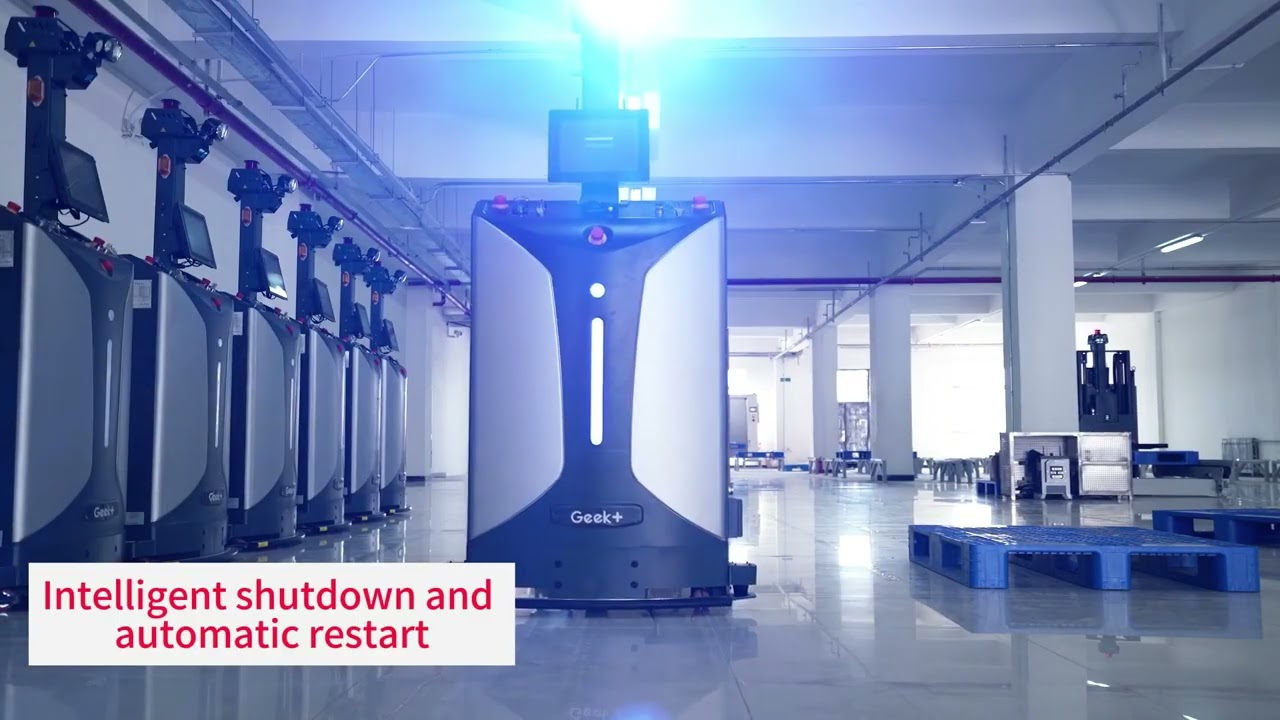
Forklift & AGV Material Handling for PCB Assembly Lines
Every PCB assembly line is only as productive as the material that reaches it. A stencil printer, a pick-and-place machine, or a wave soldering machine waiting for a reel, a magazine, or a pallet of boards is a machine that is not making money. That is why material handling — not placement speed — is usually the first bottleneck an EMS factory hits as it scales.
This guide explains how the transport layers of a PCB assembly factory divide the work: forklift solutions for pallet-level moves, AGVs for line-side point-to-point transport, and intelligent reel storage for the last few metres to the operator. It is based on Southern Machinery's forklift solutions video for Smart EMS factories and on the material-handling equipment Southern Machinery builds today.
Source video: Multi-advantage forklift solutions for Smart EMS factory PCB assembly
What is material handling equipment used for in a PCB assembly factory?
Material handling equipment moves everything that is not yet a finished board — and everything a finished board needs — between the warehouse, the kitting area, the SMT line, the THT and wave soldering section, inspection, and shipping.
Q: What exactly does it move?
- SMT component reels and trays (7-inch and 13-inch reels, moisture-sensitive parts)
- PCB magazines and bare-board stacks, plus finished panels in ESD racks
- Wave soldering pallets, fixtures, and stencils
- Consumables such as solder bar, flux, adhesive, and cleaning chemistry
- Packed finished goods and spare parts
Q: Why does the choice of transport layer matter?
A: Each layer is optimised for a different payload and distance. Pallet-level material wants a lift truck. Line-side material wants a small automated carrier. Component reels want a storage system that issues the right reel to the right feeder. Using one layer for everything creates either unsafe manual handling or an over-specified, slow process.
The four transport layers of a modern PCB assembly factory
Layer 1 — Manual hand carts and trolleys
The starting point in most factories. Flexible and cheap, but it consumes operator time, exposes boards and reels to drop and ESD risk, and creates traffic on the shop floor. It is also the layer where WIP damage most often starts: a dropped reel, a flexed panel, a mixed lot.
Layer 2 — Forklifts and pallet-level solutions
Forklifts handle what a hand cart cannot: palletised reels, stacked magazine pallets, incoming component deliveries, solder bar and chemistry, and unpacking/packing duties. In a Smart EMS factory, the forklift solution typically works in the warehouse and dock zone and feeds the line-side buffer area, so that no lift truck enters the narrow aisle in front of the placement machines.
This is exactly the case Southern Machinery covers in its forklift solutions video for Smart EMS factories: lifting and moving heavy, palletised loads safely and quickly, and keeping that traffic away from the sensitive production aisle.
Layer 3 — AGVs and mobile robots for line-side transport
Inside the production area, an AGV (Automated Guided Vehicle) replaces the push-cart and the forklift. It carries reels, magazines, PCB racks, and pallets between the warehouse, kitting station, SMT line, THT/wave soldering section, and inspection area on a fixed, repeatable route.
Southern Machinery's SWZ-10H-A AGV trolley is a representative example of this layer:
| Parameter | SWZ-10H-A (product catalog) |
|---|---|
| Navigation | Magnetic stripe, single or circular route |
| Load capacity | 100 kg |
| Vehicle weight | 30 kg |
| Speed | 25 m/min |
| Turning circle | 0.8 m |
| Positioning precision | ±2 cm |
| Battery | Li-ion 24 V 30 Ah |
| Endurance / standby | ≥10 h / ≥200 h |
| Position cards | RFID ×20 |
| Safety | Ultrasonic obstacle detection + bumper strip |
| Dimensions | 700 × 500 × 500 mm (customizable) |
Confirm parameters at quotation; Y-line layout, remote call, and an automatic charging pile are optional.
The AGV layer is what removes the two most common manual-handling failures: a board that is dropped or flexed on the way to the line, and an operator who is walking instead of producing.
Layer 4 — Intelligent reel storage and "reels come to the operator"
The final metres matter most. Intelligent SMT reel storage racks and silos keep component reels in controlled, ESD-safe conditions and issue them by part number for kitting, instead of leaving operators to search racks by hand. Combined with a barcode or reel-level identification step, this layer links the warehouse record to the physical reel that reaches the feeder — the foundation of real material traceability.
Typical application scenarios
- EMS / contract manufacturing — high-mix, short-run production where changeover speed and material accuracy decide profitability.
- Automotive electronics — controlled transport and traceability for boards and components that enter safety-related assemblies.
- Medical electronics — documented, repeatable material flow with less human contact and handling damage.
- Industrial control and power supply — heavy transformers, connectors, and metal parts that make manual carrying a real injury risk.
- LED lighting and home appliance boards — high-volume reels and multi-bay lines, where one missed reel stops an entire line.
How this connects to a complete SMT / THT assembly line
- Incoming components arrive and are counted and booked into storage (optionally with X-ray component counting for sealed reels).
- Forklift or pallet-level solutions move the pallet to the warehouse / storage area.
- Intelligent reel storage racks or silos keep reels in ESD-safe, controlled conditions and issue them for kitting.
- An AGV transports the kitted magazine, rack, or pallet to the line-side station.
- The line runs stencil printing, SPI, pick-and-place, reflow, then THT insertion, wave or selective soldering, and AOI — with SMEMA-compatible board handling between stations.
- Inspected boards are loaded into ESD magazine racks, and the same AGV or lift equipment returns them for test, packaging, and shipping.
- MES or line-control software records every material movement against the work order.
What to confirm before specifying a transport solution
Ask these questions before a quotation — they decide which layer you actually need:
- Which payloads must move: reels, magazines, pallets, stencils, chemistry? What is the maximum weight and footprint?
- What is the longest and narrowest route on the floor? What is the minimum aisle width and turning radius available?
- How many deliveries per shift are needed, and what response time is acceptable?
- What ESD control class applies, and must the carrier be grounded?
- Is there a warehouse management or MES system the transport must exchange data with?
- Should the route be fixed (magnetic stripe / rail) or flexible (free-navigation)?
- How will the equipment be charged, and is automatic charging required?
- What is the traffic pattern around people and existing machines?
- Who maintains it, and what spare parts and training are available locally?
ROI, quality, and throughput
Material handling pays back through three measurable effects:
- Labour redeployment — every automatic delivery removes walking and carrying from the operator's shift; those hours go back into production.
- Quality and yield — fewer dropped reels, less board flexing, less ESD exposure, and fewer mixed lots mean less rework and fewer escapes.
- Capacity, not speed — the placement machines stop less often for material, so the same equipment produces more output without new capital.
A practical way to size the investment: count the number of material fetches per shift, multiply by the average walking and wait time, and compare that to the cycle time lost at the line. In most factories the number is far larger than expected.
FAQ
What is the difference between a forklift and an AGV in a PCB assembly factory?
A forklift is a manually driven vehicle for heavy, palletised loads and usually works in the warehouse, dock, and buffer zones. An AGV is a small automated carrier for repeatable line-side routes — reels, magazines, and racks — and needs no driver.
Can an AGV replace every manual material move?
No. AGVs suit repetitive, defined routes with a known payload. Pallet-level inbound logistics and outbound packing usually still need a lift truck or a manual solution.
How much can a small AGV trolley carry?
Southern Machinery's SWZ-10H-A AGV trolley is rated at a 100 kg load capacity with a 0.8 m turning circle, which covers reel racks, magazines, and PCB baskets (confirm parameters at quotation).
Does automatic transport really improve yield?
It removes the handling steps where boards are dropped, flexed, or exposed to static. Those are quality losses that never appear in a placement-machine specification, but they show up in scrap and rework every month.
How does material handling connect to traceability requirements?
With reel-level identification (barcode or RFID position cards), each material movement can be recorded against the work order, so a finished board can be traced back to the component lot that was issued to the line.
Where does Southern Machinery fit?
Southern Machinery has supplied SMT and THT PCB assembly automation since 2011 from Shenzhen, China, and serves more than 237 customers worldwide. The portfolio covers the full line — insertion machines, wave and selective soldering, board handling, inspection, cleaning, intelligent reel storage, and AGV material transport — together with spare parts, retrofit kits, training, and overhaul services.
Next step
If material flow is limiting your line, send your current layout and material list to Southern Machinery. We will indicate which transport layer fits each move, and what configuration is worth the investment.
- Contact: Jason Wu — jasonwu@smthelp.com | +86 13602562576
- Product catalog and documents: https://file.autoinsertion.com
- Machine photos: https://ph.smthelp.com
- Website: https://www.smthelp.com
Watch the source video: Multi-advantage forklift solutions for Smart EMS factory PCB assembly
Comments