
FASTON Terminal Reel Feeding for THT Odd-Form Lines by Southern Machinery
Manual FASTON and tab terminal feeding can make a THT assembly line slow, inconsistent, and heavily reliant on operator skill. Southern Machinery's SRT7001 Reel Terminal Feeder is designed to turn terminal reels into a c
Jul 5, 2026 · Updated Jul 5, 2026 · Southern Machinery
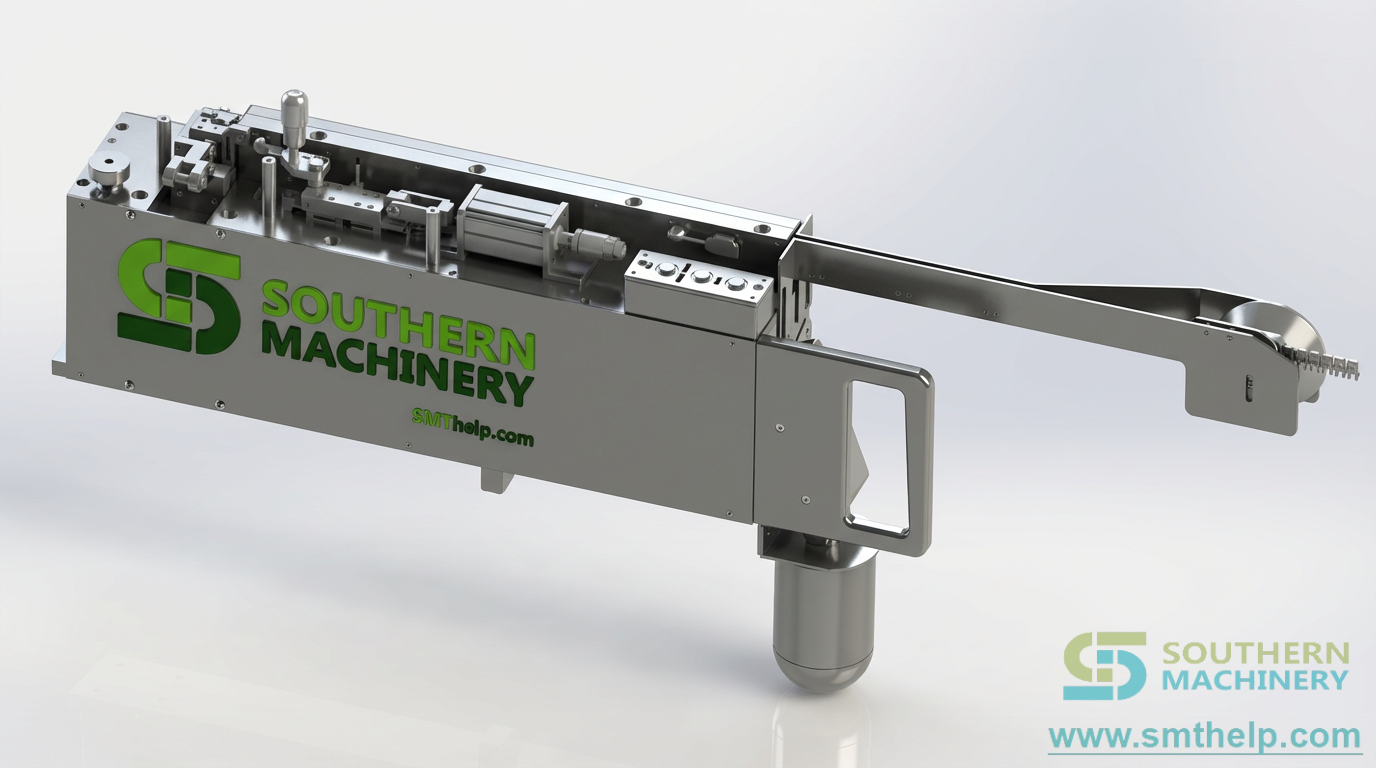
FASTON Terminal Reel Feeding for THT Odd-Form Lines by Southern Machinery
FASTON terminals, tab terminals, and similar odd-form THT components are small details that can cause big production headaches. When operators have to pick terminals from bags, trays, or loosely organized material, balancing the insertion process with the rest of the PCB assembly line becomes a challenge.
Southern Machinery's SRT7001 Reel Terminal Feeder is built for exactly this situation. It converts terminal reels into a stable feeding process that can sync with an odd-form inserter, robot, or compatible SMT platform, depending on the final machine interface.
Founded in 2011 in Shenzhen, China, Southern Machinery specializes in SMT/THT PCB assembly automation equipment for global EMS factories. Our portfolio covers SMT lines, THT insertion, wave soldering, board handling, inspection, customized feeders, nozzles, grippers, training, spare parts, and global service support. For buyers, the real value isn't just a feeder—it's a practical way to cut manual handling and integrate the terminal process into a complete production flow.
What Is This Machine Used For?
The SRT7001 Reel Terminal Feeder feeds FASTON terminals and similar tape-and-reel terminal components into THT odd-form insertion processes.
In plain language, it lets a machine pick terminals from a reel instead of requiring an operator to manually prepare each one. The feeder indexes the terminal tape, presents each terminal at a controlled pick-up point, and works with custom tooling so the insertion head can pick and place consistently.
This is ideal for PCB assemblies such as:
- Power supply boards with multiple tab terminals or heavy connectors
- Automotive relay, harness, and connector boards
- Industrial control boards with THT terminal blocks and metal terminals
- Mixed SMT + THT products where terminal insertion must happen before wave soldering
Why Manual FASTON Feeding Becomes a Bottleneck
Manual terminal feeding often looks simple during a sample build. The trouble emerges when the factory needs repeatable output across shifts.
Common issues include:
- Operators spend time sorting and orienting terminals before insertion
- Feeding speed varies from person to person
- Terminal geometry doesn't suit standard SMT tape feeders
- Mis-picks, missing terminals, or wrong orientations become more likely with manual handling
- The odd-form insertion station can't keep a stable rhythm with upstream SMT and downstream wave soldering
For EMS factories, this is a classic hidden bottleneck. The placement machine, reflow oven, and wave soldering machine may have enough capacity, but the terminal insertion step still holds up the line.
How the SRT7001 Feeder Fits Into a PCB Assembly Line
A typical line layout might look like this:
- SMT section: loader, stencil printer, pick-and-place, reflow, and optional AOI.
- THT preparation: buffer or conveyor moves boards to the insertion area.
- Odd-form terminal insertion: the SRT7001 feeder presents FASTON or tab terminals to the host inserter or robot.
- Downstream soldering: boards move to wave soldering or selective soldering, depending on PCB design.
- Inspection and test: visual inspection, AOI, ICT, or FCT can be added based on quality requirements.
The exact layout depends on PCB size, terminal type, cycle time targets, and whether the factory is upgrading an existing line or building a new one. Southern Machinery can pair the feeder with THT insertion equipment, wave soldering, board handling conveyors, and inspection options—rather than treating it as a standalone accessory.
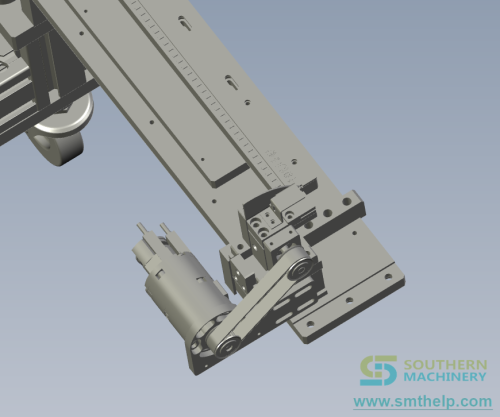
Key Selection Parameters to Confirm
The SRT7001 is application-specific. Before finalizing the feeder configuration, confirm these points:
- Terminal type: FASTON, tab terminal, reel terminal, or another metal terminal family
- Packaging: tape-and-reel format, pitch, reel size, and terminal orientation
- Host machine: dedicated odd-form inserter, robot, or compatible SMT platform
- Pick-up method: custom nozzle, gripper, or mechanical tooling
- PCB application: board size, terminal position, insertion direction, and insertion depth requirements
- Electrical interface: start, ready, error, sensor states, and other I/O needs
- Mechanical interface: bracket, feeder angle, Z-height, and pick-up clearance
- Downstream process: wave soldering, selective soldering, or another method
The source product page describes the feeder as a customized terminal reel feeding module with mechanical brackets, electrical I/O, and tooling matched to the host platform. Exact voltage, pinout, interface, and cycle settings should be confirmed during technical review—not guessed from a generic feeder page.
How the Feeder Improves Quality and Output
The main value is process control. When the terminal feeding point is fixed, indexed, and monitored, the insertion process becomes far less dependent on operator rhythm.
For production teams, this can mean:
- More stable takt time at the THT insertion station
- Less repetitive manual terminal handling
- Better consistency before wave soldering
- Easier integration with sensors and machine alarms
- Lower risk of missed terminal feed events
- A clearer path from semi-automatic THT work toward full line automation
ROI should be calculated based on your actual labor costs, shift patterns, terminal quantity per board, defect costs, and target output. For some low-volume, high-mix products, a manual or semi-automatic process may still be acceptable. For higher-volume power supply, automotive, or connector boards, automated terminal feeding is usually easier to justify.
Why Custom Nozzles and Grippers Matter
Terminal feeding is only half the job. The insertion head still needs to pick the terminal securely without bending or damaging it.
Southern Machinery can design custom nozzles or grippers around the terminal geometry. The goal is simple: pick the part reliably, hold it in the correct orientation, and support controlled insertion into the PCB hole pattern.
This is especially important for odd-form parts because there's no single universal nozzle for every terminal shape. A practical project review should include terminal samples, reel drawings, PCB hole layout, and any existing host machine interface details.
Typical Applications
Power Supply PCB Assembly
Power supply boards often use FASTON tabs, heavy connectors, and other THT parts. Manual terminal preparation can slow down an otherwise smooth line. A reel terminal feeder helps standardize terminal presentation before insertion and soldering.
Automotive and Relay Boards
Automotive electronics and relay products often include mixed THT relays, terminals, and connectors. These projects typically prioritize stable quality and traceable processes, making manual variation a real concern.
Industrial Control Boards
Industrial control PCBs commonly combine SMT parts with larger THT connectors and terminals. A feeder-based insertion process helps factories reduce handling steps before wave soldering.
Working with Southern Machinery
Southern Machinery provides high-efficiency, cost-effective SMT/THT automation equipment for EMS factories and has served over 237 global customers. For a terminal feeding project, we don't just ask, "Which feeder do you need?" We examine how the feeder will work with your PCB, terminal, insertion machine, board handling, and soldering process.
A practical project review usually starts with:
- Terminal photos or drawings
- Reel packaging information
- PCB drawing or Gerber details for terminal locations
- Current insertion method and bottlenecks
- Target output per shift or per month
- Existing equipment brand and available machine interface
From there, Southern Machinery can propose the feeder concept, tooling approach, and complete line integration plan.
FAQ
Can the SRT7001 handle every FASTON terminal?
No machine should be described that way without checking the terminal first. Terminal geometry, tape pitch, reel format, and pick-up surface must all be reviewed. The feeder and tooling can be customized after technical confirmation.
Can it be added to an existing SMT or odd-form machine?
In many projects, the feeder can be integrated through custom brackets and electrical I/O. The final answer depends on the host platform, controller interface, feeder mounting space, and pick-up position.
Is this only for high-volume factories?
Not exclusively, but the business case is strongest when manual terminal feeding is already limiting output, quality consistency, or labor efficiency. For very low-volume work, semi-automatic or manual feeding may still be more economical.
Does this replace wave soldering?
No. The feeder supports the insertion step. After terminals are inserted, the PCB normally continues to wave soldering or selective soldering depending on the board design.
What information is needed for a quotation?
Send the terminal sample or drawing, reel packaging details, PCB size and layout, target output, existing machine information, and required automation level. With that, Southern Machinery can match the feeder and line configuration more accurately.
CTA: Build a Stable Terminal Insertion Process
If FASTON terminal feeding is slowing your THT line, send Southern Machinery your terminal drawings, reel photos, PCB information, and current line setup. We can review whether an SRT7001 Reel Terminal Feeder, custom nozzle/gripper, and integrated THT + wave soldering flow will fit your production target.
Southern Machinery can support the full journey—from feeder selection to SMT/THT line integration, training, spare parts, and global service support.
Comments