
Desktop Selective Wave Soldering Machine, Southern Machinery
Desktop selective wave soldering for small PCBA: 1500 W bench-top unit, selective THT joints, line integration, selection checklist and a payback model.
Oct 9, 2026 · Updated Oct 9, 2026 · Southern Machinery
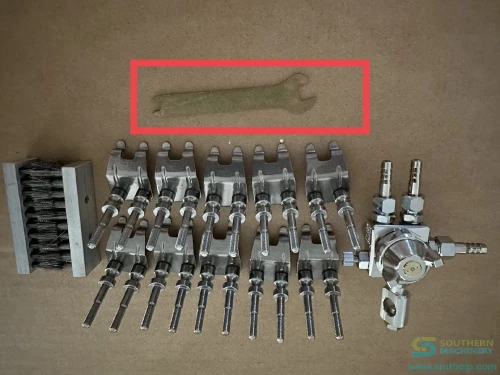
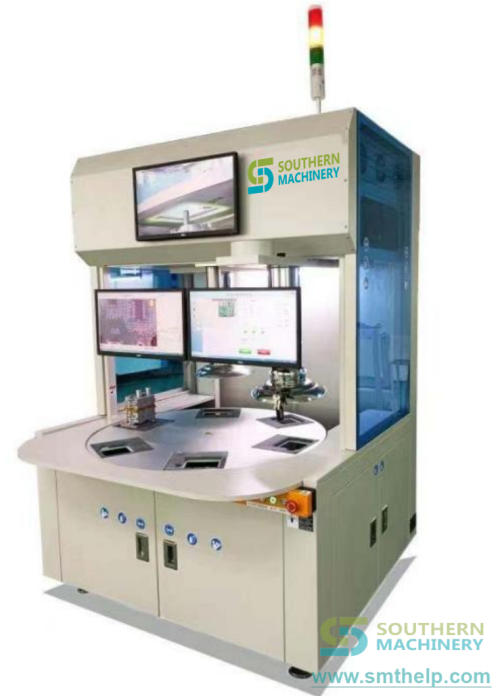
A desktop selective wave soldering machine is a compact bench-top unit that applies a mini-wave of molten solder only where the joints are programmed — fluxing, preheating and soldering small PCBA boards in one pass, without a pallet, without a full wave line, and without the operator-to-operator variation of hand soldering. Southern Machinery builds this class of machine for high-mix, low-volume THT work: the product document for this unit states a 1500 W machine, a packed footprint of 72 × 60 × 55 cm and a packed weight of about 30 kg, with process parameters customizable to your boards. This guide covers what the machine does on a real floor, how it fits a PCB assembly line, what to send with the RFQ, and how to model payback — using only the values published in that product document.
What is a desktop selective wave soldering machine used for?
It solders through-hole joints on small boards and short runs — the cases where a full wave line cannot justify its footprint, energy bill and setup time, and where two operators will not produce the same joint twice by hand. The product document states the application as various electronic product PCB / PCBA soldering and positions the machine for small boards and high-mix runs: evaluation benches, prototypes and small production batches.
Selective means the neighbouring parts stay cool
The documented design feature is precise positioning on the soldering head so solder lands only where it is programmed. The stated advantage is that selective application protects adjacent components; the stated benefit is higher yield on dense boards with less rework. On a board where connectors, relays or temperature-sensitive parts sit beside the THT joints, that is the difference between one local thermal event and a second full-board excursion.
72 × 60 × 55 cm at about 30 kg: what the footprint buys
The packed reference size is 72 × 60 × 55 cm and the packed reference weight is approximately 30 kg, which the document presents as a bench-friendly, movable unit. Two layouts benefit: one bench serving several short-run product families, and an engineering area that qualifies a joint program before it is released to the floor. A one-year warranty with technical support and spare parts service is part of the documented specification.
The family reference behind the desktop head
The same document carries the documented reference values of the selective soldering family, labelled S-100B reference: ±0.05 mm positioning, a titanium alloy solder pot of 8 kg with PID control across 0–400 °C and lead-free readiness, an ST-6 jet valve fluxer with a 1 L tank, and N2 preheat available in the family. Read those as family reference values that still have to be confirmed against your board — the desktop configuration data itself is described as coming from reference production in Dongguan.
Desktop selective wave vs full wave line vs hand soldering
The document frames the decision as a set of hidden costs rather than a machine comparison, and that framing is the useful one. Three trade-offs decide most cases.
Against hand soldering
Hand-soldered THT joints vary with the operator and the shift, and the process as described depends on the person rather than on a program. A desktop selective unit removes that variable by applying the solder from a programmed head, at a documented 1500 W power rating for daily desktop duty.
Against a full wave line
Sending small PCBA through a full wave line wastes energy, floor space and setup time, and it exposes the whole assembly to a second thermal excursion, including temperature-sensitive components that were never designed for it. Broad-area fluxing also consumes flux and generates solder dross, which the document lists as a consumable-budget item rather than a price.
Against fixture-heavy selective production
Every board variant on a fixture-based process adds tooling cost and changeover time to a small batch. The desktop configuration is documented as parameter-customizable for different board types, solders and flux, so the same bench covers several variants instead of one pallet per variant.
How does a desktop selective wave unit fit a PCB assembly line?
It is a between-steps machine, not a line replacement. On a mixed SMT + THT flow it sits after insertion and lead preparation, and before cleaning, inspection and depaneling — soldering the through-hole joints on boards that a reflow oven cannot reach.
Upstream of the desktop unit
SMT placement and reflow come first, then through-hole and odd-form insertion, then lead cutting and forming. Those upstream steps set the joint quality the desktop unit inherits, so it is worth reviewing the THT machine family and the SMT machine family before you specify the soldering bench itself.
Downstream of the desktop unit
After soldering, boards still need depanelizing, cleaning and inspection; board handling equipment and the one-stop PCB assembly line page show how those modules are sequenced. For a wider view of the modules that can be placed before and after the bench, the machine catalogue at file.autoinsertion.com lists the families Southern Machinery builds.
Soldering is one station in a line plan
Treat the desktop unit as one station in a flow: board handling in, soldering, inspection out. When volumes grow, the same joint program moves to a larger selective platform in the same family rather than being rewritten, which is the practical reason to standardize nozzle, fluxer and pot technology early.
Selection checklist: what to send with your RFQ
The document states that process parameters are customizable, and that configuration and process parameters are confirmed within 24 hours of a technical review. These are the inputs that make that review useful:
- Board dimensions, panel layout and maximum board weight per run
- THT joint count per board and the joint types involved — pin, connector, relay, shielding frame
- Daily and weekly volume, plus the number of product variants per week
- Solder alloy and lead-free or leaded process, with the flux type you intend to run
- Whether an N2 preheat setup is wanted, since the family documents N2 preheat availability
- Fixture availability: whether boards can be supported by hand-loaded tooling or need a pallet
- Board material and thickness, and any component with a temperature ceiling near the joints
- Cleaning and inspection steps that follow soldering, so the bench can be sequenced correctly
- Power supply and bench space available at the intended installation point — 1500 W and 72 × 60 × 55 cm packaged are the documented reference figures
- Target takt time, so the joint program can be reviewed against the shift requirement
- Board size range for future products, not only the current family
- Who operates the unit, so training is scoped against the number of shifts
ROI: how to model payback on a bench-top selective wave unit
The document does not publish a price, a cycle time or a saving, so payback has to be modelled from your own cost base. The structure that works is:
Annual saving = (hand-soldering hours removed × loaded labour rate)
              + (rework and touch-up hours removed × loaded labour rate)
              + (fixture and pallet spend avoided)
              + (changeover hours avoided × loaded labour rate)
              + (flux and dross reduction, if measurable)
Payback (months) = machine investment ÷ (Annual saving ÷ 12)
Example — illustrative inputs you supply, not Southern Machinery figures: if a plant removes 500 hours of hand soldering and 120 hours of rework or touch-up a year at a loaded rate of 20 per hour, that is 12,400 a year before any fixture, changeover, flux or dross effect. Against a machine investment of 20,000, the arithmetic gives roughly 19 months. Substitute your own rates and volumes. Any payback figure is an example only, depends on configuration and production reality, and is subject to final technical confirmation.
FAQ
What is a desktop selective wave soldering machine?
It is a compact soldering unit that applies solder selectively to programmed joints on small PCBA boards, combining a mini-wave process with desktop convenience for labs, prototypes and small production runs.
Which boards can it solder?
Various electronic product PCB / PCBA soldering tasks, especially small boards and high-mix runs. Board size and joint program are confirmed during technical review.
Is the machine customizable?
Yes. Process parameters can be customized for different board types, solders and flux, and multiple configurations are available on request.
How big and how heavy is the machine?
The packed reference is 72 × 60 × 55 cm at about 30 kg — bench friendly and movable between stations.
What warranty is included?
A one-year warranty, with technical support and spare parts service.
How do I get a price and delivery time?
Send your board size, joint count and quantity. Quotation and delivery schedule follow technical confirmation, typically the same working day.
Next step
Send your PCB dimensions, THT joint count and daily volume, and Southern Machinery will reply with a configuration, a quotation and a delivery schedule — the documented sequence is board and process review, technical consultation within 24 hours, configuration, installation and training, then one-year warranty support with spares. Founded in Shenzhen in 2011, Southern Machinery serves 237+ customers worldwide with SMT, THT, wave soldering, board handling and inspection equipment and complete line solutions.
- Request a configuration and quote on the desktop selective wave soldering machine
- Review the THT machine family for the insertion and lead-preparation steps
- See how the station fits a complete line on the one-stop PCB assembly solutions page
- Browse the full machine catalogue at file.autoinsertion.com
Comments