
Custom SMT and THT Feeder Nozzle Solutions from Southern Machinery
Southern Machinery’s custom SMT and THT feeder nozzles help EMS factories automate tricky component handling—axial and radial parts, tube, tray, belt, bowl, and odd-form feeding. This buyer guide walks you through where
Jul 4, 2026 · Updated Jul 4, 2026 · Southern Machinery
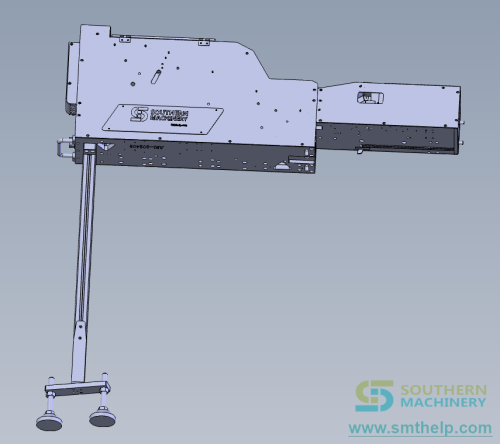
Custom SMT and THT Feeder Nozzle Solutions from Southern Machinery
For EMS factories, the placement machine isn’t always the only bottleneck. Odd-form terminals, axial parts, radial parts, tube-packed components, tray parts, and custom-shaped components often still need manual prep before SMT or THT. Southern Machinery’s custom feeder and nozzle solution closes that gap by matching the feeding method, pickup interface, shaping process, and line integration to your actual component.
What is this machine used for?
A custom SMT/THT feeder and nozzle solution presents non-standard or tricky components to an SMT mounter, THT insertion machine, robotic arm, or auxiliary automation station in a repeatable position. Instead of having operators sort, orient, cut, bend, or hand-place every part, the feeder preps the component and the nozzle or gripper picks it reliably.
In practice, this type of solution helps automate components like axial taped parts, radial taped parts, bulk terminals, tube-mounted components, tray-supplied parts, and odd-form devices that don’t fit a standard tape feeder.
Feeder Types Covered in the Source Material
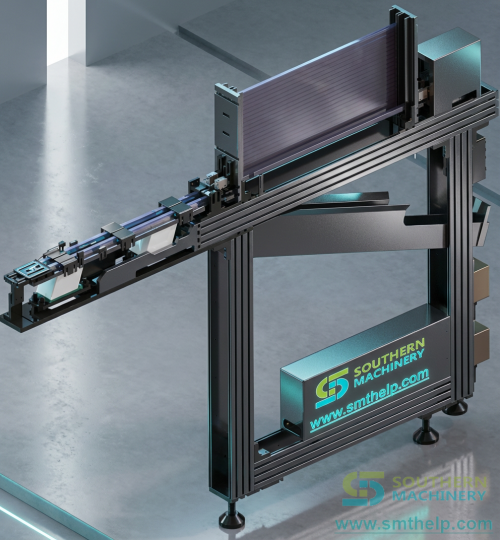
The source document describes a broader Southern Machinery feeder/nozzle catalog concept rather than a single machine. The key solution categories include:
- SAF1001 Axial Tape Feeder for axial components that may need feeding, U-shaping, lead forming, or lead trimming before insertion or pickup.
- SRF1001 Radial Tape Feeder for radial components that need controlled feeding, cutting, bending, and repeatable presentation.
- SBF1001 Bowl Feeder for bulk components that need sorting and orientation before entering an SMT, THT, or robotic process.
- STF1003 Tube Feeder for tube-packed components such as DIP-style or transistor-style parts where stable sequencing is required.
- SBF2002 Belt Feeder for bulk or multi-pin components that need a compact, quieter alternative to some bowl-feeding layouts.
- STP1001 Tray Feeder for parts supplied in trays and picked by an SMT machine, auxiliary machine, or robot.
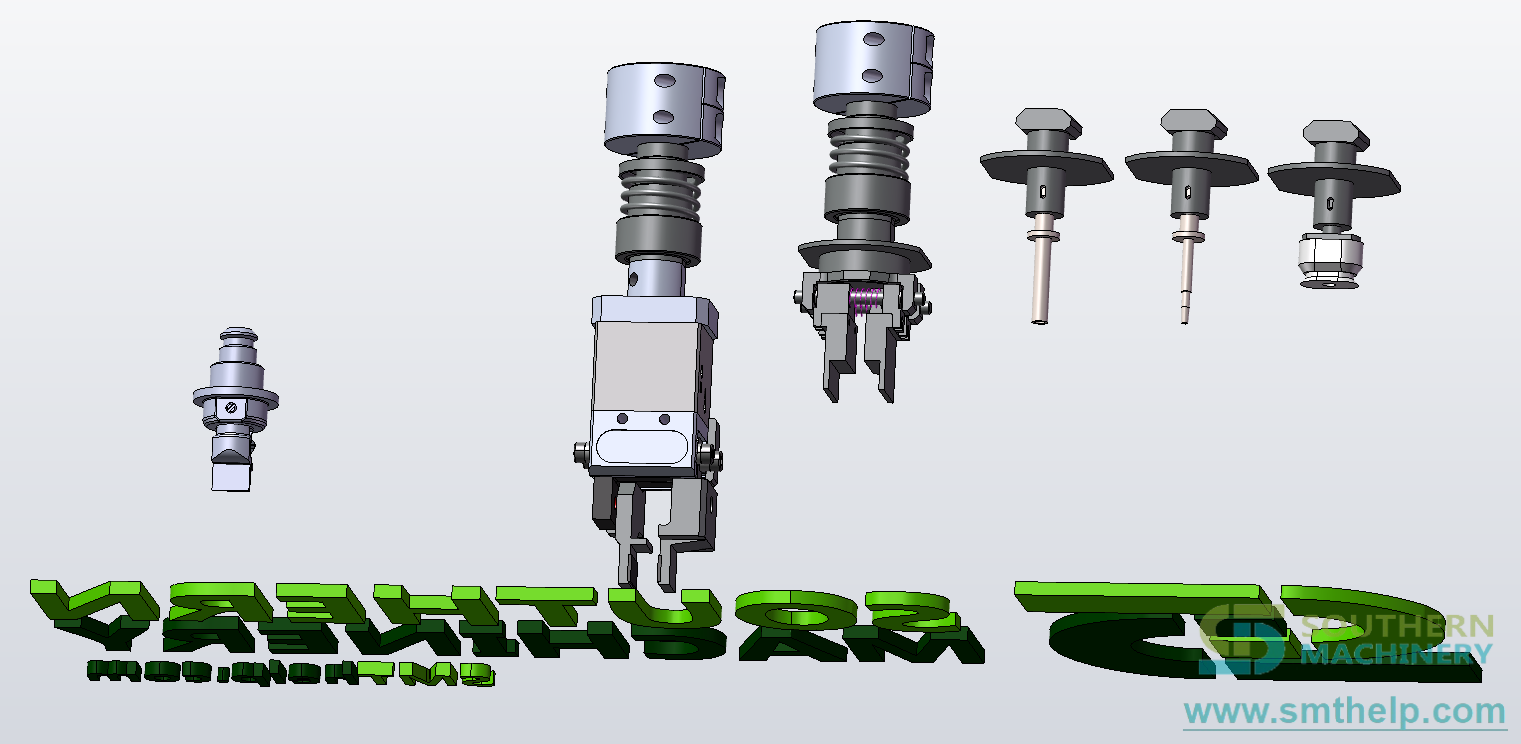
- Customized nozzles and grippers for odd-form parts where a standard vacuum nozzle can’t hold, center, or release the component reliably.
The source also lists example values like 0.8-second feeding speed for certain feeder concepts, plus accuracy examples of ±0.2 mm or ±1 mm and a 3-second-per-material tray feeding example. Treat these as source examples only. Final values depend on the component, feeder mechanism, host machine interface, and acceptance testing.
Typical Applications
This solution is most useful when a factory has a good SMT or THT platform but still loses time around component preparation. Common use cases include FASTON terminals, connectors, clips, pins, relays, switches, axial and radial components, tube-packed ICs, bulk parts, tray materials, and high-mix EMS production where different components need different feeding logic.
How It Fits Into a Complete PCB Assembly Line
A feeder/nozzle solution should match the full assembly flow: SMT loader, printer, pick-and-place, reflow, AOI, custom feeding station, THT insertion or robotic insertion, wave or selective soldering, board handling, inspection, and traceability when required. Southern Machinery can support these surrounding process steps as a complete PCB assembly automation partner.
Key Selection Parameters
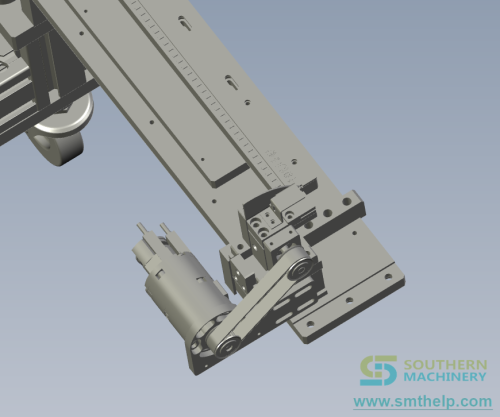
- Component package: axial tape, radial tape, tube, tray, bulk, reel terminal, or loose odd-form part.
- Component size range, lead shape, polarity, pickup surface, and fragility.
- Required process before pickup: cutting, forming, bending, orientation, sorting, or inspection.
- Host machine interface: SMT mounter, auto insertion machine, robotic arm, or dedicated workstation.
- Required pickup accuracy and repeatability.
- Target cycle time per component and expected daily or monthly output.
- Product mix and changeover frequency.
- Available floor space and preferred feeder format.
- Traceability needs, including barcode, MES, or production data connection.
There’s no universal feeder for every odd component. A low-cost feeder that works for one terminal may be unstable for another part with different geometry. The right choice comes from testing the actual component, not just reading a spec sheet.
ROI, Quality, and Capacity Value
A well-matched feeder and nozzle solution can reduce repetitive manual loading, improve pickup stability, reduce orientation errors, support more consistent line takt time, and make future automation easier. ROI should be calculated with real production data: labor hours, scrap cost, rework rate, current takt time, and planned output.
Why Work With Southern Machinery?
Southern Machinery was founded in Shenzhen, China in 2011 and focuses on SMT and THT PCB assembly automation equipment. The company supports 237+ global customers with high-efficiency, cost-effective solutions for EMS, ODM, automotive electronics, medical electronics, industrial control, and other electronics manufacturing teams.
For feeder and nozzle projects, Southern Machinery can review the component, match the feeder type, design or adapt the nozzle/gripper, and connect the solution into a wider SMT/THT process—instead of selling only a standalone accessory. Global service, spare parts support, and professional training help reduce implementation risk for overseas factories.
FAQ
Can one custom feeder handle every odd-form component?
No. Different parts need different feeding logic. The feeder should be selected after reviewing the real sample and required process.
When should I use a belt feeder instead of a vibratory bowl feeder?
A belt feeder can be suitable when the component can be presented in a controlled path and the factory needs a compact, quieter, easier-changeover setup. A vibratory bowl may still be useful for some loose bulk parts.
Do I need a custom nozzle or a mechanical gripper?
Use a standard vacuum nozzle when the pickup surface is stable and accessible. Use a custom nozzle or gripper when the component is heavy, irregular, fragile, porous, or hard to center with vacuum alone.
Can this connect with my existing SMT machine or robot?
In many cases, yes, but the interface must be checked. Southern Machinery needs the machine brand/model, available signals, pickup height, feeder mounting area, and process sequence before confirming integration.
Are the speed and accuracy values fixed?
No. The source document includes example values, but final performance is subject to component testing, feeder configuration, and technical confirmation.
What information should I send for evaluation?
Send clear photos or samples of the component, packaging format, target output, host machine model, board application, current manual process, and any quality or traceability requirement.
CTA: Send Your Component Sample for a Feeder Review
If your SMT or THT line still depends on operators for terminals, axial parts, radial parts, tube components, tray parts, or odd-form devices, Southern Machinery can help evaluate the right feeder, nozzle, or gripper approach.
Comments