
Custom SMT Nozzles and Grippers for Odd-Form Placement – Southern Machinery
Custom SMT nozzles and grippers help EMS factories automate odd-form components that standard vacuum tooling can't handle reliably. Southern Machinery designs application-specific tooling around the component shape, host
Jul 2, 2026 · Updated Jul 2, 2026 · Southern Machinery
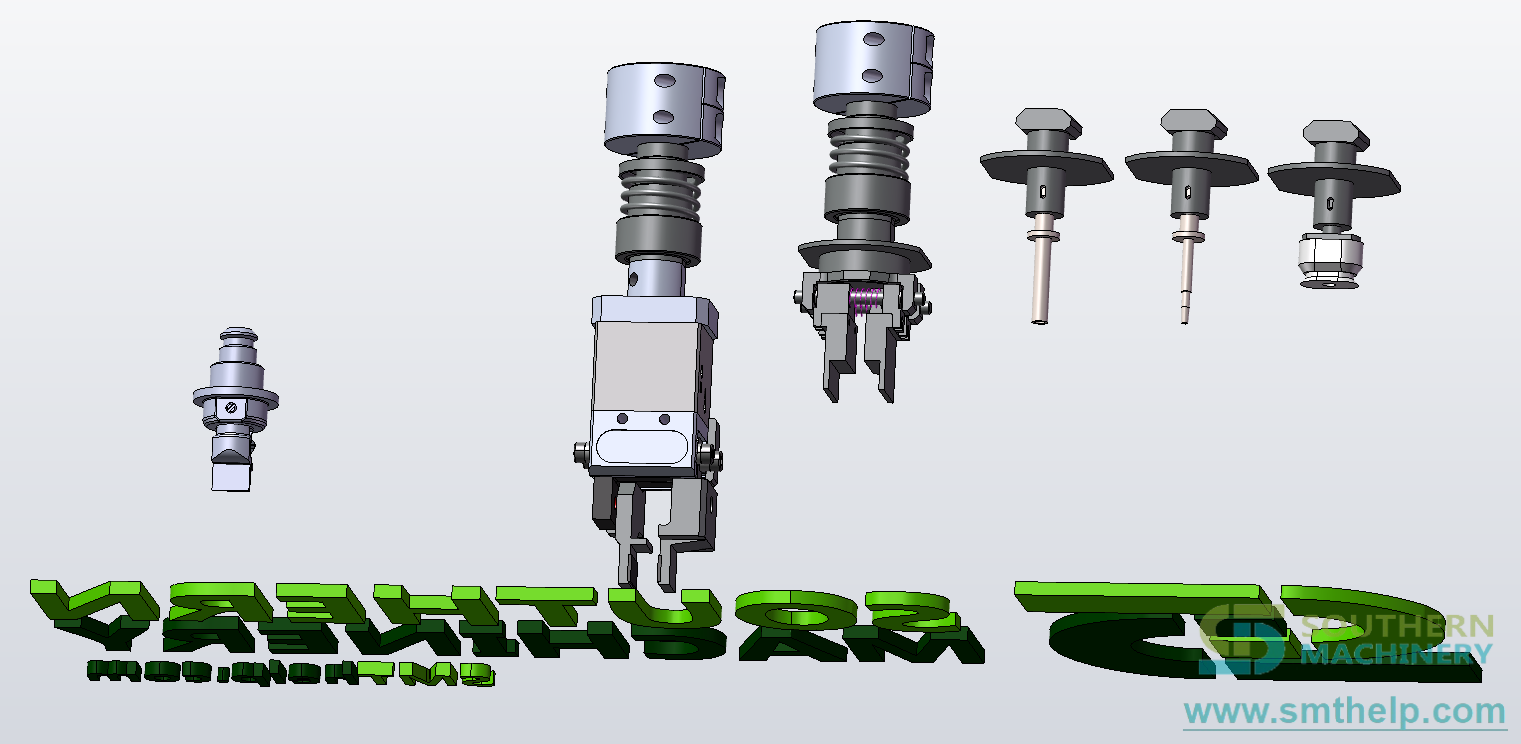
Custom SMT Nozzles and Grippers for Odd-Form Placement – Southern Machinery
For many EMS factories, the SMT line already runs fast when handling standard chips and ICs. The real bottleneck shows up when the product includes odd-form components: connectors, shields, jumpers, bulky parts, porous surfaces, or parts with no stable flat suction area. A standard vacuum nozzle might pick the part once, miss it the next time, or damage the component during placement.
Southern Machinery's customized SMT nozzle and gripper solution is built for this exact gap. Instead of forcing every component into a standard feeder/nozzle setup, our engineers design the pick-up tool around the component geometry, host machine, and production problem. The goal is simple: help factories automate more odd-form placement, reduce manual intervention, and keep the PCB assembly line stable.
Southern Machinery was founded in Shenzhen in 2011 and focuses on SMT/THT PCB assembly automation equipment. For global EMS, ODM, automotive electronics, medical electronics, and industrial control manufacturers, we support not only custom tooling but also full-line integration across SMT, THT insertion, wave soldering, board handling, inspection, training, spare parts, and long-term service.
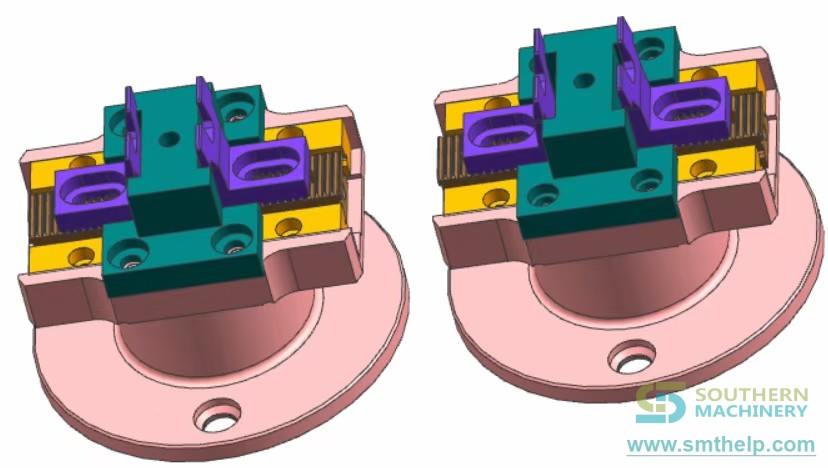
What is this machine used for?
It is not a standalone placement machine. This product category is a custom-engineered tooling and handling solution used on SMT mounters or related odd-form automation stations.
The customized nozzle is used when a component can still be picked by vacuum, but the standard nozzle doesn't match the component surface, center of gravity, or required contact area. The customized gripper is used when vacuum is not enough, such as with heavy, irregular, porous, tall, or awkward components that need mechanical holding.
In practical terms, it helps factories move components that would otherwise require manual placement into a more repeatable automated process.
The production problem it solves
Odd-form components usually create three problems on a PCB assembly line:
- Unstable pick-up: the component shifts, drops, rotates, or sticks to the wrong surface.
- Placement defects: the component arrives at the PCB with offset, tilt, or wrong orientation.
- Manual dependency: operators must place or correct parts by hand, which slows output and makes quality harder to control.
The source landing page positions custom nozzles and grippers as a way to improve pick-up reliability, reduce production errors, and handle components that standard tooling can't manage well. Actual pick-up rate, lifespan, and throughput depend on the component, machine model, nozzle/gripper material, feeder setup, and final engineering confirmation.
Typical applications
Custom SMT nozzles and grippers are useful for production teams handling:
- Odd-form SMT components with unusual shapes.
- THT components processed through automated handling or odd-form insertion.
- Large connectors, shields, terminals, jumpers, or bulky parts.
- Heavy parts where a normal vacuum nozzle can't hold the part securely.
- Porous or uneven components without a clean suction surface.
- Delicate components where the contact surface must be carefully controlled.
For example, if a connector has no flat top surface, a standard nozzle may lose suction during acceleration. A mechanical gripper can hold the component from the side, control the center of gravity, and place it more repeatably. If a small custom component has a usable but narrow contact area, a purpose-built nozzle can create a better vacuum seal without touching sensitive features.
Custom nozzle or custom gripper: how to choose
The first engineering question is not "Which model should I buy?" It is "How should this component be held?"
Custom nozzle
Use a custom nozzle when the component has a usable surface for vacuum pick-up. The design can be adjusted for contact area, shape, material, anti-stick behavior, and machine compatibility.
Best fit:
- Components with at least one stable suction surface.
- Parts that need fast pick-and-place movement.
- Small to medium odd-form components where vacuum is still reliable.
- Applications where contact pressure must stay low.
Mechanical gripper
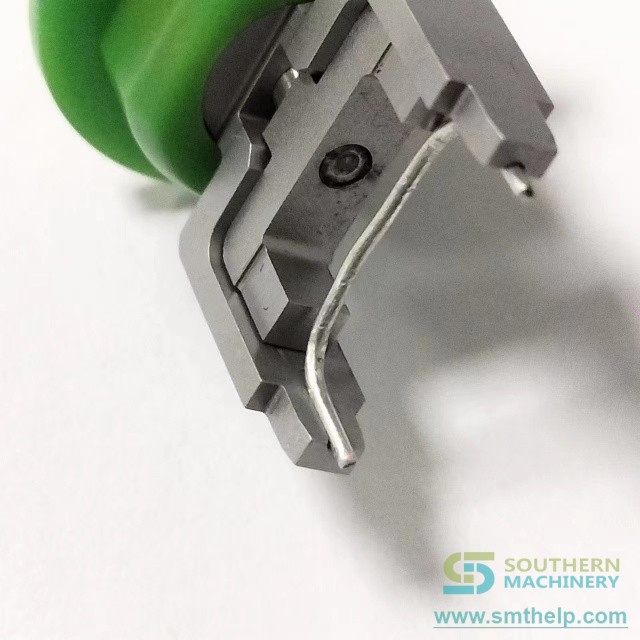
Use a gripper when vacuum is not reliable enough. The source page describes mechanical grippers for heavy, porous, or irregularly shaped components, using a fixed-and-swing-arm style approach to hold parts securely.
Best fit:
- Heavy or tall components.
- Parts with no flat vacuum surface.
- Connectors, shields, THT parts, and large components.
- Components that must be held from the side to prevent rotation or dropping.
How it connects to a complete PCB assembly line
Custom tooling works best when it is considered as part of the whole line, not as an isolated accessory.
In a typical SMT/THT production flow, Southern Machinery can review:
- Component input: tape, tube, tray, bulk, or special feeding.
- Host equipment: SMT mounter, odd-form insertion machine, or custom automation station.
- Pick-up tooling: customized nozzle, mechanical gripper, or a hybrid method.
- PCB handling: loader, conveyor, buffer, inverter, or unloader depending on the line.
- Inspection: AOI, visual inspection, or process check after placement/insertion.
- Downstream process: reflow, selective soldering, wave soldering, ICT/FCT, or depaneling.
This is where Southern Machinery's broader SMT/THT experience matters. A custom nozzle may solve the pick-up issue, but the full result also depends on feeder stability, placement path, board support, inspection strategy, and operator training.
Key selection parameters to confirm
Before designing the tooling, a buyer should prepare the following information:
- Component drawing or real sample.
- Component dimensions, weight, material, and surface condition.
- Whether the component is supplied by tape, tube, tray, or bulk.
- Host machine brand and model.
- Available nozzle holder or gripper interface.
- Placement speed expectation and acceptable cycle time.
- PCB layout around the component, including clearance and nearby tall parts.
- Required placement orientation and tolerance.
- ESD, cleanroom, or material restrictions if applicable.
- Current problem: missed pick-up, dropping, rotation, sticking, damage, manual placement, or rework.
With these details, Southern Machinery can recommend the closest tooling concept and confirm whether the solution should be a vacuum nozzle, mechanical gripper, or a feeder-plus-tooling package.
ROI, quality, and capacity value
The business case is usually strongest when the same manual operation repeats every shift. Replacing one difficult odd-form handling step can reduce operator dependency, improve first-pass consistency, and make output easier to plan.
The value is not only speed. The bigger benefit is process control:
- More stable pick-up and placement.
- Less manual correction and rework.
- Lower risk of component damage.
- Better repeatability between operators and shifts.
- Easier integration into an automated SMT/THT line.
- More headroom for future product variants.
For high-mix EMS factories, the right tooling also protects flexibility. Instead of buying a dedicated machine for every component, a custom nozzle or gripper can help adapt existing equipment to more product families, subject to machine compatibility and engineering confirmation.
Why work with Southern Machinery?
Southern Machinery is a Shenzhen-based manufacturer established in 2011. We focus on high-efficiency, cost-effective SMT/THT automation for PCB assembly factories and have served 237+ global customers.
For customized nozzles and grippers, the practical advantage is that tooling is not separated from line knowledge. Our team can look at the component, mounter, feeder, THT process, wave/selective soldering requirements, and board handling flow together. That reduces the risk of designing a beautiful tool that can't run smoothly in the real factory.
We can also support global buyers with remote technical discussion, training guidance, spare parts support, and integration advice for wider SMT/THT automation projects.
FAQ
Can a custom nozzle handle every odd-form component?
No. If the part has no reliable suction area, a mechanical gripper may be better. The correct choice depends on the component geometry, weight, surface, center of gravity, and placement motion.
Is this only for SMT mounters?
No. The source page focuses on SMT customized nozzles and grippers, but the same engineering idea can support odd-form handling and THT-related automation when the machine interface and component feeding method allow it.
What information do you need before quoting?
We need the component drawing or samples, host machine model, feeding method, PCB placement position, current defect or bottleneck, and target output. Photos and short production videos are also useful.
Can Southern Machinery provide the feeder as well?
Depending on the component package, Southern Machinery can discuss feeder, nozzle, gripper, and integration options together. This is important for terminals, jumpers, connectors, and other components where feeding stability affects placement quality.
Are pick-up rate and tool lifespan guaranteed?
They must be confirmed after component review and testing. The source landing page presents strong performance positioning, but final numbers depend on the actual component, material, machine model, maintenance, and production conditions.
Can this be integrated into a complete automated line?
Yes. Southern Machinery can support broader SMT/THT line planning, including SMT placement, THT insertion, wave/selective soldering, board handling, inspection, and traceability options.
CTA: send your component problem
If your SMT or THT line still depends on manual placement for difficult components, send Southern Machinery your component drawing, machine model, feeding method, and a short description of the problem.
Our engineering team can review whether a custom SMT nozzle, mechanical gripper, or feeder-plus-tooling solution is the most practical path for your PCB assembly line.
Comments