
Custom SMT Nozzles and Grippers for Difficult Components by Southern Machinery
Difficult-to-handle components can slow an SMT line when standard tooling cannot pick, hold, or release them consistently. Southern Machinery designs custom SMT nozzles and grippers for odd-form parts, special surfaces, and application-specific placement challenges. For EMS, ODM, automotive electronics, medical electronics, and industrial control manufacturers, the goal is practical: reduce manual intervention, stabilize quality, and make complex components easier to integrate into a complete PCB assembly line.
Jul 26, 2026 · Updated Jul 26, 2026 · Southern Machinery
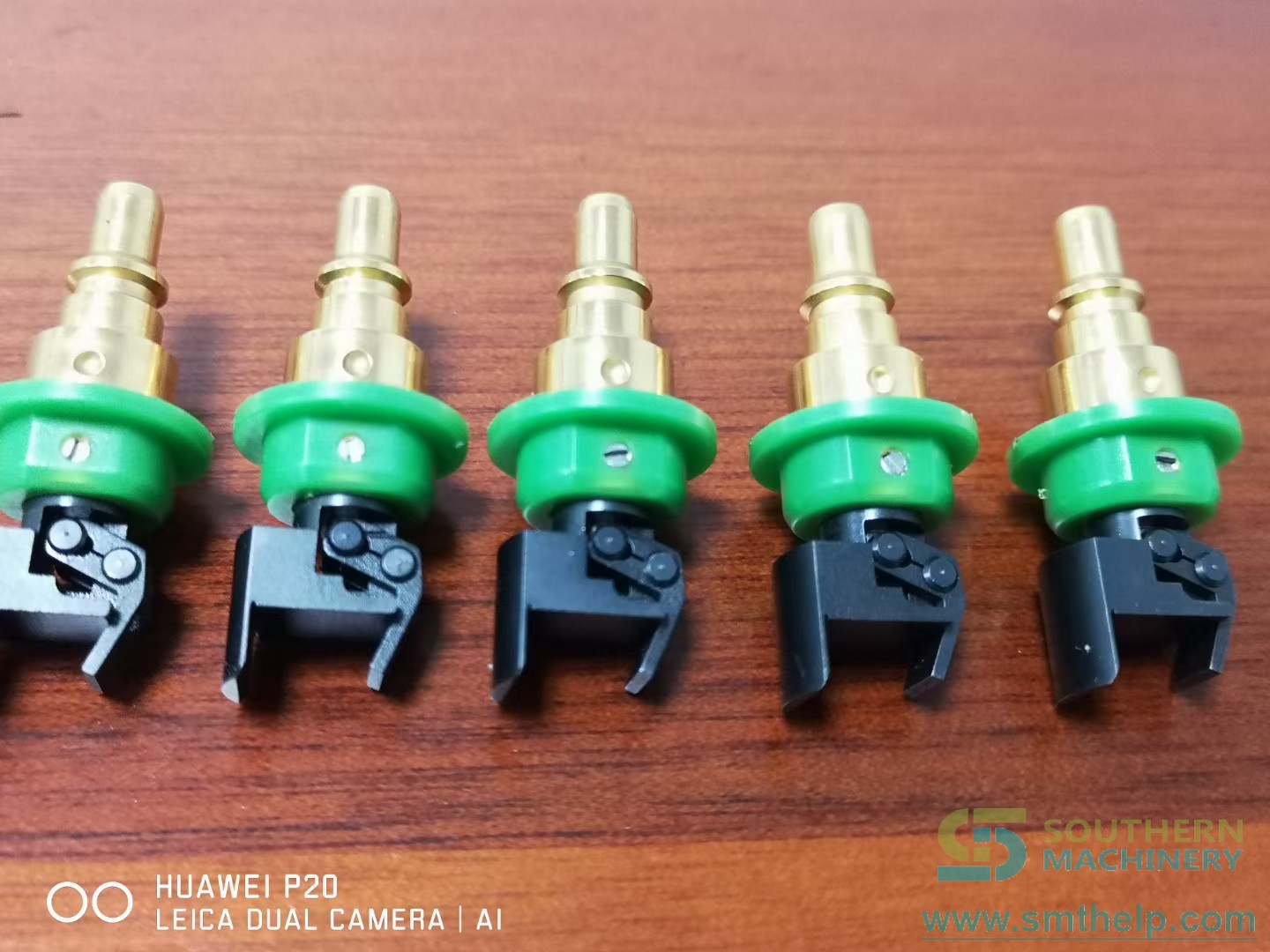
Custom SMT Nozzles and Grippers for Difficult Components by Southern Machinery
Standard SMT tooling works well for standard packages. The problem starts when an EMS factory needs to place odd-form, fragile, tall, heavy, or surface-sensitive components and the existing nozzle cannot grip the part reliably.
This blog is based on Southern Machinery's custom SMT nozzle and gripper cold-email material, which focuses on production slowdowns, quality issues, difficult-to-handle components, custom-engineered tooling, yield, speed, and durable materials such as diamond steel and ceramic. No unverified speed, accuracy, price, delivery, certification, or ROI guarantee is added here.
What is this machine used for?
Custom SMT nozzles and grippers are used to adapt a pick-and-place or odd-form assembly process to components that cannot be handled reliably by standard vacuum nozzles or generic mechanical tooling.
In practical PCB assembly, these tools help when a component has an unusual body shape, limited vacuum area, fragile surface, special orientation requirement, or handling condition that creates mis-picks, drops, skewed placement, rework, or manual intervention. The exact design depends on the component sample, placement machine interface, feeder method, PCB layout, and production target.
Why Standard Tooling Becomes a Bottleneck
A difficult component does not only create a local placement problem. It can affect the whole line because one unstable pick point may stop the placement machine, force operators to intervene, increase inspection burden, or push the factory back toward manual handling.
From a buyer's perspective, the key issue is not whether a custom nozzle looks complex. The real question is whether the tooling can make the component repeatable enough for production.
Typical symptoms include:
- Production slowdowns caused by odd-form or difficult-to-handle parts.
- Quality issues linked to unstable pick, transfer, or placement.
- Rework caused by component shift or unreliable release.
- Underused SMT machine capacity because special parts are still handled manually.
- Higher operating cost when the line depends on manual correction.
Southern Machinery's Custom Tooling Approach
Southern Machinery, founded in 2011 in Shenzhen, China, focuses on SMT and THT PCB assembly automation equipment for global manufacturers. The company supports complete line solutions covering SMT, THT insertion, wave soldering, board handling, inspection, and traceability options, with professional training, spare parts support, and global service coordination.
For custom nozzles and grippers, the practical approach is application engineering: understand the part, understand the machine, then design tooling that fits the actual production condition.
The source material highlights customized SMT nozzles and grippers, difficult components, odd-form handling, higher yield, improved production speed, and longer-lasting tools using materials such as diamond steel and ceramic. Those benefits should still be validated against the actual component, pick-and-place platform, and process window.

Typical Applications
Custom SMT nozzles and grippers are relevant in high-mix and special-process assembly environments, especially where a standard nozzle library does not solve the handling problem.
Common application areas include:
- Automotive electronics using connectors, terminals, shields, and mechanically demanding parts.
- Industrial control boards with relays, transformers, terminals, and special housings.
- Medical and instrumentation electronics where surface condition and placement stability matter.
- Consumer and power electronics with mixed SMT/THT assemblies.
- ODM and EMS factories that need to automate a component previously handled manually.
How Custom Tooling Fits Into a Complete PCB Assembly Line
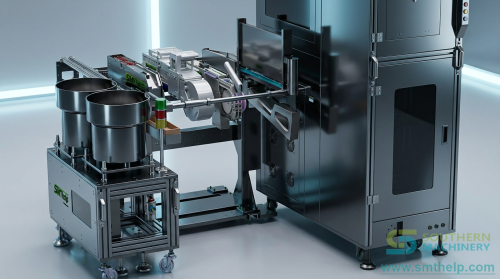
A custom nozzle or gripper should not be treated as an isolated accessory. It belongs inside a complete manufacturing flow.
A typical integration path may include:
- SMT section: loader, solder paste printing, SPI when required, pick-and-place machine, custom nozzle or gripper, reflow oven, and AOI.
- THT section: radial insertion, axial insertion, odd-form insertion, jumper wire feeding, terminal feeding, or manual-assisted insertion depending on the board.
- Soldering section: wave soldering or selective soldering according to component heat sensitivity, layout, and throughput.
- Board handling: conveyors, buffers, inverters, magazine loaders/unloaders, NG/OK sorting, and routing to inspection.
- Traceability and support: barcode, MES connection, spare tooling management, training, and maintenance planning.
For this reason, Southern Machinery normally evaluates the component, machine interface, feeding method, PCB design, and line bottleneck before recommending a final custom tooling configuration.
Key Selection Parameters for Buyers
Before requesting a custom SMT nozzle or gripper, prepare the following details. These inputs reduce guesswork and make the engineering discussion faster.
- Component drawings, photos, and physical samples if available.
- Package dimensions, weight, surface material, and fragile areas.
- Pick position, available vacuum area, and allowed contact surfaces.
- Placement machine brand, model, head type, and nozzle interface.
- Feeder method: tape, tray, tube, bowl, stick, belt, or custom feeder.
- PCB layout constraints and surrounding component clearance.
- Required placement orientation and acceptable process tolerance.
- Current failure mode: mis-pick, drop, rotation, skew, poor release, damage, or low speed.
- Production volume, shift pattern, and whether the goal is full automation or semi-automation.
ROI, Quality, and Capacity Value
The business case is strongest when custom tooling removes a repeated production constraint. If a special component is creating stops, rework, or manual labor, a correctly engineered nozzle or gripper can help the factory recover machine utilization and improve process stability.
The value should be evaluated through measurable factors:
- Fewer manual corrections for difficult components.
- More stable picking and placement after engineering validation.
- Better use of existing SMT equipment capacity.
- Lower rework pressure when handling becomes more consistent.
- Reduced dependence on operator skill for special parts.
- Longer tool life when suitable materials are selected for the component and process.
Any payback estimate should be treated as an example only and depends on component difficulty, current defect/rework level, labor cost, machine downtime, and production volume. Final ROI should be confirmed with real line data.
FAQ
Can one custom nozzle solve all difficult components?
No. Each component has different geometry, weight, surface, and handling constraints. A nozzle or gripper should be designed around the specific part and machine interface.
What materials can be used?
The source material mentions premium materials such as diamond steel and ceramic. Final material selection depends on wear, contact surface, ESD considerations, component sensitivity, and expected production load.
Is this only for SMT machines?
The core topic is customized SMT nozzles and grippers, but difficult component handling often connects with feeders, odd-form insertion, THT automation, and complete PCB assembly line design.
What information is needed before quoting?
Southern Machinery should confirm the component sample or drawing, machine model, nozzle interface, feeder method, current failure mode, and production requirement before giving a technical recommendation.
Can it improve speed and quality?
It can support higher stability and less manual intervention when the tooling is correctly matched to the component and process. Exact speed, yield, and defect improvement must be verified during technical confirmation and line testing.
Does Southern Machinery provide complete line support?
Yes. Southern Machinery provides SMT, THT insertion, wave soldering, board handling, inspection, and related automation solutions, not only single tooling items. The right nozzle or gripper can be evaluated as part of the full PCB assembly process.
CTA: Share Your Difficult Component
If your SMT line is slowed by odd-form, fragile, or difficult-to-handle components, send Southern Machinery the component photo, drawing, machine model, feeder method, and current failure mode. The engineering team can review whether a custom SMT nozzle, mechanical gripper, feeder modification, or broader line solution is the right next step.
Comments