
Custom SMT Nozzle and Gripper Process by Southern Machinery
Custom SMT nozzles and grippers help EMS factories automate difficult components that standard tooling cannot handle reliably. Based on Southern Machinery's customization workflow, this guide explains how engineering tea
Jul 7, 2026 · Updated Jul 7, 2026 · Southern Machinery
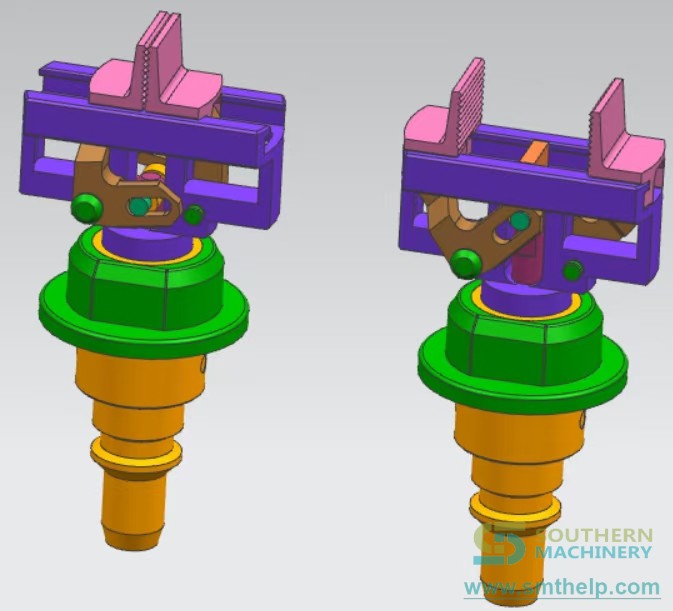
Custom SMT Nozzle and Gripper Process by Southern Machinery
Standard SMT nozzles work well for normal chips, ICs, and many common packages. Problems arise when the component is tall, heavy, uneven, sticky, fragile, or simply not shaped for a standard vacuum nozzle. In such cases, a custom SMT nozzle or gripper can bridge the gap between manual handling and stable automation.
Southern Machinery, founded in Shenzhen in 2011, supports global EMS, ODM, automotive electronics, medical electronics, industrial control, and PCB assembly teams with SMT/THT automation equipment and custom tooling. For nozzle and gripper projects, the goal is straightforward: understand the part, design the right contact method, test it, and help the customer integrate it into their production line.
What is this machine used for?
This is not a single fixed machine model. It is a custom SMT tooling solution used to pick, hold, transfer, and place components that standard SMT nozzles or grippers cannot handle reliably.
Typical use cases include odd-form components, parts that shift during pickup, components that stick to the nozzle, parts that need side gripping, and components where poor contact causes misalignment or damage. The source page describes a four-step engineering process: consultation, design and review, manufacturing, and delivery with support.
When should you consider a custom nozzle or gripper?
A custom nozzle or gripper is worth considering when the placement issue is repeatable and causing real production loss. For example, if a part regularly rotates during pickup, if the vacuum contact area is unstable, or if an operator still has to manually place a difficult component after SMT, standard tooling may be limiting your line.
It is also useful when your product mix includes odd-form parts but you still want a cleaner automated flow. The goal is not to over-engineer every component, but to solve the few component-handling problems that create defects, rework, or manual labor.
Southern Machinery's 4-step customization workflow
1. Consultation and component review
The process starts with a practical review of the customer's requirements, components, and production challenge. Southern Machinery's engineering team needs to understand what is failing today: component sticking, shifting, misalignment, damage, unstable pickup, or difficulty matching the placement machine.
Useful inputs include:
- Component datasheet
- 3D model such as a STEP file when available
- Clear photos of the component
- Current placement machine brand and model
- Short description of the problem on the line
- Target production situation and whether the process is new, upgraded, or being stabilized
2. Design and customer review
After the consultation, engineers prepare detailed 3D models and drawings for review. This step matters because the tooling must match both the component geometry and the machine interface. A technically correct nozzle that cannot fit the customer's SMT placement machine is not a usable solution.
The buyer should review pickup contact, clearance, orientation, and any risk of scratching or deforming the component. For unusual parts, this design review often clarifies the project significantly.
3. Manufacturing with precision tooling
The source page describes manufacturing using CNC machinery and suitable materials. The practical goal is repeatable geometry, stable mounting, and a tool that can survive real factory use. Final material and mechanical details should be confirmed according to the component, machine, and process requirements.
This is also where Southern Machinery's SMT/THT automation background helps. The tooling is designed not just as a standalone accessory, but to support the customer's wider PCB assembly flow.
4. Testing, delivery, and post-delivery support
Before delivery, the custom solution should be checked and tested against the intended function. After shipment, support is important because small adjustments may be needed when the tool is installed on the real machine and used with actual components.
Southern Machinery can support overseas customers with remote guidance, training, spare parts support, and line-level discussion. Final installation scope and service details should be confirmed on a project-by-project basis.
How it connects to a complete PCB assembly line
Custom nozzles and grippers usually sit within a broader SMT/THT automation strategy. They may be used on a pick-and-place machine for odd-form SMT placement, or as part of a mixed-technology line where SMT placement, THT insertion, wave/selective soldering, board handling, and inspection must work together.
A practical line may include:
- SMT loader and conveyor
- Automatic stencil printer
- Pick-and-place machine with standard and custom nozzles
- Reflow oven
- AOI inspection when quality targets require it
- THT insertion or manual assist for through-hole parts
- Wave soldering or selective soldering depending on board design
- Board handling, buffers, unloading, and optional traceability
For buyers, the key point is this: a custom nozzle should reduce a process bottleneck, not create a separate engineering island. It should fit the real board flow, the actual component mix, and the customer's future automation direction.
Key selection parameters to confirm
Before Southern Machinery can recommend the right custom nozzle or gripper design, the buyer should prepare a few details:
- Component type, size, shape, weight, and surface condition
- Whether the part can be picked by vacuum, gripped mechanically, or needs a hybrid method
- Current SMT placement machine brand and model, such as Fuji, Juki, Panasonic, Yamaha, ASM, or other platforms
- Feeder or presentation method for the component
- Current defect mode: sticking, dropping, rotation, misalignment, deformation, or low pickup rate
- Required production volume and product mix
- Board layout limitations, nearby component clearance, and placement orientation
- Quality target and inspection method
If these details are missing, it is better to pause and confirm them. Guessing the tooling shape too early can waste time.
ROI, quality, and capacity value
The value of a custom nozzle or gripper usually comes from three areas: fewer defects, less manual handling, and more stable line flow.
A well-matched tool can help reduce component shifting, misalignment, and damage. It can also eliminate a manual placement step for parts that were previously difficult to automate. The result may be better first-pass yield, faster changeover for repeat products, and lower rework or scrap cost.
However, ROI depends on the component, defect rate, labor cost, production volume, and machine compatibility. Southern Machinery can help estimate the business case after reviewing the actual component and line condition. Any payback calculation should be treated as an example until the technical data is confirmed.
Why work with Southern Machinery?
Southern Machinery is a Shenzhen-based manufacturer founded in 2011, focused on high-efficiency and cost-effective SMT/THT PCB assembly automation equipment. The company supports 237+ global customers and can provide solutions across SMT, THT, wave soldering, board handling, inspection, and custom tooling.
For custom nozzle and gripper projects, the advantage is practical integration. The discussion is not only about one tool, but about making the component feed, pickup, placement, soldering, inspection, and support plan work together.
FAQ
What information do I need to start a custom nozzle or gripper project?
Send the component datasheet, clear photos, a 3D model if available, your placement machine brand and model, and a short description of the problem you want to solve.
Can one custom nozzle fit every machine?
No. Machine interface, head structure, clearance, and control method can differ by brand and model. The design should be confirmed for the actual placement machine.
Is a custom gripper better than a vacuum nozzle?
Not always. Vacuum is simpler when the component surface allows stable pickup. A mechanical gripper is useful when the component shape, weight, or surface makes vacuum pickup unreliable.
Can this help with odd-form components?
Yes, odd-form handling is one of the most common reasons to consider custom SMT tooling. The final design depends on the component geometry and how the part is presented to the machine.
Will this guarantee zero defects?
No. A custom tool can reduce specific handling defects, but final quality also depends on feeder stability, machine setup, board design, process control, operator training, and inspection.
Can Southern Machinery support the full line, not just the nozzle?
Yes. Southern Machinery can discuss the wider PCB assembly line, including SMT, THT insertion, wave/selective soldering, board handling, inspection, and traceability options.
CTA: send your component and machine details
If you have a component that is difficult to pick, grip, or place, send Southern Machinery the component photos, datasheet, machine model, and a short note about the current problem. Our team can review whether a custom SMT nozzle or gripper is the right solution and how it should connect with your complete PCB assembly process.
Comments