
Custom SMT Nozzle and Gripper Projects by Southern Machinery
Custom SMT nozzles and grippers help EMS factories handle parts that standard tooling cannot pick, hold, or place reliably. Southern Machinery supports precision automation projects for SMT and mixed PCB assembly lines, helping manufacturers reduce manual intervention, stabilize handling quality, and connect special tooling into a practical production workflow. This buyer guide explains what custom nozzle and gripper projects are used for, how they fit into a complete PCB assembly line, which selection details should be confirmed before engineering, and how to evaluate the value of a customized automation project without relying on unverified speed, ROI, or yield claims.
Jul 28, 2026 · Updated Jul 28, 2026 · Southern Machinery
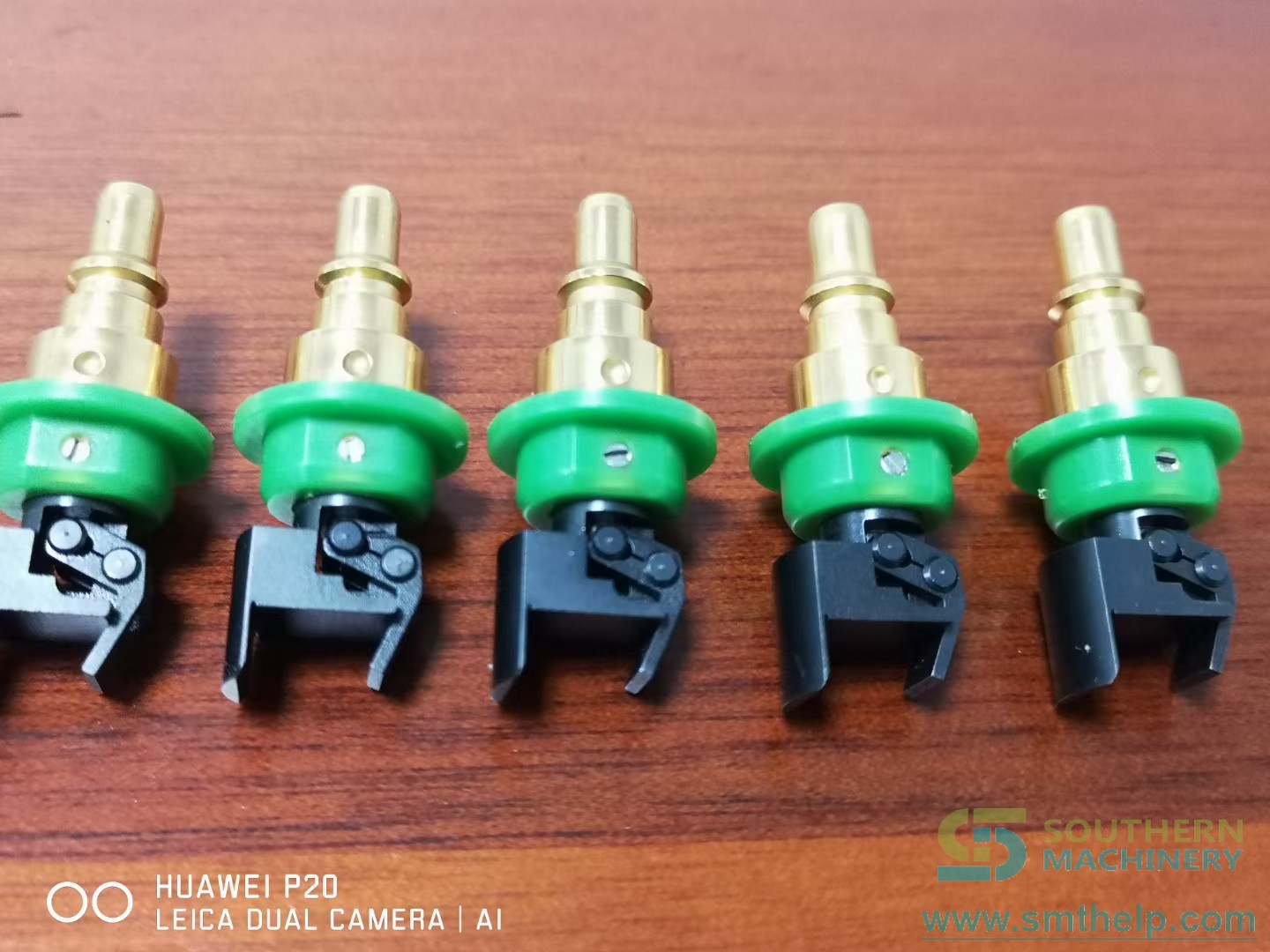
Custom SMT Nozzle and Gripper Projects by Southern Machinery
For many SMT and mixed-technology PCB assembly lines, the real bottleneck is not always the placement machine itself. The bottleneck is often the interface between the component and the machine: the nozzle, gripper, or custom holding method that decides whether a part can be picked, transported, aligned, and placed with repeatable control.
Southern Machinery uses custom SMT nozzle and gripper projects to support precision automation in practical factory conditions. The goal is simple: help EMS, ODM, automotive electronics, medical electronics, industrial control, lighting, and power electronics manufacturers move difficult component handling away from manual work and into a more stable, production-ready assembly process.
Southern Machinery was founded in Shenzhen, China in 2011. The company focuses on SMT and THT PCB assembly automation equipment and serves 237+ global customers with high-efficiency, cost-effective equipment, global service, spare parts support, and professional training. Custom nozzle and gripper work is normally evaluated as part of a broader line solution, not as an isolated accessory.
What is this machine used for?
A custom SMT nozzle or gripper project is used when a standard pick-and-place nozzle cannot reliably handle a component or assembly task.
Typical cases include odd-shaped parts, parts with limited vacuum contact area, components that need mechanical gripping, parts with unstable orientation, and assemblies where the customer wants to reduce manual placement. The source concept for this page is Southern Machinery's custom SMT nozzle and gripper visual: a precision automation offer built around enhancing assembly line efficiency and starting a custom project around the customer's real component.
In practical terms, the nozzle or gripper is the bridge between the component's physical geometry and the automation process. If the bridge is wrong, the line may suffer from mis-picks, dropped parts, unstable placement, rework, or continued dependence on manual operators. If it is engineered correctly, it can make a difficult product more suitable for repeatable automated production.
Why standard nozzles are not always enough
Standard SMT nozzles are designed for common package types and predictable surfaces. They are efficient when the part has a stable pick surface, reasonable flatness, and enough vacuum contact area. Many real production parts do not behave this neatly.
A custom project becomes relevant when the part has one or more of these problems:
- The available pick area is too small or uneven for a standard vacuum nozzle.
- The component has an irregular body, tall feature, pin, clip, connector, wire form, or mechanical feature.
- The part may rotate or tilt during transfer.
- The required placement angle or seating condition is sensitive.
- Manual handling is slowing down the SMT or THT process.
- The production team wants a more stable interface between feeder, placement, inspection, and downstream soldering.
The first-principles issue is mechanical contact and control. A placement machine cannot place a part more reliably than the tooling can hold and release it. Before discussing automation benefits, the component's geometry, surface, center of gravity, feeding method, and placement requirement must be understood.
Typical application scenarios
Custom nozzle and gripper work is commonly considered for mixed PCB assembly environments where standard SMT tooling does not cover every part type. These projects can support:
- Odd-form component placement in SMT or hybrid assembly lines.
- Connector, terminal, jumper wire, or mechanical part handling where a simple vacuum cup is not enough.
- Specialized component feeding projects that need matching pick tooling.
- Retrofitting an existing assembly line to reduce manual steps.
- Engineering trials for new products before a broader automation investment.
- Production cells where consistency matters more than simply adding labor.
This does not mean every unusual component should immediately become a custom automation project. Some low-volume products may still be better handled manually. The decision depends on repeat volume, defect cost, operator workload, product lifetime, and whether the component design is stable enough to justify tooling work.
How custom tooling fits into a complete PCB assembly line
Southern Machinery evaluates custom nozzle and gripper projects in the context of the whole PCB assembly process. The tooling must work with the upstream feeding method, the placement action, board handling, inspection strategy, and downstream process.
A typical complete line discussion may include:
SMT section
For SMT production, the customized nozzle or gripper must match the placement machine environment and the component feeding method. The engineering question is not only whether the tool can pick the part once, but whether it can do so repeatedly under production conditions.
Relevant checks include component orientation, pick height, release behavior, placement clearance, and whether the part creates any collision risk around nearby components.
THT section
In mixed SMT and THT production, custom tooling may also connect with radial insertion, axial insertion, terminal insertion, odd-form insertion, or assisted manual insertion workflows. The right solution may be a feeder, a nozzle, a gripper, an insertion head, or a combination of equipment depending on the component.
Wave or selective soldering
If the component is through-hole or mechanically inserted, the tooling decision should also respect downstream soldering. Lead shape, component seating, board support, and thermal process requirements may affect the final automation concept.
Board handling
Board handling equipment such as loaders, unloaders, conveyors, buffers, PCB inverters, and NG/OK sorting can be added depending on the factory layout. For a custom project, stable board positioning is as important as stable component handling.
Inspection and traceability
Inspection and traceability may include AOI, SPI, barcode tracking, MES connection, or process records depending on the factory's quality requirements. A custom nozzle or gripper project should not be evaluated only by whether it moves a part. It should be evaluated by whether the whole process becomes easier to control.
Key selection parameters to confirm
Before Southern Machinery can judge whether a custom SMT nozzle or gripper project is suitable, the engineering team should confirm these details:
- Component photos, drawings, and dimensions.
- Component material, surface finish, and available pick areas.
- Weight, center of gravity, and any fragile features.
- Feeding format, such as tape, tray, tube, bulk, stick, or custom feeder.
- Required placement orientation and tolerance expectation.
- PCB layout around the placement area and nearby component clearance.
- Current machine brand/model or planned line configuration.
- Current pain point: mis-pick, drop, tilt, manual labor, slow cycle, rework, or unstable quality.
- Target production volume and shifts.
- Inspection and downstream process requirements.
These inputs matter because custom tooling is not a generic catalog item. The correct design depends on the actual component and production environment.
ROI, quality, and production value
The value of a custom SMT nozzle or gripper project usually comes from three places: fewer manual operations, more stable handling, and better line integration.
For ROI, the responsible way to evaluate the project is to compare the current manual or unstable process against the proposed automated process. Useful inputs include operator time, defect or rework cost, expected production volume, product lifetime, machine availability, and the cost of keeping a manual station in the line.
Any payback example should be treated as an example only. Final ROI depends on the customer's PCB, component, production schedule, current labor cost, defect rate, and selected machine configuration. Southern Machinery can help prepare a configuration suggestion after reviewing the component and line data, but final technical confirmation is required before making performance commitments.
Why work with Southern Machinery
Southern Machinery's advantage is not only selling one accessory. The company can connect custom tooling with SMT, THT, wave soldering, board handling, inspection, and traceability equipment. That matters because many automation problems fail at the interfaces between machines, not inside one machine.
For global EMS and electronics manufacturers, the practical benefit is a more complete discussion: what component needs to be handled, how it should be fed, where it should be placed, how the PCB moves through the line, how quality is checked, and what support is needed after delivery.
FAQ
Can every special component be automated with a custom nozzle or gripper?
No. Some parts are technically possible but not commercially sensible. The component geometry, production volume, defect cost, and process stability must be reviewed before choosing automation.
Is a custom gripper better than a vacuum nozzle?
Not always. A vacuum nozzle is simpler when the part has a reliable pick surface. A gripper may be better when mechanical holding is needed. The correct choice depends on the component.
What information should I send for evaluation?
Send component photos, drawings, sample dimensions, feeding method, PCB placement position, current machine model, current process issue, and target production volume.
Can this be connected with a complete SMT or THT line?
Yes. Southern Machinery can evaluate custom tooling as part of SMT placement, THT insertion, wave soldering, board handling, inspection, and traceability line planning.
Can Southern Machinery guarantee ROI before testing?
No responsible supplier should guarantee ROI before reviewing the component and process data. ROI depends on the actual line, labor situation, quality cost, production volume, and selected configuration.
Is this only for new factories?
No. Custom nozzle and gripper projects can support both new line planning and existing line improvement, depending on machine compatibility and process requirements.
CTA: start a custom project with real component data
If your assembly line still depends on manual placement for unusual SMT or mixed-technology components, send Southern Machinery your component photos, drawings, feeding method, PCB placement area, and target production volume.
Our team can review whether a custom SMT nozzle, gripper, feeder, or broader PCB assembly automation configuration is the right path for your factory.
Comments