
Custom SMT Nozzle and Gripper Engineering Process by Southern Machinery
Custom SMT nozzles and grippers help EMS factories automate difficult components that standard vacuum nozzles cannot handle consistently. This guide explains Southern Machinery's engineering process from component review
Jul 2, 2026 · Updated Jul 2, 2026 · Southern Machinery
Custom SMT Nozzle and Gripper Engineering Process by Southern Machinery
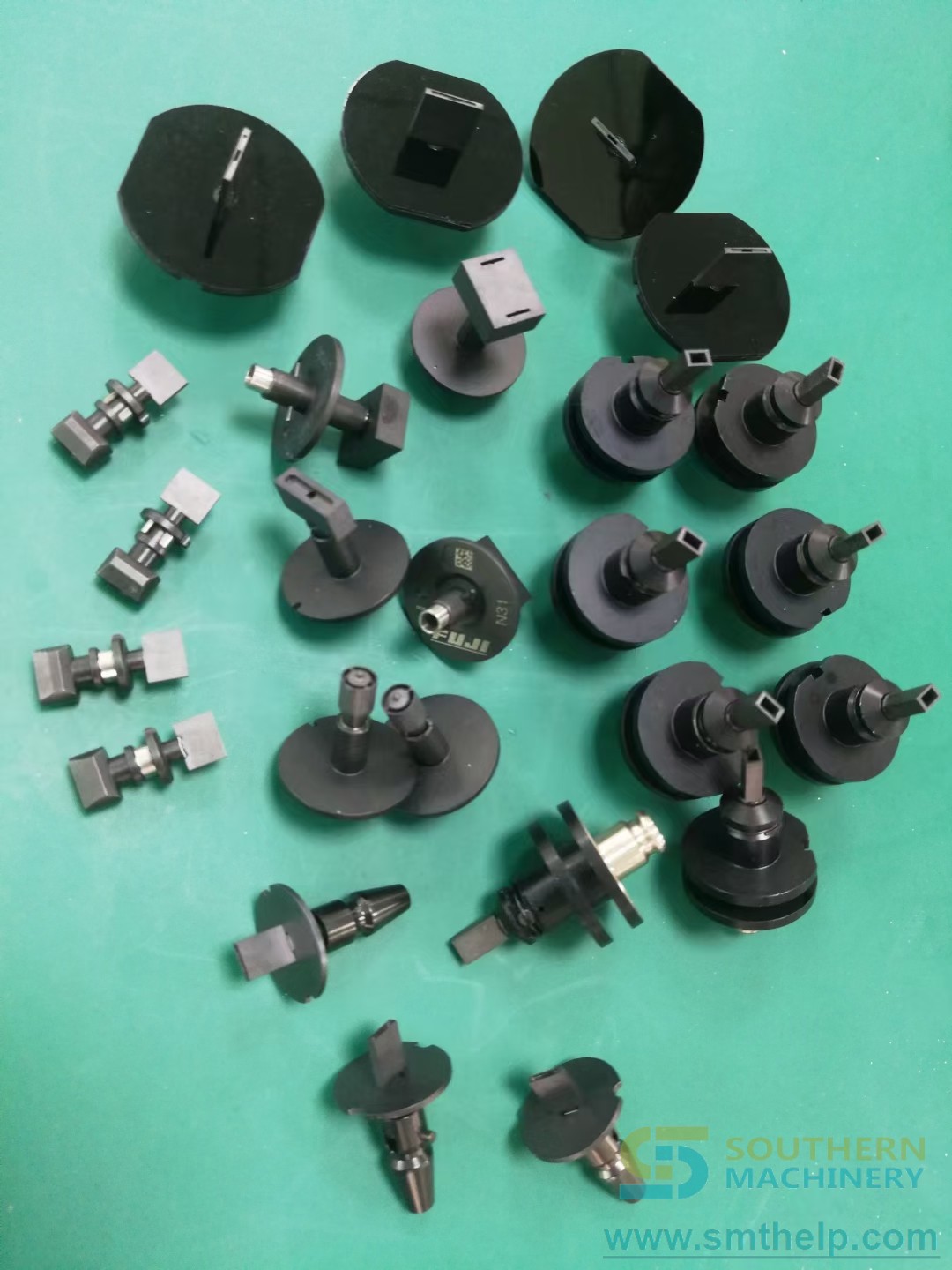
When an EMS factory struggles with odd-form, fragile, tall, heavy, or irregular components, the bottleneck is not always the pick-and-place machine itself. Very often, the weak point is the interface between the component, the feeder, and the placement head. A standard nozzle may pick well on simple chips, but it can fail on connectors, shields, coils, sensors, switches, terminals, and other components with unusual geometry.
Southern Machinery, founded in Shenzhen in 2011, supports SMT and THT PCB assembly automation with cost-effective equipment, feeder solutions, board handling, inspection integration, wave/selective soldering support, and custom tooling. Our custom SMT nozzle and gripper process is designed for factories that want to turn a difficult manual placement step into a controlled automated process.
What is this machine used for?
This is not a standalone production machine. A custom SMT nozzle or gripper is an engineered tooling solution used on a pick-and-place machine or odd-form automation cell to pick, hold, move, and place components that are difficult for standard nozzles to handle.
In practical terms, it helps automate components that would otherwise require manual placement, manual correction, or a slow special process. Depending on the component and machine platform, the custom solution may use vacuum pickup, mechanical gripping, shaped contact surfaces, anti-scratch materials, or a special geometry that improves component stability during movement and placement.
Why standard nozzles are not always enough
Standard nozzles work well when the component has a flat, predictable pickup surface and stable center of gravity. Problems start when the component has an uneven top surface, a soft body, a high center of gravity, pins that can bend, a reflective surface, or a shape that shifts during acceleration.
Typical symptoms include:
- Low pickup rate from the feeder or tray
- Component rotation during movement
- Misalignment at placement
- Scratched or damaged surfaces
- Dropped parts before placement
- Manual rework after automated placement
- Slow cycle time because operators need to compensate for unstable handling
For high-mix EMS factories, these issues can quietly consume engineering time. The component may be technically placeable, but not stable enough for repeatable production. That is where a custom nozzle or gripper becomes useful.
Southern Machinery's customization workflow
1. Consultation and needs analysis
The process starts with a clear review of the component, the SMT machine model, the feeder method, production goals, and the failure mode. For example, the issue may be pickup failure, body damage, pin deformation, low placement repeatability, or poor compatibility with the current nozzle library.
The most useful input from the buyer includes:
- Component datasheet or drawing
- 3D model if available
- Photos or videos of the current handling problem
- SMT machine brand and model
- Feeder type: tape, tube, tray, stick, bowl, belt, or custom feeder
- Target output and acceptable defect level
- PCB layout area and placement constraints
This stage prevents guesswork. A custom tool should solve the real production issue, not just look mechanically impressive.
2. Engineering and 3D design
After the component and machine interface are understood, Southern Machinery engineers create a tooling concept and 3D design. The design focuses on pickup surface, contact area, clearance, material choice, weight, mounting interface, and compatibility with the machine head.
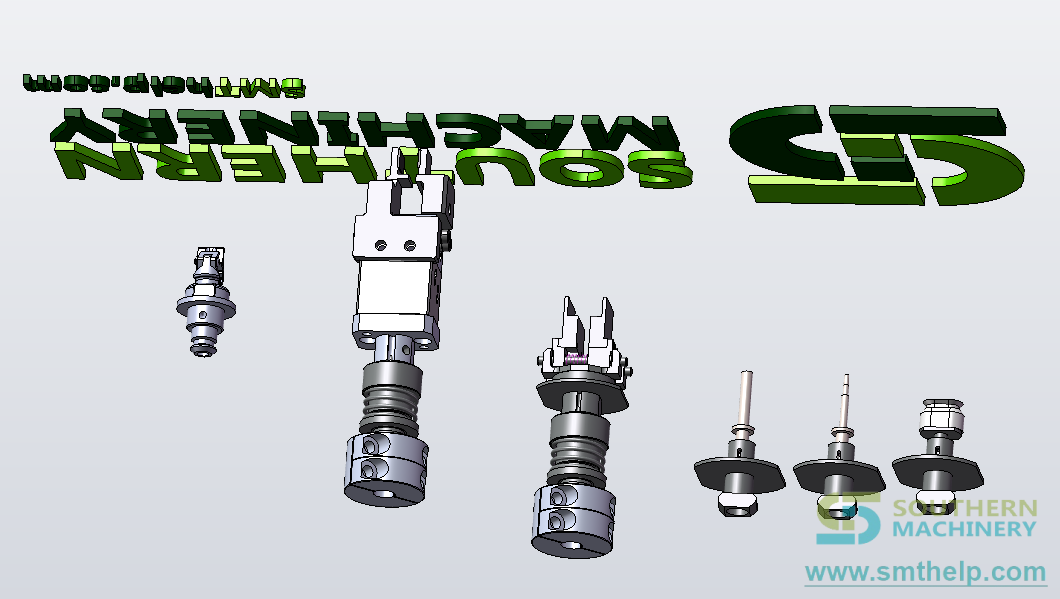
For vacuum nozzles, the key is stable suction without damaging the component. For grippers, the key is holding force, release control, clearance, and repeatability. In both cases, the design must match the component and the actual machine movement, not only the static drawing.
3. Precision manufacturing
Once the design is approved, the custom part moves into manufacturing. The source page notes the use of precision manufacturing methods and materials such as diamond steel and ceramic where appropriate. The exact material and structure should be selected according to the component surface, wear requirement, machine interface, and expected production environment.
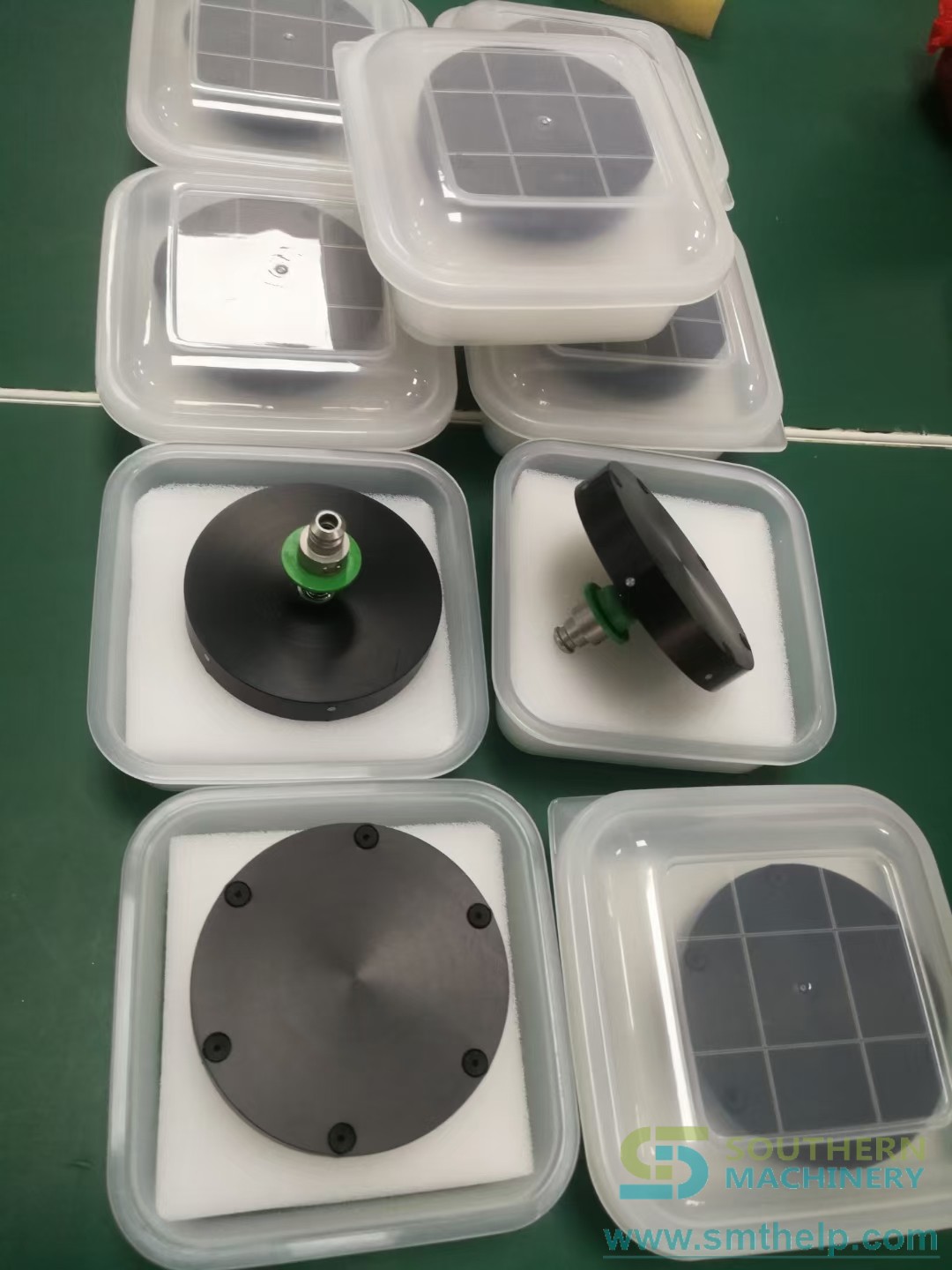
For purchasing teams, this step matters because a custom nozzle is not just a small metal part. If the contact surface, tolerance, weight, or mounting detail is wrong, the factory may still face pickup instability or placement drift.
4. Quality checking and delivery
Before delivery, the custom part should be checked against the approved drawing and intended use. The goal is to confirm physical dimensions, surface finish, mounting fit, and basic readiness before the customer runs production trials.
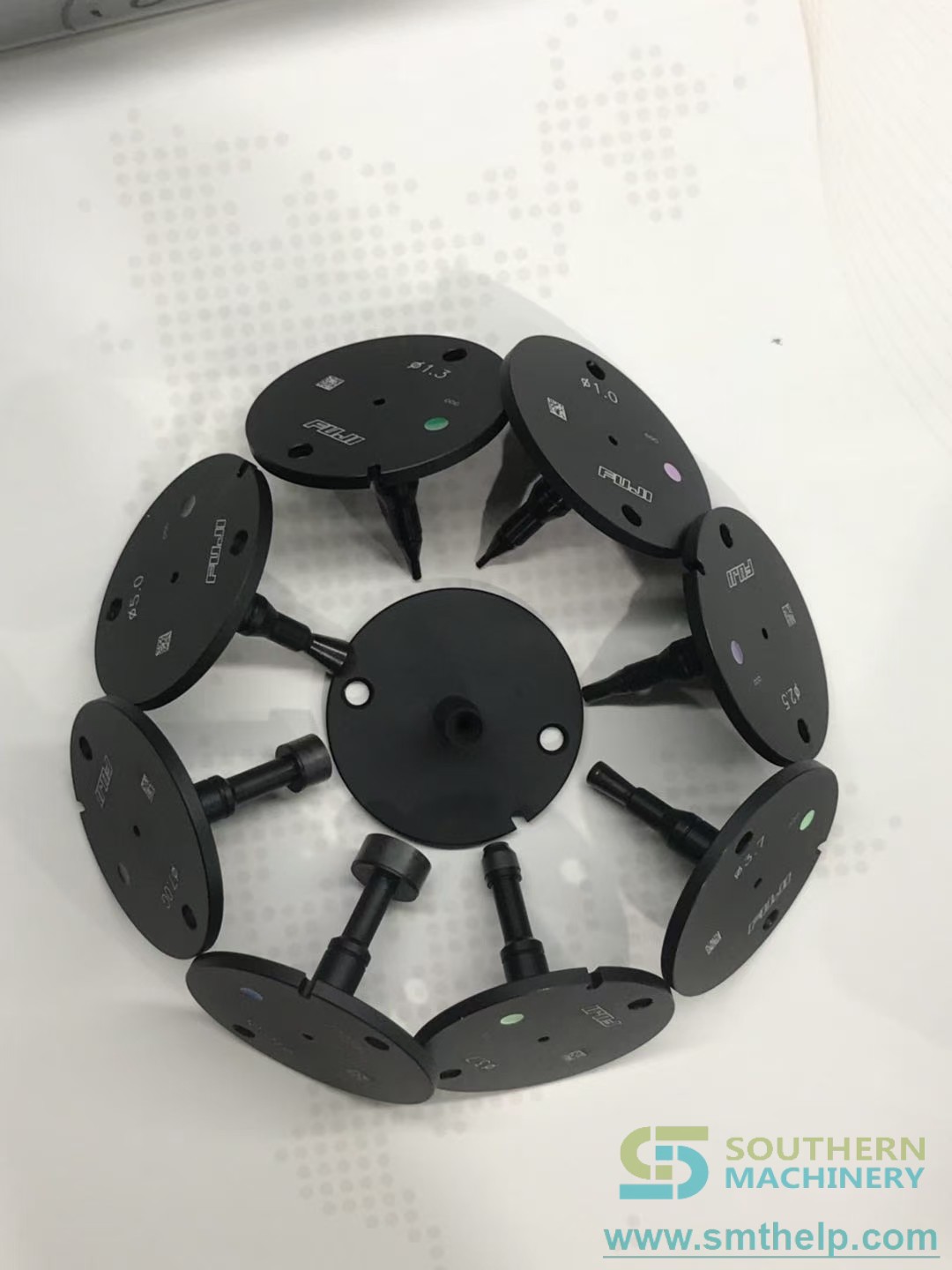
Southern Machinery can support global buyers with engineering discussion, delivery support, spare parts planning, remote support, and professional training as part of a wider SMT/THT automation project.
Typical applications
Custom SMT nozzles and grippers are commonly used when a factory wants to automate parts such as:
- Connectors and sockets
- Shields, covers, and metal frames
- Coils, transformers, relays, and sensors
- Terminals and special through-hole parts handled in an SMT-style cell
- Components supplied by tube, tray, stick, bowl, belt, or custom feeder
- Fragile or cosmetic parts where surface damage is unacceptable
- Tall or heavy components that shift during transfer
For example, if a connector is still being placed by hand after SMT because a standard nozzle cannot hold it reliably, the factory may lose the benefit of inline automation. A custom gripper plus the right feeder can move that step closer to a controlled automatic process.
How it connects to a complete PCB assembly line
A custom nozzle or gripper is most valuable when it is considered as part of the full assembly flow, not as an isolated accessory. Southern Machinery can help buyers review where the tooling fits into the complete line:
SMT section
The tooling may be used on a pick-and-place machine after solder paste printing and before reflow. It should match the feeder, placement head, vision recognition, board support, and nozzle exchange method.
THT and odd-form section
For mixed-technology boards, custom gripping may support odd-form insertion or pre-insertion handling. It can work alongside radial insertion, axial insertion, terminal feeding, jumper wire feeding, or a dedicated odd-form insertion process when the component mix justifies automation.
Board handling
Stable board transfer matters. Loaders, unloaders, conveyors, buffers, inverters, and NG/OK handling can help keep the line moving while special components are placed or inserted.
Inspection and traceability
AOI, SPI, barcode scanning, and MES connection may be added depending on the customer's quality target. For difficult components, it is often useful to confirm not only pickup success but also final placement quality after reflow or downstream soldering.
Key selection parameters
Before Southern Machinery can confirm the best custom tooling approach, buyers should prepare these details:
- Component drawing, datasheet, or 3D model
- Actual sample components if possible
- SMT machine brand, model, nozzle interface, and head type
- Feeder method and component supply format
- Pickup surface and acceptable contact area
- Component weight, height, center of gravity, and fragile zones
- Placement accuracy requirement and quality target
- PCB layout constraints and nearby component clearance
- Current failure mode and photos/videos of the issue
- Target volume, shifts, and expected future product changes
Without this information, any claim about performance, speed, or ROI would be only a rough assumption. The right process is to confirm the component first, then design the tool and test the handling method.
ROI, quality, and capacity value
The ROI of custom SMT tooling usually comes from several small improvements that add up:
- Less manual placement for difficult components
- Fewer pickup failures and machine stops
- Reduced component damage and scrap
- More stable placement quality
- Less rework and manual correction
- Better use of existing SMT or odd-form equipment
- A clearer path from semi-automatic handling to inline automation
The exact payback depends on labor cost, defect cost, part price, line speed, product mix, and how often the difficult component appears in production. Southern Machinery can help estimate this only after reviewing the real component and line data.
Why work with Southern Machinery
Southern Machinery is a Shenzhen-based manufacturer founded in 2011, focused on SMT and THT PCB assembly automation equipment. We support 237+ global customers with practical, cost-effective equipment and engineering support.
Our value is not only the custom tool itself. We can connect the tooling decision with the wider automation plan, including SMT equipment, THT insertion, wave soldering, board handling, inspection, spare parts support, and operator training. That matters for EMS factories that want a solution that can scale beyond one component problem.
FAQ
What is this machine used for?
A custom SMT nozzle or gripper is used to pick, hold, and place components that standard nozzles cannot handle reliably. It is usually installed on a pick-and-place machine or special automation cell.
Is a custom nozzle better than a standard nozzle?
Only when the component requires it. If a standard nozzle gives stable pickup and placement, it may be enough. Custom tooling makes sense when the component shape, surface, weight, or fragility causes repeatability problems.
What information do I need to start a custom project?
Send the component datasheet or drawing, machine model, feeder method, current problem, target output, and any photos or videos of pickup or placement failure. A 3D model and sample components are helpful when available.
Can Southern Machinery support both SMT and THT automation?
Yes. Southern Machinery provides SMT and THT automation equipment and can help connect custom tooling with feeders, insertion machines, board handling, wave/selective soldering, inspection, and full-line planning.
Can performance be guaranteed before testing?
No serious supplier should guarantee final performance without reviewing the actual component, machine, feeder, and process. Southern Machinery can propose a design direction first, then confirm details through engineering review and testing.
Does this replace the need for AOI or process inspection?
No. Custom tooling improves handling stability, but inspection is still important for quality control. For demanding products, AOI, SPI, barcode traceability, and process checks may still be needed.
CTA: Send your difficult component for review
If your SMT or mixed-technology line still depends on manual placement for one difficult component, send Southern Machinery the component drawing, machine model, feeder method, and current failure mode. We can review whether a custom nozzle, gripper, feeder, or wider SMT/THT automation solution is the right next step.
Southern Machinery can help you move from isolated manual fixes to a more stable, high-efficiency, cost-effective PCB assembly line with global service, spare parts support, and professional training.
Comments