
Custom SMT Nozzle and Gripper Buyer Guide by Southern Machinery
Standard SMT nozzles are often the wrong interface for odd-form, fragile, tall, or asymmetrical components. This guide explains how custom SMT nozzles and grippers from Southern Machinery help EMS and OEM factories reduce manual handling, stabilize component pick-and-place, and connect difficult components into a complete PCB assembly automation line. Based on the source email template, the focus is practical: when to consider custom tooling, what engineering data to prepare, how the tooling supports yield and throughput, and how Southern Machinery can support SMT, THT, wave soldering, board handling, and inspection projects from Shenzhen for global customers.
Jul 24, 2026 · Updated Jul 24, 2026 · Southern Machinery
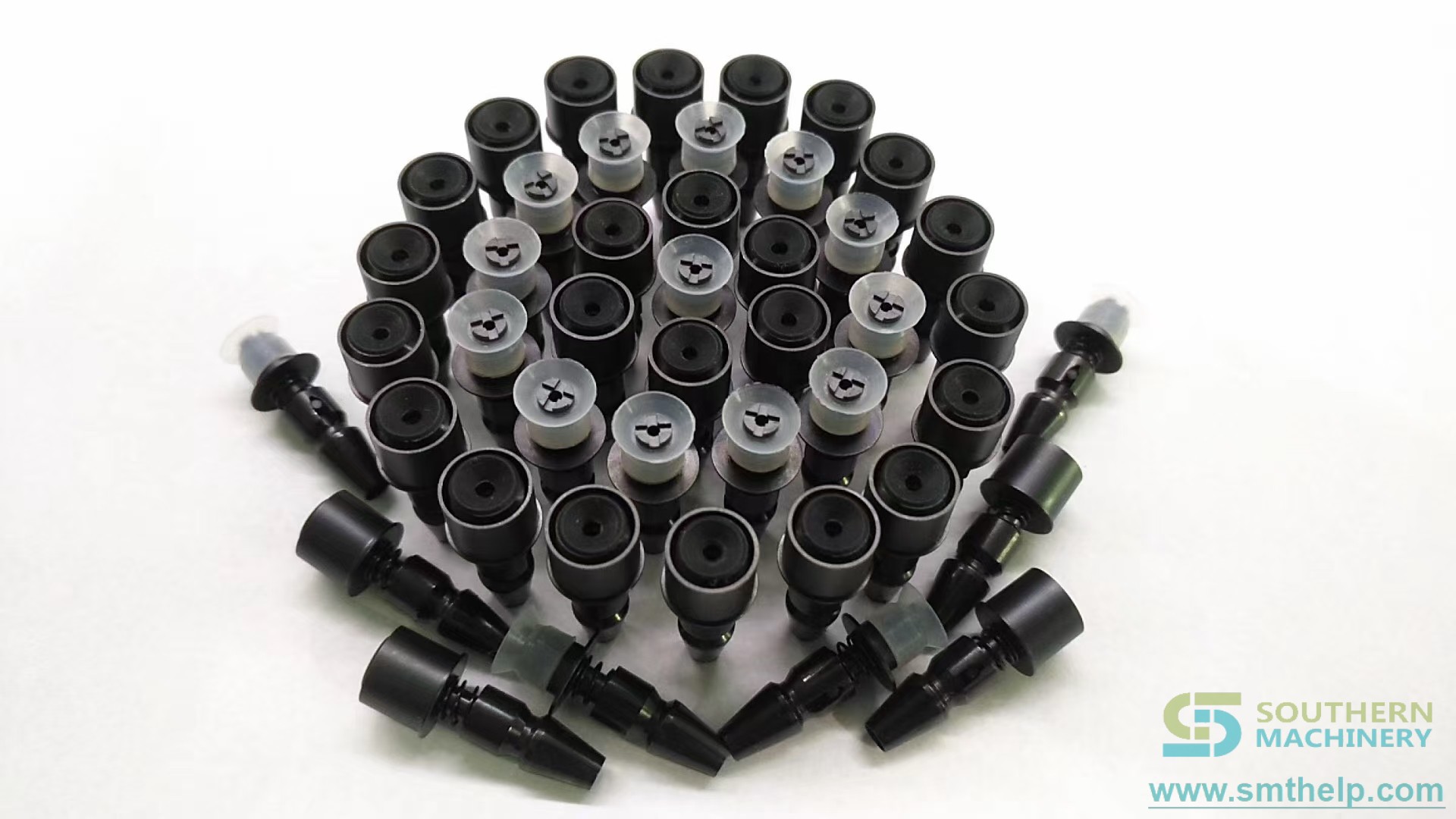
Custom SMT Nozzle and Gripper Buyer Guide by Southern Machinery
Standard SMT nozzles work well when the component body is predictable, the pick surface is clean, and the placement process has enough margin. The problem starts when an EMS or OEM line needs to handle odd-form parts, unusual connectors, delicate components, jumper-wire parts, or components that cannot be picked reliably with a standard vacuum nozzle.
The source document for this article is a Southern Machinery cold email template focused on custom SMT nozzles and grippers. Rewritten as a buyer guide, the core message is simple: when standard tooling creates production bottlenecks, the tooling interface should be engineered around the component, not forced to fit a generic nozzle.
What is this machine used for?
A custom SMT nozzle or gripper is used to pick, hold, transfer, and place components that are difficult for standard SMT tooling to handle consistently. It is not a standalone machine by itself; it is a precision tooling solution that supports an SMT mounter, odd-form placement process, or a customized automation station.
In practical PCB assembly, this tooling is used when factories need to automate complex placements that would otherwise require manual intervention, slow the SMT line, or create defects and rework. The source document specifically positions Southern Machinery custom SMT nozzles and grippers as high-performance tooling built to customer specifications for unique or odd-form components.
Why standard nozzles become a bottleneck
From first principles, a placement tool has only one job: create stable control over the component during pick, movement, vision correction, and placement. If the component shape, center of gravity, surface texture, or pick area does not match the nozzle, the process becomes unstable.
That instability usually appears as missed picks, component rotation, placement shift, slower speed settings, extra operator checks, or downstream rework. The source document frames the same problem in sales terms: standard SMT nozzles can create bottlenecks when handling unique or odd-form components.
A custom nozzle or gripper changes the contact geometry so the automation process has a better mechanical interface with the actual component. For difficult parts, this can be more valuable than simply slowing down the machine and hoping the standard tooling becomes reliable enough.
Typical applications
Custom SMT nozzles and grippers are most relevant for products with a higher mix of non-standard components, including industrial control boards, power electronics, automotive electronics, medical electronics, LED control products, and mixed-technology PCB assemblies.
Typical use cases include:
- Odd-form components that do not have a clean vacuum pick surface.
- Connectors, terminals, or bulky parts that need mechanical gripping support.
- Delicate components where contact position must be controlled carefully.
- Components that are currently placed by hand because standard SMT tooling is unreliable.
- Lines where difficult components are limiting throughput even when the main mounter has available capacity.
How custom tooling connects into a complete PCB assembly line
Custom nozzle and gripper work should not be treated as an isolated accessory decision. It affects the full automation plan.
In an SMT line, the custom tooling may support the pick-and-place process after solder paste printing and before reflow. For mixed SMT/THT products, it may be part of a broader plan that also includes THT insertion, feeder customization, board handling, wave soldering or selective soldering, inspection, and traceability.
Southern Machinery was founded in Shenzhen, China in 2011, serves 237+ global customers, and focuses on SMT/THT PCB assembly automation equipment. For global EMS and manufacturing teams, the practical value is that custom tooling can be discussed together with the line configuration: SMT placement, THT insertion, wave soldering, board handling, inspection, spare parts support, and operator training.

Key selection parameters to confirm
Before engineering a custom SMT nozzle or gripper, the buyer should prepare real production data instead of relying on a generic catalog request. The most important inputs are:
- Component photos, drawings, package dimensions, and weight.
- Pick surface condition, available vacuum area, and mechanical gripping points.
- Required placement orientation and clearance around neighboring parts.
- Current mounter brand/model and feeder condition.
- Existing defect symptoms: missed pick, dropped component, rotation, offset, damage, or slow cycle time.
- Target production mode: high-mix/low-volume, medium-volume, or high-volume.
- Whether the solution must integrate with SMT placement only or with a larger SMT/THT automation cell.
The source document mentions exact-specification engineering. In practice, that means the tooling decision should be based on the real component and process window, then confirmed through technical review.
ROI, quality, and capacity value
The source document highlights three business outcomes: higher yield, faster throughput, and lower cost. These are directionally correct, but the exact value depends on the component, line speed, operator workload, defect rate, and final machine configuration.
The strongest ROI case appears when a difficult component is currently causing repeated manual handling or rework. In that situation, a better nozzle or gripper can reduce waste, stabilize the process, and make the line less dependent on operator adjustment.
For capacity, the value is not only maximum CPH. The real question is whether the difficult component stops limiting the complete line. A custom tool that enables stable automated placement can help the factory keep the rest of the SMT process moving with fewer interruptions.
For quality, the practical benefit is repeatability. A tool designed around the component can reduce the chance of unstable pick, rotation, and poor placement. Final performance still needs to be confirmed with the actual component, mounter, feeder, PCB, and process settings.
When a gripper is better than a nozzle
A vacuum nozzle depends on a usable sealing surface. If the component has holes, uneven geometry, high mass, unstable balance, or a surface that does not seal reliably, a mechanical gripper may be the more robust option.
A gripper can hold the component from selected mechanical points, which can be useful for odd-form parts and components where vacuum alone is not enough. The source document groups nozzles and grippers together because both solve the same underlying problem: creating a stable interface between the part and the automation system.

FAQ
Can a custom SMT nozzle fit any mounter brand?
It may be possible depending on the mounter interface, component, and mechanical limits. The mounter brand/model should be confirmed before design work starts.
Is this only for SMT placement?
No. The same engineering logic can support odd-form automation and mixed SMT/THT assembly planning, especially when the component is difficult to feed, pick, or place.
What information should I send first?
Send the component drawing or datasheet, clear photos, current machine model, PCB placement position, defect symptoms, and target production volume.
Will custom tooling automatically increase CPH?
Not automatically. The source document positions custom tooling as a way to automate complex placements and maximize practical throughput, but final output depends on the machine, feeder, component, PCB, and process settings.
Can Southern Machinery help with the complete line, not only the nozzle?
Yes. Southern Machinery focuses on SMT/THT PCB assembly automation equipment and can discuss SMT placement, THT insertion, wave soldering, board handling, inspection, line integration, spare parts support, and professional training.
How should an EMS factory evaluate the project?
Start with the bottleneck. If the difficult component is causing manual intervention, defects, rework, or speed reduction, custom tooling is worth a technical review.
CTA: send your difficult component for review
If a standard nozzle is limiting your assembly process, send Southern Machinery the component drawing, photos, mounter model, and current defect symptoms. Our team can review whether a custom SMT nozzle, custom gripper, feeder adjustment, or broader line integration plan is the right next step.
Southern Machinery supports global EMS, ODM, automotive electronics, medical electronics, industrial control, and power electronics manufacturers with high-efficiency and cost-effective PCB assembly automation solutions.
Comments