
Custom SMT Nozzles and Grippers for Odd-Form Assembly: Practical Benefits from Southern Machinery
Custom SMT nozzles and grippers enable EMS factories to automate odd-form component handling without resorting to manual placement and rework. For parts that are difficult to pick, prone to tilting, or sensitive to press
Jul 5, 2026 · Updated Jul 5, 2026 · Southern Machinery
Custom SMT Nozzles and Grippers for Odd-Form Assembly: Practical Benefits from Southern Machinery
Odd-form components are often the small problem that slows down the entire PCB assembly line. A standard SMT nozzle may work well for normal chips and ICs, but it struggles with parts that are tall, heavy, asymmetric, fragile, or supplied in non-standard packaging.
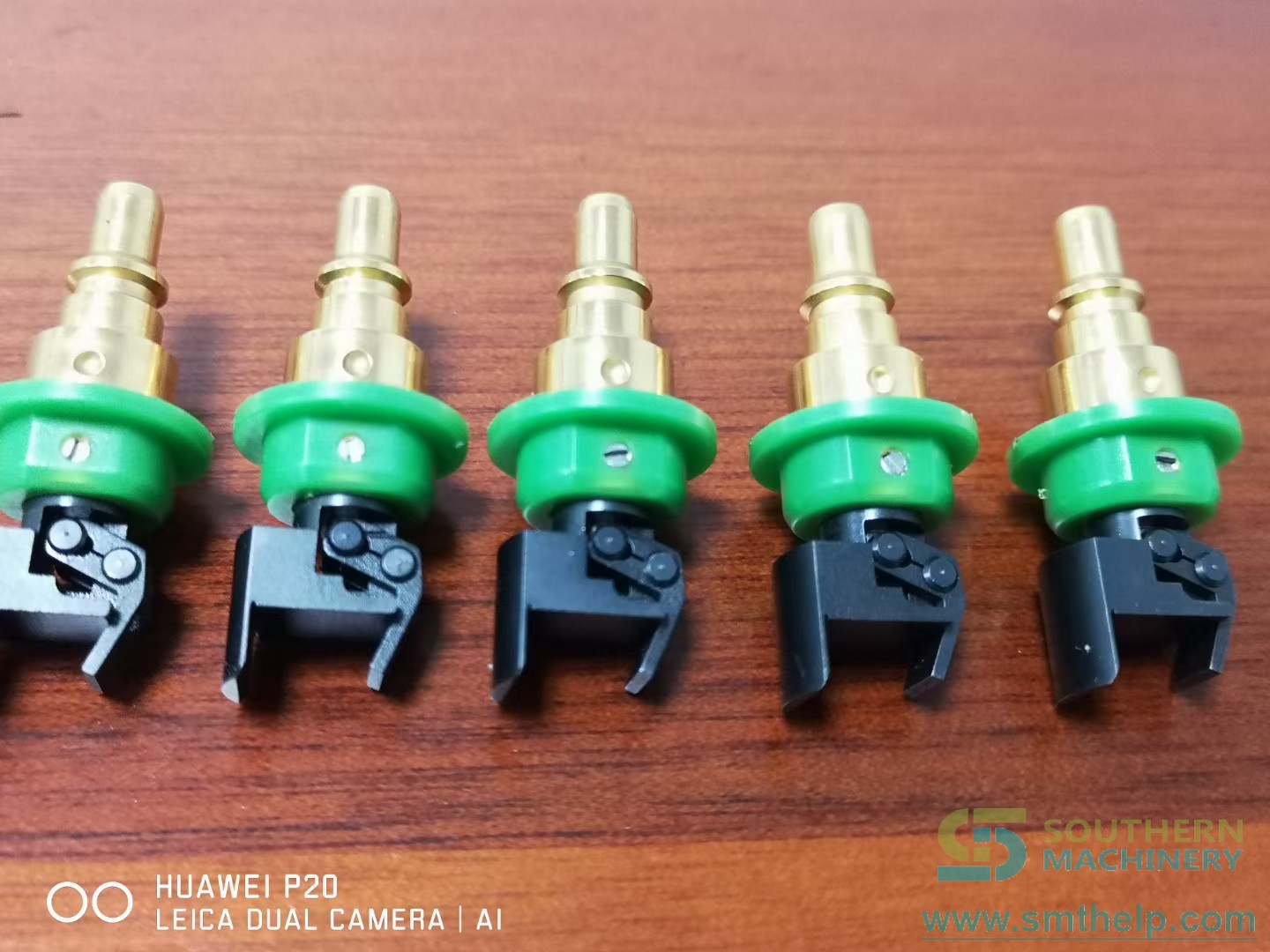
For EMS, ODM, automotive electronics, medical electronics, industrial control, and power supply manufacturers, custom SMT nozzles and grippers become practical production tools. Southern Machinery designs customized handling solutions so difficult components can be picked, held, placed, and released with greater stability.
What are these tools used for?
Custom SMT nozzles and grippers help SMT placement machines handle components that standard vacuum nozzles cannot reliably pick or place.
Typical use cases include:
- Odd-form connectors, terminals, jumpers, clips, shields, sockets, and mechanical parts
- Components with uneven surfaces or limited vacuum area
- Heavy or tall parts that shift during acceleration
- Fragile parts that need controlled contact pressure
- Parts that require a gripper instead of a simple vacuum pickup
- Mixed SMT/THT products where one difficult component creates a manual bottleneck
In plain language: the goal is to make a hard-to-handle part behave like a normal automated placement part.
Why standard nozzles are not always enough
A standard nozzle is designed for common component shapes. It relies on a stable vacuum seal, a predictable center of gravity, and repeatable pickup geometry. Odd-form parts often break one or more of these assumptions.
When the nozzle does not match the part, factories may see:
- Component shift during pickup or travel
- Misalignment at placement
- Part drop or failed pickup alarms
- Surface marks or component damage
- Slower placement programs to compensate for unstable handling
- Extra manual inspection and rework after placement
A custom nozzle or gripper is not just a small accessory. For the right product, it directly affects yield, line speed, and whether the process can remain automated.
Core benefits for EMS factories
1. Higher placement stability
A purpose-built nozzle contacts the component in the right location and supports its geometry. This helps reduce shifting, tilting, and unexpected release problems.
For parts with unusual shapes or limited pickup areas, Southern Machinery can review the component and recommend whether vacuum pickup, mechanical gripping, or a combined approach is more suitable.
2. Better quality control
Stable handling reduces the chance of component damage and misplacement. This matters most in products where the connector, terminal, or mechanical component carries load, current, or user interaction.
This does not eliminate the need for AOI, visual inspection, or process control. It gives the line a better starting point by reducing handling-related defects.
3. Higher throughput potential
When operators manually place odd-form parts, the full line speed is often limited by labor, fatigue, and rework. A custom nozzle or gripper can help bring those parts back into the automated SMT process.
Any throughput gain depends on the component, feeder method, machine model, placement program, and inspection requirements. Southern Machinery treats speed claims as project-specific and confirms them after reviewing the actual part and line setup.
4. Lower total operating cost
The value is not just the tooling cost. The real calculation includes manual labor, rework, rejected boards, downtime, and the opportunity cost of running a slower line.
A practical ROI discussion should compare:
- Current manual placement time
- Current defect or rework rate related to the component
- Placement machine compatibility
- Expected product life and monthly volume
- Tooling cost and maintenance needs
Example ROI numbers should always be treated as illustrative and subject to final technical confirmation.
5. Expanded manufacturing capability
Custom tooling helps factories accept more complex PCB assembly work. If your team can automate more odd-form components, you can quote mixed-technology products with more confidence instead of rejecting them or absorbing high manual costs.
Typical application scenarios
Custom SMT nozzles and grippers are especially useful in these production cases:
- LED lighting and power supply boards with connectors and jumpers
- Industrial control boards with relays, terminals, shields, and sockets
- Automotive electronics with heavier or mechanically sensitive parts
- Medical electronics where stable placement and repeatability matter
- High-mix EMS lines that need quick adaptation to unusual component shapes
- NPI and pilot lines that later need a path toward automated production
How it fits into a complete PCB assembly line
A custom nozzle or gripper is normally one part of a wider process solution. Southern Machinery can support the full PCB assembly flow around it:
SMT section
The custom nozzle or gripper works with the placement machine to automate difficult component placement. It should be reviewed together with the feeder method, pickup angle, placement height, board support, and placement program.
Feeder and presentation method
The part may be supplied by tray, tube, tape, bulk feeder, belt feeder, or a custom presentation unit. The best tooling design depends on how the component is presented to the machine.
Reflow and process control
If the component goes through reflow, solder paste volume, component weight, thermal profile, and board support should be checked. For heavy or tall parts, placement stability alone is not enough.
THT and odd-form automation
Some parts are better handled by THT insertion, odd-form insertion, or manual assist before wave or selective soldering. Southern Machinery can help judge whether SMT placement tooling, THT insertion, or a hybrid solution is the better route.
Inspection and traceability
AOI, visual inspection, barcode tracking, and MES data can be added depending on the customer’s quality target. Tooling should support repeatable placement so inspection is not used as a substitute for process stability.
Key selection parameters
Before designing or quoting custom SMT tooling, Southern Machinery usually needs these details:
- Component drawing, datasheet, photos, or 3D STEP file
- Component weight, dimensions, surface material, and pickup area
- SMT placement machine brand and model
- Existing nozzle interface and available head type
- Feeder or presentation method
- PCB layout around the placement location
- Target output and number of shifts
- Quality target and current defect mode
- Whether the part must pass reflow, wave soldering, or selective soldering
With this information, Southern Machinery can match the closest engineering approach instead of guessing from a catalog number.
ROI, quality, and capacity value
The strongest reason to customize a nozzle or gripper is not appearance—it is process control.
For a low-volume product, the value may be flexibility and reduced operator dependence. For a medium-volume EMS line, the value may be fewer placement alarms and more stable shift output. For a high-volume product, the value may be lower rework cost and better line balancing.
Southern Machinery has served 237+ global customers and focuses on high-efficiency, cost-effective SMT/THT PCB assembly automation equipment. Founded in Shenzhen in 2011, we support not only custom tooling but also complete line planning across SMT, THT insertion, wave soldering, board handling, inspection, training, spare parts, and global service support.
FAQ
Can a custom nozzle fit any SMT placement machine?
It depends on the machine interface, head design, nozzle holder, and available pickup motion. Southern Machinery needs the machine brand and model before confirming compatibility.
Is a gripper better than a vacuum nozzle?
Not always. A vacuum nozzle is simpler when the component has a stable pickup surface. A gripper is better when the part shape, weight, or surface makes vacuum pickup unreliable.
Do custom nozzles guarantee zero defects?
No. They help reduce handling-related defects, but final quality also depends on component tolerance, feeder stability, PCB support, placement program, soldering process, and inspection control.
What information is needed for a quick evaluation?
Send the component datasheet or drawing, clear photos, machine model, feeder method, current problem, and target output. A STEP file is helpful when available.
Can this be combined with a full Southern Machinery line solution?
Yes. Southern Machinery can integrate tooling with SMT placement, THT insertion, wave or selective soldering, board handling, inspection, and traceability based on your production target.
How should we evaluate ROI?
Start with current manual placement time, labor cost, rework cost, defect type, monthly volume, and expected product life. Any ROI estimate should be confirmed against your real production data.
Talk with Southern Machinery
If one odd-form component is slowing down your SMT or mixed SMT/THT line, send us the component drawing, machine model, feeder method, and target output. Southern Machinery can review whether a custom nozzle, gripper, feeder, or complete line adjustment is the most practical solution.
For buyers comparing options, the best next step is simple: share the component and the current bottleneck. We will help you decide whether custom tooling is enough, or whether the better ROI comes from a broader SMT/THT automation upgrade.
Comments