
Computing PCBA in 29 Seconds: AI Insertion Machine Upgrade | Southern Machinery
Southern Machinery's AI insertion machine upgrade finishes a computing PCBA in 29 seconds with automatic loading, cutting labor and improving EMS throughput.
Aug 8, 2026 · Updated Aug 8, 2026 · Southern Machinery
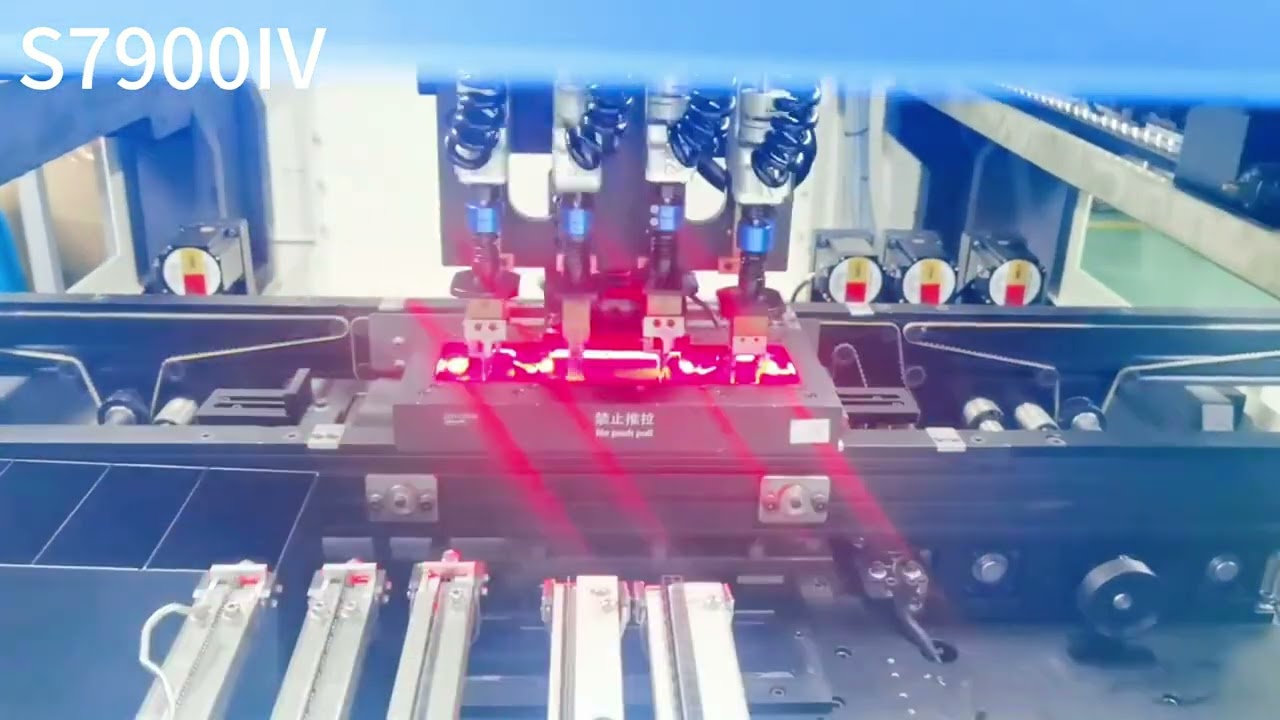
Computing PCBA in 29 Seconds: AI Insertion Machine Upgrade from Southern Machinery
How fast can a through-hole computing PCBA actually be assembled? Southern Machinery's validation video answers that question directly: an upgraded auto-insertion (AI) machine finishes a computing PCBA in 29 seconds. The demo — recorded for EMS decision-makers — shows what is possible when a legacy Universal/UIC-style AI insertion machine is retrofitted with automatic PCB loading, modern programming, and optimized through-hole tooling.
For EMS companies assembling motherboards, computing boards, and dense mixed-technology PCBA, the 29-second cycle is not a marketing number; it is a measured result from a working line. This article explains what that result means, how the upgrade works, and how to evaluate it for your own line.
Video: Just 29 Seconds to Finish a Computing PCBA in an AI Machine — validation demo from Southern Machinery's engineering team.
What is this machine used for?
The "AI machine" in the demo is an auto-insertion machine for through-hole (THT) components — the class of equipment that automatically inserts axial-lead, radial-lead, DIP, and odd-form components into a PCB before wave soldering. In this validation case, the machine is configured for computing PCBA: a board with the connector, socket, capacitor, and through-hole device mix typical of motherboards and computing products.
Southern Machinery's upgrade work on these machines focuses on three things shown in the related demos:
- Automatic PCB loading and unloading — boards are fed and removed automatically instead of by hand, which removes the labor bottleneck around the insertion station.
- Fast programming — the companion demo shows programming created and modified in about 3 seconds, which makes changeover between board types practical even for high-mix EMS lines.
- Through-hole assembly throughput — the validated result is a complete computing PCBA finished in 29 seconds on the machine.
The upgrade path applies to Universal/UIC "AI" auto-insertion machines, a widely installed legacy platform that many EMS factories still operate. Rather than replacing the machine, Southern Machinery retrofits it with automatic board handling and modern control, then re-validates the line — a lower-capital path to automation than buying new.
Typical Application Scenarios
- EMS / contract manufacturing: computing PCBA lines where multiple board types share one insertion platform; fast programming makes the machine practical for high-mix, low-to-medium volume.
- Computing and server boards: motherboards, industrial PCs, and embedded computing boards with dense through-hole connector and socket populations.
- Power supply and control PCBA: boards that combine a few axial/radial components with larger odd-form parts.
- Legacy machine modernization: factories running Universal/UIC AI inserters that want automatic PCB loading/unloading, better programming workflow, and validated throughput without a full machine replacement.
- Medical and automotive electronics: where process consistency, traceability, and repeatable insertion quality justify automating remaining manual through-hole work.
How It Integrates into a Complete PCB Assembly Line
The upgraded AI insertion machine sits in the through-hole section of the line, downstream of SMT:
- SMT side: solder paste printing → pick-and-place → reflow oven → AOI.
- Board handling: automatic loading takes boards from the SMT outfeed (magazine or conveyor) and feeds them into the insertion machine — the exact handoff the "automatic PCB loading" upgrade automates.
- THT insertion: the AI machine inserts axial, radial, DIP, and odd-form components.
- Soldering: boards move to wave soldering (or selective soldering for sensitive areas).
- Post-solder: cleaning, inspection, and depaneling as required.
Because the upgrade adds automatic loading/unloading, the station can run with fewer operators — the classic labor-replacement ROI. The machine keeps standard feeder and tooling interfaces, so it integrates with the existing line equipment and MES tracking.
Key Selection Parameters
When evaluating an AI insertion machine upgrade for computing PCBA, confirm these with the supplier (parameters vary by board and configuration — no generic numbers are assumed here):
- Applicable component types: axial, radial, DIP/IC, and odd-form; lead span and body size ranges the machine can handle.
- PCB size range: maximum board dimensions and thickness the loader/unloader and insertion area accept.
- Integration method: standalone with manual loading vs. inline with automatic PCB loading/unloading; conveyor height and interface standards.
- Programming workflow: how quickly new board programs are created or edited; offline programming support for changeover speed.
- Feeder and tooling compatibility: existing feeders, nozzles, and insertion heads that can be retained vs. what must be upgraded.
- Facility requirements: power, air, and footprint for your specific line layout.
ROI, Quality & Throughput Perspective
- Labor replacement: automatic PCB loading/unloading removes the operator from the insertion station — the single largest recurring cost in manual THT.
- Cycle time: the validated 29-second computing PCBA cycle shows what a tuned machine can sustain; compare it to your current manual insertion time per board.
- Consistency: machine insertion gives repeatable lead forming, placement, and clinching — fewer bent leads and misplaced components than manual work.
- Rework reduction: fewer insertion defects means less post-wave touch-up and rework.
- Capital efficiency: upgrading an installed Universal/UIC AI machine with automatic loading, programming, and re-validation costs a fraction of a new machine while extending the asset's useful life.
- Changeover economics: fast programming (seconds per program in the demo) turns the machine into a flexible resource for high-mix EMS lines rather than a single-product asset.
FAQ
Q: What types of components can an AI insertion machine handle?
A: Auto-insertion (AI) machines handle through-hole components — axial-lead resistors and diodes, radial-lead capacitors, DIP/IC packages, and odd-form parts — using feeders and insertion heads configured for each component family. The exact range depends on the machine model and its tooling.
Q: Does this upgrade work with my existing Universal/UIC machine?
A: The demos show upgrades to Universal/UIC "AI" auto-insertion machines, adding automatic PCB loading/unloading and faster programming. Contact Southern Machinery with your machine model and board types to confirm the retrofit kit for your configuration.
Q: How does the 29-second computing PCBA cycle compare to manual assembly?
A: The 29 seconds is the measured machine cycle shown in the validation video for a specific computing board. Manual through-hole insertion of a comparable board typically takes minutes and varies with operator skill; automation delivers a consistent, repeatable cycle.
Q: What support does Southern Machinery provide after the upgrade?
A: Southern Machinery (founded 2011, Shenzhen, China) provides spare parts, sub-assemblies, retrofit kits, repair kits, upgrading, training, and overhaul services for SMT/THT equipment, with global support across its 237+ customer base.
Q: Which industries use this type of automation?
A: EMS/contract manufacturers, computing and server board producers, power supply and industrial control makers, and automotive/medical electronics suppliers all use auto-insertion for through-hole work that remains after SMT placement.
Q: Can I see the machine in operation?
A: Yes — the validation video shows a computing PCBA finished in 29 seconds. For machine photos and more catalog material, visit the links below or contact Southern Machinery for a live demonstration and line evaluation.
Contact Southern Machinery for Configuration Advice
Every computing PCBA line is different. To evaluate an AI insertion machine upgrade for your board mix, contact Jason Wu at jasonwu@smthelp.com or +86 13602562576.
- Catalogs & documentation: https://file.autoinsertion.com
- Machine photos: https://ph.smthelp.com
- Website: https://www.smthelp.com
Southern Machinery — SMT/THT PCB assembly automation equipment, full line solutions (SMT, THT, Wave Soldering, Board Handling, Inspection), high-efficiency and cost-effective, with global support, spare parts, and training. Founded 2011, Shenzhen, China; serving 237+ customers worldwide.
Comments