
Bulk Feeder Mispick and Jam Fixes by Southern Machinery
Bulk feeder mispick and jam fixes for odd-form assembly: selection-track rules, four tuning steps, shift checks and the S-MVF01 1000-feed test record.
Oct 7, 2026 · Updated Oct 7, 2026 · Southern Machinery
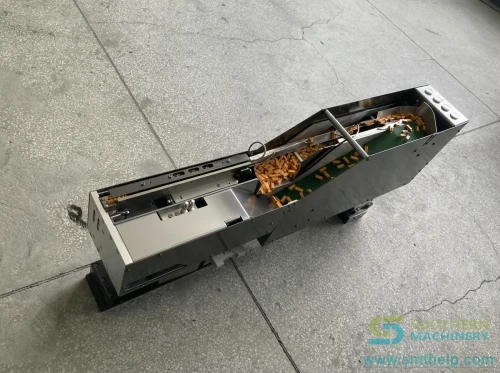
Direct answer. A bulk feeder mispick or jam is usually a part-geometry problem, not a settings problem. A mechanical selection track can only reject the orientations it can physically tell apart, so a part with no obvious physical feature, easily deformed leads, or a length-to-height ratio under 1:1.2 will never feed reliably loose. The S-MVF01 reciprocating belt feeder by Southern Machinery is built for the odd-form parts that pass that test, and it holds the accepted part at a vacuum-assisted pick position with a fibre-optic part-present signal, so the head is never sent to an empty track.
Why does a bulk feeder mispick or jam?
The reject rate is decided by part geometry
A selection track separates parts by shape: it admits the orientations it can recognise mechanically and returns the rest. The S-MVF01 specification sheets rule out three cases explicitly - no obvious physical feature and still needing orientation, easily deformed leads, and a length-to-height ratio under 1:1.2.
A jam is normally a part that never reached the track
Feeding stops when a part sits in the box or falls out of the flow and starves the pick position. Five air-blowing points on the S-MVF01 - box exit, selection assistance, fallen parts, selection entry and final delivery - push a dropped part back into the flow, and the belt return carries rejects back into the cycle.
Which components can the S-MVF01 present without a mispick?
Component families and envelope - connectors, buzzers, network ports, terminal posts and square capacitors, 3 x 3 x 3 mm up to 20 x 20 x 20 mm (specification sheets).
Keep on other packaging - no obvious physical feature and still needing direction; leads easily deformed; length-to-height ratio under 1:1.2.
Packaging accepted - bulk only, loose from a bag: no tape, tube or tray.
Size, weight and accuracy - 850 x 140 x 260 mm, 12 kg, plus or minus 1 mm at the pick position.
Feeding interval - 1.5 to 2 s per feed, single channel. The bulk-feeder sheet also quotes a cycle time of 1 s or less; the figures conflict and remain to be confirmed, not averaged.
Utilities and interface - AC 220 V / 50 Hz at 3 A average and 6 A peak via an internal DC 24 V, 100 W supply; air at 0.4 to 0.6 MPa, with the manual asking above 0.5 MPa; 8-core 16 mm aviation plug for material-present and alarm signals, or self-control.
Mounting - positioning key plus clamping block, and the sheet states the feeder can be equipped to any brand of placement machine.
Test record - 1000 consecutive feeds without abnormality, then 48 hours of continuous ageing.
Price, lead time and certification - not specified in source - contact Southern Machinery to confirm.
How does the S-MVF01 stop a mispick at the pick position?
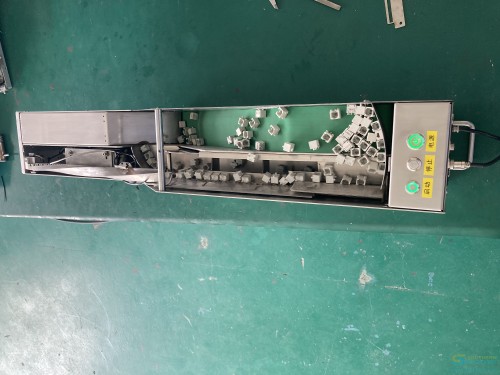
Components go into the box straight from the bag; a motor-driven belt lifts them out; the selection track admits a usable orientation and returns the rest; a straight-vibration track carries the accepted part to the front; and a fibre-optic sensor confirms it is there before the machine picks.
What happens when the track cannot feed
A vacuum suction block holds the accepted part at the front of the track so it cannot drift forward or back before the pick, and it switches off after a minute if the part is not taken. Front and rear track-end sensors stop the vibrator and the belt when the track is full, and if sensing sees no material for over a minute the feeder alarms and stops the belt and the blowing - a signal at the mounter instead of a no-pick at production speed.
Which four adjustments decide whether the feeder runs or jams?
The order matters more than the values. Tuning the belt first is the classic mistake: parts then arrive faster than the selection track can orient them, and the reject flow covers the return track.
Selection first - channel A, the vibration frequency of the selection box, raised until parts are oriented and rejected cleanly.
Transport second - channel B, the feeding track that advances accepted parts to the front.
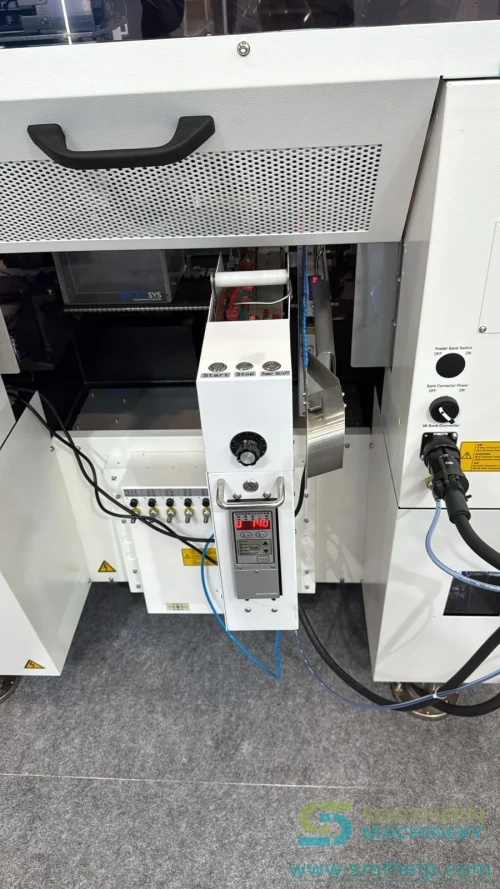
Presentation third - belt speed on the speed controller, clockwise to increase, fast enough to keep the selection box fed and no faster.
Vacuum last - confirm the suction block holds the part before the head descends.
Write the four numbers down inside the control area. A feeder that "mysteriously" stops after a rebuild is usually one whose channels, belt speed and vacuum were never recorded.
Which checks belong on a bulk feeder shift checklist?
Most bulk feeder downtime is an uninspected wear item. The manual names three.
Drive gears - lubricate after three months of operation.
Belt tensioner - if the motor turns but the belt does not, tighten it; if the belt turns but the material does not travel, wipe the belt with alcohol.
Armature gap - stays under 1 mm between armature and coil on both straight-vibration units.
Sensors - the front sensor stops the front vibrator and releases the vacuum after a minute; the rear one stops the rear vibrator and the belt when full.
What throughput does a single-channel bulk feeder give?
Single channel means the ceiling is the published feeding interval.
1.5 s per feed - 2,400 feeds per hour theoretical, 2,160 at 90 percent availability, 1,920 at 80 percent.
1.75 s per feed - 2,057 theoretical, 1,851 at 90 percent, 1,646 at 80 percent.
2.0 s per feed - 1,800 theoretical, 1,620 at 90 percent, 1,440 at 80 percent.
Derived arithmetic, not a measured production figure, counting feeds rather than finished boards. If your mounter takes longer than two seconds per bulk part, a second channel adds complexity rather than output.
How do you accept a bulk conversion without a hidden jam rate?
The pattern is consistent: the feeder is proven on a clean sample, the changeover is approved, and two weeks later a different batch carries slightly more moulding flash and the track that worked rejects one part in fifty.
Orientation test on three batches, not one, plus a tumbling lead-deformation check.
Aspect ratio on ten samples, measured against the 1:1.2 limit.
A continuous run of at least 1000 feeds, the published acceptance figure.
A jam log recording the rejection rate per batch, the number that spots supplier drift.
A written changeover procedure naming both vibration channels and the belt speed.
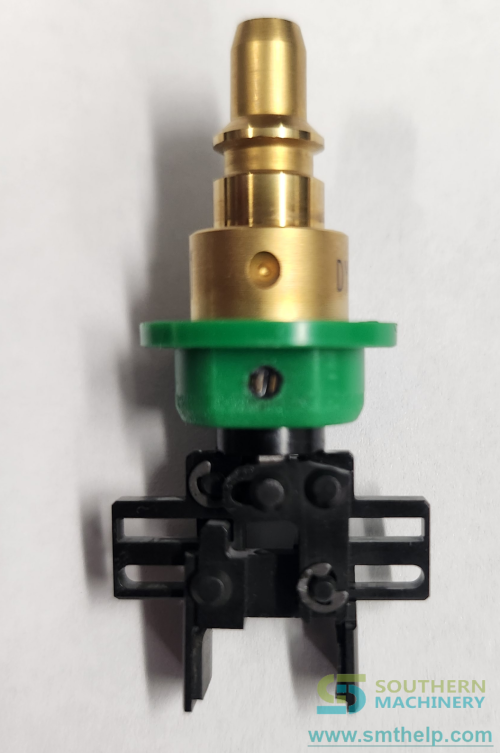
The feeder does not sit in isolation. It mounts in a bank alongside the rest of the odd-form insertion equipment, feeds the THT machine range, and the same bank is configured inside a complete PCB DIP assembly line or a one-stop PCB assembly solution for EMS.
How do you put a budget on a mispick fix?
Feeder business cases go wrong the same way: an assumed labour saving is set against a machine price, and the saving was guessed rather than measured.
seconds saved per part        = manual handling time per part - feeding interval
handling hours released/month = parts per board x seconds saved x boards per month / 3600
labour released per month     = hours released x loaded labour rate per hour
payback in months             = feeder investment / labour released per month
The feeding interval is the only figure taken from the S-MVF01 documents: 1.5 to 2 seconds per feed, single channel. Worked example, illustrative only - depends on configuration and subject to final technical confirmation: 150 bulk parts per board, a 2.0 s interval and a measured 8 s manual handling time give 6 s saved per part; over 240 boards a month that is 60 handling hours released, USD 480 at an example USD 8.00 an hour, and a 20-month payback against an example USD 9,600 investment. Replace each input with your line data.
Frequently asked questions
Why does my bulk feeder mispick if the parts fit the size envelope? Size is only one condition. The track also has to tell one orientation from another, so the sheets exclude parts with no obvious physical feature and parts under 1:1.2.
Does the S-MVF01 stop when no part is present at the pick position? A fibre-optic sensor confirms part presence; if sensing sees no material for over a minute the feeder alarms and stops the belt and the blowing.
What air pressure and power does it need? 0.4 to 0.6 MPa on both sheets, while the user manual asks for usable pressure above 0.5 MPa - documented, not averaged.
How do I know it will not jam on my part? The published record is 1000 consecutive feeds without abnormality followed by 48 hours of ageing, and Southern Machinery runs the feeder against a sample of your actual component before you commit.
Send the part, not just the enquiry
Southern Machinery has designed and manufactured SMT and THT equipment in Shenzhen since 2011 and serves more than 237 customers worldwide, with spare parts support and operator training behind every machine. Bulk feeding is decided by component geometry, so the fastest answer is a sample bag, a photograph of the part and the monthly volume: we will confirm whether it can be fed loose, and what happens to the settings when the mix moves on. Start with the feeder range, or take the S-MVF01 specification sheet with you.
Comments