
BGA Desoldering Station SR-430A by Southern Machinery
BGA desoldering without lifted pads: SR-430A 2-in-1 station, 0.01 mm CCD alignment, 5300 W three-zone heat at ±3 °C, 360° nozzles and vacuum pickup.
Oct 7, 2026 · Updated Oct 7, 2026 · Southern Machinery
A BGA desoldering station is the bench tool an EMS plant uses to remove a ball-grid-array package from a finished board without lifting pads, and then put a replacement device back onto the same footprint. The Southern Machinery SR-430A does both jobs in one 2-in-1 station: CCD optical alignment resolved to 0.01 mm, three independently controlled heaters under K-type closed-loop control at ±3 °C, BGA nozzles with 360° rotation, and vacuum pickup for chip removal. Its published envelope covers PCBs from 85 × 85 mm to 410 × 370 mm and BGA packages from 2 × 2 mm to 80 × 80 mm.
What is a BGA desoldering station used for?
A BGA desoldering station removes a soldered area-array package from a populated board and prepares the site for a new device, instead of scrapping the assembly. In a high-mix EMS plant it is the rework cell that decides whether a board with one bad BGA becomes a repaired unit or a write-off.
Desoldering and soldering in the same station
The SR-430A is documented as a 2-in-1 machine: automatic soldering and automatic desoldering in one station, run by one operator. Separate desoldering, reflow and placement tools each add a transfer step where a board that is already at temperature has to be handled again.
When desoldering is cheaper than scrapping
Once a board has passed SMT, THT, wave soldering and inspection, most of its cost is already committed. The source document states the trade-off directly: every failed rework attempt costs the board and the cycle time, and rework margins disappear quickly when the bench has to redo its own work.
BGA desoldering versus hand removal: what changes on the bench?
Hand removal is not a controlled process. The failure modes below are the ones the SR-430A is designed around, and each is answered by a published capability rather than by an operator's judgement.
Alignment: 0.01 mm optics instead of line of sight
At 0.3–0.5 mm pitch a fraction of a degree of rotation bridges or misses balls, and the document's own warning is blunt: eyes cannot hold that tolerance. The SR-430A uses an adjustable CCD colour optical system with beam split, zoom and micro-adjust, plus laser position and joystick control, giving 0.01 mm alignment resolution — and the PCB does not need to move after alignment.
Heat: three independent zones at ±3 °C
Uneven heating on multi-layer boards lifts pads and warps laminate. The SR-430A splits heat across three independently controlled heaters — top 1200 W, bottom 1200 W and IR 2700 W, 5300 W total — under K-type thermocouple closed-loop control with ±3 °C accuracy, with multi-segment rising and activity profiles that can be analysed and stored.
Removal: 360° rotation nozzles and vacuum pickup
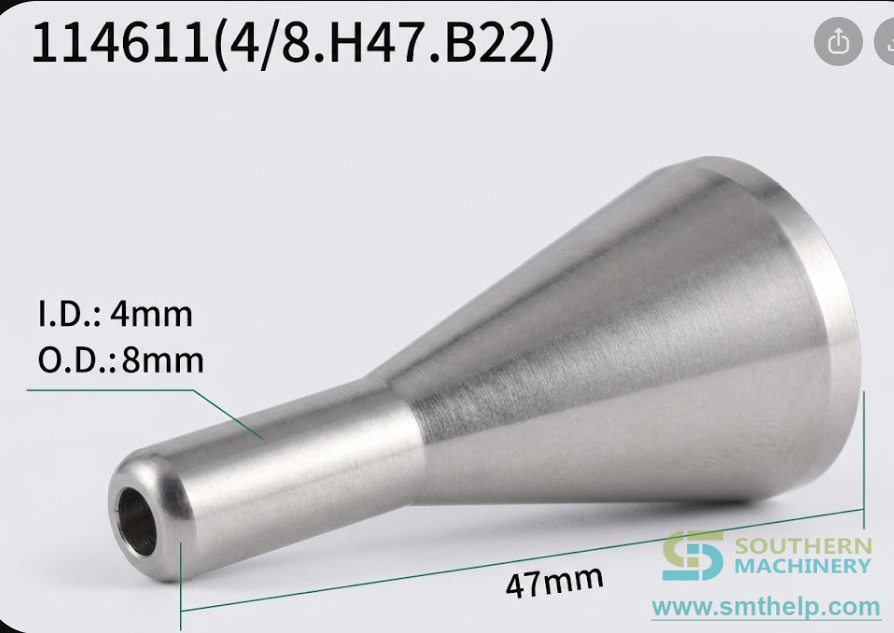
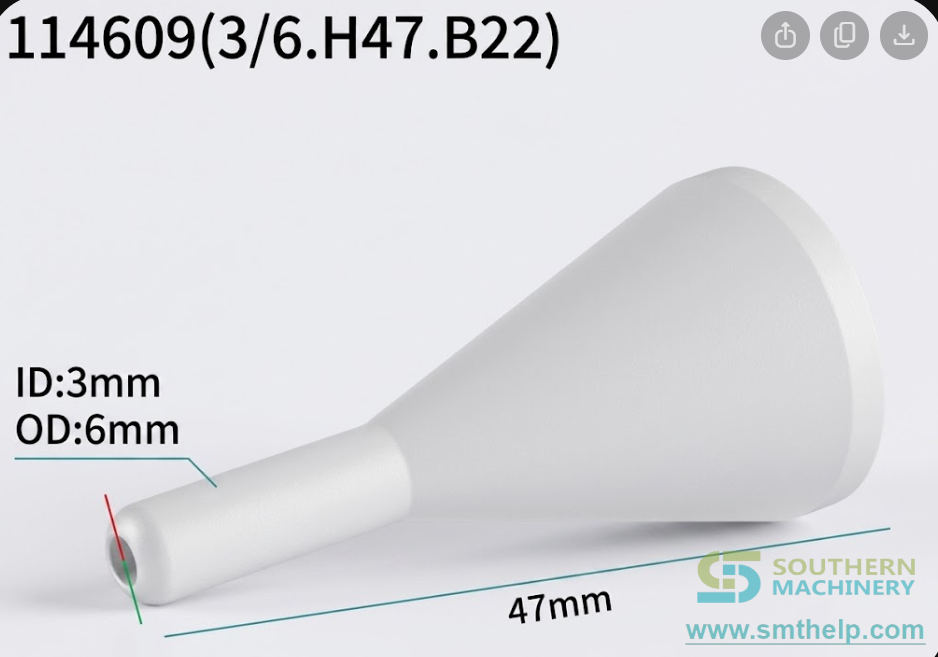
BGA nozzles with 360° rotation cover multiple package sizes, and custom nozzles are available. Vacuum pickup lifts the chip free once the joints are molten, cross-flow fan cooling runs after reflow, and V-groove positioning plus PCB support blocks hold the board through the cycle.
Where documented curves matter
The document lists audits as a rework pain point: EMS customers want documented rework with curves, profiles and placement evidence. A programmable controller that supports a computer connection turns a bench operation into a record you can hand to a customer.
How does a desoldering cycle actually run?
Bench, ventilation and utilities first
Place the station on a stable workbench with clearance around the moving head and provide fume extraction or ventilation above the working area. The SR-430A runs on 220 VAC ±10% single phase at roughly 5–8 kW depending on model; the vacuum pump and cooling fans are built in and no compressed air is required.
Set the profile, then verify it
Set the rising and activity temperature segments for the BGA type, verify with the K-type thermocouple, and store the curve. Desoldering cycle time is not specified in the source document — contact Southern Machinery to confirm it for your package mix.
Trial on scrap boards first
Rework scrap boards before production boards and check alignment, temperature balance and placement accuracy. Heat is applied through the nozzle set, the package is lifted with vacuum pickup, and the site is dressed and re-balled for the replacement device.
Train, then ramp
Installation and operator training are included with the machine, with 24/7 worldwide support and a one-day spare-part lead time quoted after handover.
Which parameters should you confirm before ordering?
Confirm each item below against your own boards. Every value is quoted from the SR-430A datasheet and remains subject to final technical confirmation:
- Package range — BGA from 2 × 2 mm up to 80 × 80 mm.
- Board range — PCB from 85 × 85 mm up to 410 × 370 mm, positioned on V-groove with PCB support blocks.
- Heating — top 1200 W, bottom 1200 W, IR 2700 W; 5300 W total; 220 V ±10%, 50/60 Hz.
- Temperature control — K-type thermocouple closed loop, independent control, ±3 °C accuracy.
- Alignment — CCD optical system with beam split and zoom, 0.01 mm chromatism resolution, laser position and joystick control.
- Operation — 2-in-1 automatic soldering and desoldering with 360° rotation nozzles.
- Machine footprint — 640 × 630 × 920 mm, 70 kg.
- Safety — CE certified, over-temperature protection with automatic power-off, password protection, emergency stop.
- Options — 360° rotation nozzle set, V-groove and support fixtures, multi-segment profile storage, vacuum and cooling extras, computer link.
The same document quotes a separate production reference for the optical-alignment rework platform (ZM-B750 / ZM-R750): ±0.01 mm optical fast alignment, IR preheating zone with imported centrifugal fan, 380 V supply and 7,750 W total power. Those are platform reference figures and vary by configuration.
What does BGA desoldering cost per recovered board?
The formula
- Recovered board value = board value × boards recovered per month
- Rework cost = (labour minutes ÷ 60 × loaded hourly rate + consumable cost per board) × boards reworked
- Net monthly benefit = recovered board value − rework cost
A worked example
Take a plant that desolders 60 fine-pitch BGA boards a month, with a board value of USD 120 and 25 minutes of rework labour at a loaded rate of USD 30 per hour:
- Recovered board value: 60 × USD 120 = USD 7,200
- Rework cost: 60 × (25 ÷ 60 × USD 30) = USD 750
- Net monthly benefit: USD 7,200 − USD 750 = USD 6,450
This is an example only, depends on configuration, and is subject to final technical confirmation — substitute your own board value, labour rate and monthly rework volume. The document's own framing is that one 2-in-1 station replaces separate soldering and desoldering tooling, and that documented curves satisfy customer audits.
Lifecycle: what you do not pay for twice
Free installation and operator training remove the usual ramp cost, spare-part lead time is quoted at one day after handover, and support is 24/7 worldwide — three cost lines you do not fund separately later.
How does a rework cell fit a complete PCB assembly line?
Rework is a downstream capability; the volume decision happens upstream. Boards are built on an SMT line, then completed through THT insertion, wave or selective soldering, and final assembly. If you are mapping that flow, start with Southern Machinery's one-stop PCB assembly total solutions for EMS, the PCB DIP assembly line and the wave soldering machine pages. The SR-430A sits at the end of that chain, where the cost of scrapping a fully populated board is highest.
The official SR-430A BGA Rework Station datasheet and the BGA Rework Station operation manual are published in Southern Machinery's public document library at file.autoinsertion.com.
FAQ
Can the SR-430A both desolder and solder a BGA?
Yes. The 2-in-1 design performs automatic desoldering and automatic soldering with 360° rotation nozzles and vacuum pickup, so one station completes the whole rework loop.
What BGA package sizes can it handle?
BGA packages from 2 × 2 mm up to 80 × 80 mm, on PCBs from 85 × 85 mm up to 410 × 370 mm.
How is temperature controlled during desoldering?
Three independently controlled heaters (top 1200 W, bottom 1200 W, IR 2700 W; 5300 W total) with K-type closed-loop thermocouple control at ±3 °C accuracy and software curve analysis.
How does optical alignment work when the board cannot move?
A CCD colour optical system with beam split and zoom projects a magnified view of the BGA balls and board pads, with laser position and joystick control for fine adjustment. Placement resolution is 0.01 mm, and the PCB does not need to move after alignment.
Is it safe for production use?
The station is CE certified, with over-temperature protection that powers off automatically, password-protected parameters and an emergency stop.
How do I get a quote and a profile recommendation?
Email info@smthelp.com or WhatsApp +86 136 0256 2576 with your board samples or drawings, package sizes and rework volume. According to the source document, Southern Machinery replies with a configuration, quotation and profile strategy within 24 hours.
Tell us what you desolder
Southern Machinery has focused on SMT and THT PCB assembly automation since 2011 and works with more than 237 customers worldwide. If BGA desoldering is the bottleneck in your rework cell, send your package list and monthly volume and we will come back with a configuration, a quotation and a profile recommendation within 24 hours. Request a quote
Comments