
Belt Feeder vs Vibratory Bowl Feeder for Odd-Form Automation by Southern Machinery
For EMS factories handling loose or odd-form components, the feeder choice affects labor cost, line uptime, changeover speed, and component quality. This buyer guide, based on Southern Machinery local product analysis, compares modern belt-driven feeding with legacy vibratory bowl feeding and explains where each approach fits in SMT/THT automation. It also shows how feeder selection connects to a complete PCB assembly line, including insertion, board handling, inspection, and factory ROI planning.
Jul 2, 2026 · Updated Jul 2, 2026 · Southern Machinery
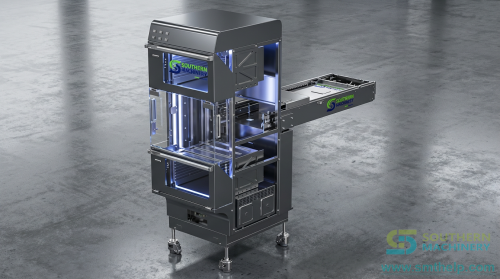
Belt Feeder vs Vibratory Bowl Feeder for Odd-Form Automation by Southern Machinery
Odd-form and loose components are still one of the hardest parts of PCB assembly automation. They do not always arrive in standard SMT tape-and-reel format, and manual orientation can slow down an otherwise stable SMT or THT line.
This article is based on the local Southern Machinery feeder analysis file Belt Feeder vs Vibratory Bowl Feeder Analysis.html. The source compares modern belt feeders with legacy vibratory bowl feeders for odd-form component handling. Any ROI or performance figures mentioned below should be treated as examples for discussion and must be confirmed against your actual component, feeder design, line layout, and shift pattern.
What is this machine used for?
A belt feeder or vibratory bowl feeder is used to orient, singulate, and present loose or non-standard components so an operator, robot, SMT mounter, or insertion process can pick them more consistently.
In plain language: the feeder turns a mixed pile or stream of parts into a repeatable pick point. For EMS factories, this can reduce manual handling, shorten changeovers, and improve placement consistency for parts that are difficult to feed with ordinary tape feeders.
Typical use cases include:
- Odd-form component feeding for SMT placement or robotic handling
- THT component preparation before insertion
- Connector, terminal, mechanical part, and special component presentation
- High-mix production where fast changeover matters
- Automation cells where manual sorting creates bottlenecks
Why feeder choice matters in EMS production
The source document highlights four common pain points in loose component assembly:
- High manual labor cost from sorting, orienting, and placing parts by hand
- Production bottlenecks caused by manual assembly or slow mechanical changeover
- Inconsistent quality when parts are damaged or presented unreliably
- Low manufacturing flexibility when a feeder is built around only one component
For a factory manager, this is not just a feeder decision. It affects line balance, quality cost, operator allocation, and how quickly the line can switch between jobs.
Belt feeder vs vibratory bowl feeder: practical comparison
Modern belt feeder
A belt feeder uses controlled, linear movement to transport and present components. According to the source analysis, the main advantages are flexibility, gentler handling, compact layout, and faster changeover compared with a traditional bowl approach.
This makes belt feeding especially useful when:
- Components are sensitive to impact or abrasion
- The factory runs high-mix products
- Floor space near the line is limited
- Changeover time is a frequent source of lost output
- The same automation cell may need to support several part families
Vibratory bowl feeder
A vibratory bowl feeder uses vibration and a shaped track to orient parts. The source positions it as a legacy but still useful solution for stable, high-volume, low-mix production where one part runs for a long time.
It can still make sense when:
- The component design is stable
- One part runs for long production batches
- Changeover is rare
- The project prioritizes lower initial cost over flexibility
- Mechanical tooling is already proven for the component
Key selection parameters before buying
Before Southern Machinery recommends a feeder concept, we normally confirm these points:
- Component type, size, weight, material, and whether the surface is damage-sensitive
- Required orientation and final pick position
- Feeding rate required by the downstream process
- Changeover frequency and number of part types
- Whether the feeder connects to an SMT mounter, robot, manual station, or THT insertion process
- Available floor space and line-side layout
- Vision, sensor, barcode, or traceability requirements
- Whether the project needs a single feeder or a complete automation cell
If your component is fragile, mixed in size, or changes often, the safer first discussion is usually a configurable belt-style or custom feeder concept. If it is a single robust part running continuously, a bowl feeder may still be technically and financially reasonable.
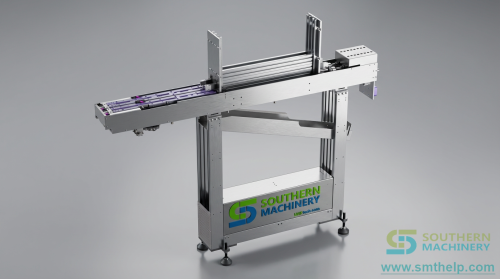
How this connects to a complete PCB assembly line
Southern Machinery does not look at feeders as isolated accessories. In a real EMS factory, the feeder must support the full process flow.
For an SMT-oriented line, the feeder may connect with:
- Automatic stencil printer
- Pick-and-place machine
- Reflow oven
- Inline AOI after reflow
- Board loader, conveyor, buffer, and unloader
For THT or mixed-technology assembly, the feeder may support:
- Manual or automatic insertion process
- Odd-form insertion station
- Wave soldering or selective soldering
- THT AOI or visual inspection
- Board handling between insertion and soldering
This is where Southern Machinery’s full-line capability matters. Founded in Shenzhen in 2011, Southern Machinery supports SMT, THT insertion, wave soldering, board handling, inspection, training, spare parts, and global service for EMS customers. The goal is not just to sell a feeder, but to keep the full line stable and cost-effective.
ROI, quality, and capacity value
The source dashboard includes an ROI calculator concept using feeder cost, number of feeders, line operating cost, changeovers per day, and time saved per changeover. That is the right way to think about feeder automation, but the numbers must be treated as examples.
The real ROI depends on:
- Labor hours removed from sorting and loading
- Downtime reduced during changeover
- Scrap or rework reduced by gentler handling
- Throughput gained at the bottleneck station
- Engineering time saved when new products are introduced
A lower-cost feeder is not always the lowest-cost solution. If it forces long changeovers or damages parts, the line may lose more money through downtime and quality loss than it saves in initial CapEx.
When to choose each option
Choose a belt feeder concept when:
- You run high-mix or medium-volume production
- Component changeover happens often
- Parts are delicate or cosmetically sensitive
- Floor space is tight
- You need a path toward robotics, sensors, or traceability
Choose a vibratory bowl feeder concept when:
- One component runs for long periods
- The part is robust enough for vibration
- Mechanical orientation has already been proven
- Changeover is rare
- Initial equipment cost is the main constraint
FAQ
Is a belt feeder always better than a vibratory bowl feeder?
No. A belt feeder is usually better for flexibility, gentler handling, and faster changeover. A bowl feeder can still be suitable for one stable part in high-volume production.
Can Southern Machinery customize feeders for special components?
Yes, Southern Machinery can discuss custom feeder, nozzle, gripper, and automation concepts for special SMT/THT components. Final feasibility depends on component samples, drawings, orientation requirements, and machine interface.
Can this type of feeder connect to a robot or SMT machine?
In many projects, yes, but the interface must be confirmed. The pick height, pick position, communication method, and safety layout need engineering review.
What information should I send for feeder selection?
Send component photos, drawings, package method, target output, acceptable orientation, downstream machine model, and whether you need manual assist, robotic pick, SMT placement, or THT insertion.
Does the feeder guarantee ROI?
No responsible supplier should guarantee ROI without line data. Southern Machinery can help estimate ROI using your labor cost, changeover pattern, current bottleneck, and expected production hours.
Can one feeder handle every odd-form component?
No. Odd-form feeding is highly component-specific. Some parts can share one flexible platform, while others need dedicated tooling or a different feeding method.
CTA: send your component sample data
If you are comparing belt feeding, bowl feeding, tube feeding, tray feeding, or a custom odd-form feeder, send Southern Machinery your component photos, dimensions, package format, target output, and current process bottleneck.
We can help you decide whether a belt feeder, bowl feeder, custom feeder, robotic cell, or full SMT/THT automation line is the most cost-effective path for your factory.
Comments