
Belt Feeder vs Vibratory Bowl Feeder for Odd-Form Assembly by Southern Machinery
For EMS and ODM factories handling loose odd-form components, the feeder choice can decide whether automation improves throughput or creates another bottleneck. This guide compares modern belt-driven feeders with legacy
Jul 5, 2026 · Updated Jul 5, 2026 · Southern Machinery
Belt Feeder vs Vibratory Bowl Feeder for Odd-Form Assembly by Southern Machinery
Odd-form component assembly is often where a PCB assembly line loses its rhythm. Standard SMT parts can move through tape feeders and pick-and-place machines smoothly, but loose terminals, connectors, clips, molded parts, and other non-standard components create a different problem: they must be separated, oriented, presented, and picked reliably before the insertion or placement process can remain stable.
This buyer's guide is based on the local Southern Machinery source document Belt Feeder vs. Vibratory Bowl Feeder Analysis. It turns that technical comparison into a practical selection guide for EMS, ODM, automotive electronics, medical electronics, industrial control, and high-mix electronics factories.
Southern Machinery, founded in Shenzhen in 2011, focuses on high-efficiency and cost-effective SMT/THT PCB assembly automation equipment. Our team supports 237+ global customers with equipment and integration across SMT lines, THT insertion, wave soldering, board handling, inspection, custom feeders, spare parts support, professional training, and global service.
What is this machine used for?
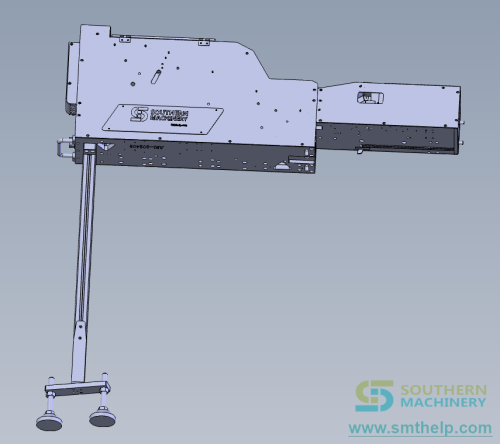
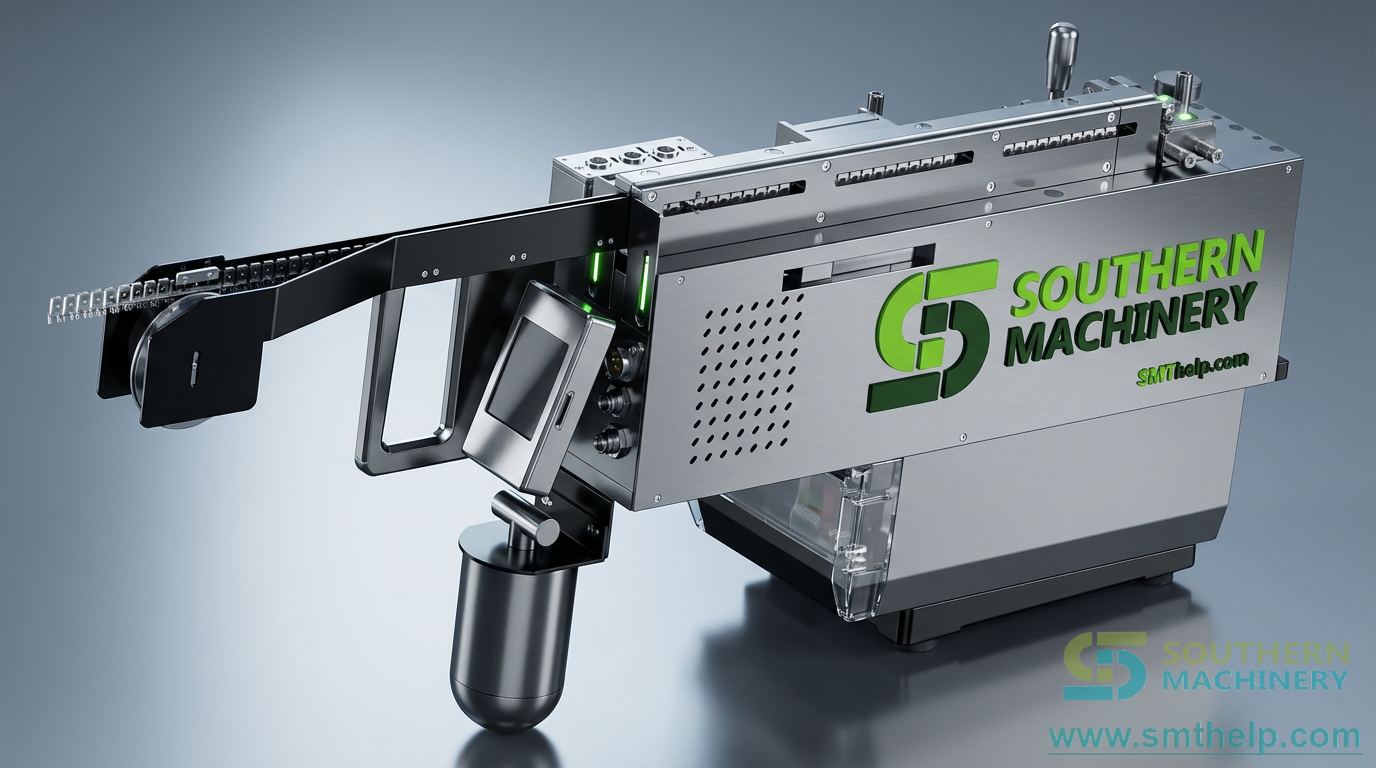
A belt feeder is used to automate the feeding, singulation, orientation, and stable presentation of loose or odd-form components before they are picked by a robot, SMT mounter, odd-form insertion machine, or dedicated automation station.
In simple terms, it replaces part of the manual work of sorting and presenting difficult components. Instead of an operator placing parts one by one, the feeder helps deliver components to a repeatable pick point. For parts that are sensitive to scratching, impact, or orientation error, this controlled presentation can improve line stability.
A vibratory bowl feeder is also used to orient and feed loose parts, but it depends on vibration and custom mechanical tooling. It can be effective for one stable component in high-volume production, but it can become rigid and expensive when the factory handles many different odd-form components.
Why odd-form feeding becomes a bottleneck
Loose odd-form components create four common production problems:
- High labor cost: operators spend time sorting, orienting, and loading parts.
- Production bottlenecks: manual feeding and long changeovers limit the speed of the downstream machine.
- Inconsistent quality: manual handling and harsh feeding can lead to placement mistakes, component damage, rework, or scrap.
- Manufacturing inflexibility: a feeder built for one component may not adapt well when the product mix changes.
For high-mix EMS factories, the issue is rarely only feeder speed. The bigger question is whether the feeder can keep the line stable across many product variants without excessive tooling, tuning, and downtime.
Belt feeder vs vibratory bowl feeder: practical comparison
Flexibility and adaptability
A modern belt feeder is better suited when a factory handles multiple component types or expects frequent changeovers. The source document describes belt feeders as supporting fast, software-based adjustment and broader component adaptability.
A vibratory bowl feeder is usually custom-tooled for a single part. It can be a good workhorse for dedicated, high-volume production, but retooling can be expensive and time-consuming when the component changes.
Component handling
Belt feeding uses a smoother linear transport method. This is useful for components that may be scratched, marked, bent, or damaged by vibration.
A vibratory bowl feeder can be harsher because its feeding principle depends on vibration. For robust parts, that may be acceptable. For delicate odd-form parts, terminals, or cosmetically sensitive components, the risk needs to be checked with real samples.
Footprint
The source analysis describes a belt feeder footprint advantage of up to 97% smaller compared with a typical bowl-feeder setup. Treat this as a source-document comparison example, not a universal guarantee. Actual floor-space savings depend on the component, feeder configuration, hopper, guarding, and integration layout.
Even so, the direction is clear: belt feeders can be easier to fit beside an SMT mounter, robot cell, odd-form insertion station, or compact THT automation area.
Changeover
The source document compares long mechanical changeover for bowl feeders with faster belt-feeder adjustment. It uses examples such as changeover in minutes for belt feeders versus hours for bowl feeders. This should be treated as a planning reference. Real changeover time depends on tooling, recipes, operator training, and part family similarity.
For high-mix work, faster changeover can matter more than maximum theoretical feeding speed.
Maintenance and operation
Bowl feeders often require experienced tuning. A small component design change can affect feeding behavior, especially if orientation rails and tracks are highly customized.
A belt feeder generally has a simpler and more predictable operating model, but it still needs proper setup: belt material, pocketing or guides, component loading, sensor position, pick coordinate, and machine handshake all need to be confirmed.
Typical applications
Belt feeders are most useful for:
- Loose odd-form components in SMT or THT automation
- Terminals and connectors that need repeatable pickup
- High-mix EMS lines with frequent product changes
- Components that are sensitive to impact, abrasion, or uncontrolled vibration
- Robotic loading or odd-form insertion stations
- Factories trying to reduce manual part presentation work
Vibratory bowl feeders can still be a practical option for:
- One component running for long periods
- High-volume, low-mix manufacturing
- Rugged parts that tolerate vibration well
- Lines where lower initial feeder cost matters more than changeover flexibility
The right answer depends on your product mix, component geometry, tolerance for part damage, available floor space, and future model-change plan.
How to connect feeder selection into a complete PCB assembly line
A feeder is not an isolated accessory. It should be selected around the complete assembly flow.
For an SMT + odd-form line, a typical flow may look like this:
- Magazine loader or board handling conveyor
- Stencil printer and SPI if solder paste control is required
- SMT pick-and-place and reflow oven
- AOI after reflow if quality requirements justify it
- Odd-form insertion or robotic placement station with belt feeder, bowl feeder, tube feeder, tray feeder, or custom nozzle/gripper
- Wave soldering or selective soldering if THT pins need soldering
- Final inspection, ICT/FCT, unloading, and traceability data collection
Southern Machinery can help match the feeder with the downstream equipment instead of treating it as a standalone purchase. This matters because a good feeder still fails commercially if the pick point, cycle time, component orientation, board handling, and soldering process are not designed together.
Key selection parameters to confirm
Before selecting a belt feeder or vibratory bowl feeder, confirm these items:
- Component type, material, size, weight, and surface sensitivity
- Required orientation and pickup face
- Packaging format: loose bulk, reel, tube, tray, stick, or tape
- Target output per hour and actual downstream machine cycle time
- Product mix: one stable part or many part numbers
- Changeover frequency per shift or per day
- Available machine-side footprint
- Integration target: SMT mounter, robot, insertion machine, or custom automation cell
- Required sensors, pick coordinate accuracy, and communication handshake
- ESD, cleanliness, safety guarding, and traceability requirements
If the component is unusual, Southern Machinery should test real samples before finalizing the feeder concept. That is the practical way to avoid overpromising on speed or compatibility.
ROI, quality, and capacity value
The source document includes an ROI calculator concept using example values such as feeder cost, number of feeders, line operating cost per hour, changeovers per day, and minutes saved per changeover. These figures are useful for building a planning model, but they should not be treated as a fixed quotation or guaranteed payback.
The value usually comes from several areas:
- Less manual sorting and orientation work
- Shorter changeover downtime for high-mix production
- Fewer line stops caused by feeding instability
- Lower risk of component damage from harsh feeding
- More repeatable pickup presentation for automation
- Better use of factory floor space
For example, if a factory changes products several times per day, saving even a few minutes per changeover can become meaningful across 250 working days. But if the line runs one part for months, a simpler dedicated bowl feeder may still make financial sense.
When Southern Machinery would recommend each option
Choose a belt feeder when:
- Your factory is high-mix or expects product changes.
- Components are delicate or easily damaged by vibration.
- You need compact layout beside an SMT/THT automation station.
- Changeover speed matters to your OEE.
- You want a more flexible feeding platform for future models.
Consider a vibratory bowl feeder when:
- The component is stable, rugged, and high-volume.
- The same part will run for long periods.
- Mechanical tooling cost is acceptable for the expected lifetime volume.
- The factory has enough space and experienced technicians for tuning.
This is not about saying one technology is always better. It is about matching the feeder to the production reality.
FAQ
Is a belt feeder always better than a vibratory bowl feeder?
No. A belt feeder is usually better for high-mix, compact, gentle, and flexible feeding. A bowl feeder can still be suitable for a single robust component in high-volume production.
Can one belt feeder handle many different components?
The source material positions belt feeders as more adaptable than bowl feeders, but actual compatibility depends on component geometry, orientation requirement, belt design, sensors, and tooling. Real samples should be tested before final confirmation.
Will a belt feeder improve ROI automatically?
No. ROI depends on labor cost, changeover frequency, line operating cost, downtime reduction, and component stability. Any payback estimate should be calculated with your real production data.
Can Southern Machinery integrate the feeder into a full SMT/THT line?
Yes. Southern Machinery supplies and integrates SMT, THT insertion, wave soldering, board handling, inspection, traceability, custom feeders, nozzles, and grippers. The feeder can be matched to the whole PCB assembly process instead of selected in isolation.
What information is needed for a feeder recommendation?
Send component photos or samples, dimensions, packaging format, required orientation, target UPH, downstream machine model, available space, and changeover expectations. With that, Southern Machinery can suggest a practical feeder direction and confirm details through technical review.
Can this replace manual odd-form component handling?
In many cases, yes, but the exact level of automation depends on component type and the downstream process. Some lines may use full automatic feeding and insertion, while others may use semi-automatic feeding to remove the most repetitive manual steps.
CTA: review your odd-form feeding process
If your SMT or THT line is losing time because operators manually sort, orient, or present loose components, send Southern Machinery the component details and target output. We can help compare belt feeder, bowl feeder, tube feeder, tray feeder, tape feeder, custom nozzle, and odd-form insertion options, then match the solution into a complete PCB assembly line.
For the first review, share:
- Component photos or drawings
- Current feeding method
- Target output per shift
- Current bottleneck
- Existing SMT/THT machine model if available
- Automation level and budget direction
Southern Machinery will help you select a cost-effective, high-efficiency feeding and assembly approach that fits your real production needs.
Comments