
AI Splice Tape for Axial & Radial Insertion Lines | Southern Machinery
Three-hole and five-hole crepe paper splice tape with 300 N/m adhesion and 150 °C heat tolerance for axial and radial insertion machines. Keeps your THT insertion line running without splice-related downtime.
Sep 3, 2026 · Updated Sep 3, 2026 · Southern Machinery
AI Splice Tape for Axial & Radial Insertion Lines | Southern Machinery
Your Insertion Line Stops Every Time a Splice Fails — Here's Why That's Costing You More Than You Think
A single failed splice on your axial or radial insertion machine doesn't just pause one station. It cascades into missed component placements, solder defects downstream, and operators scrambling to manually feed tape while the clock ticks. Most EMS factories treat splice tape as a cheap consumable — then wonder why their insertion line OEE sits at 68% when it should be above 85%.
The hidden cost isn't the tape. It's the downtime you've normalized.
The Real Problem: Splice Failures You've Learned to Work Around
If your operators keep a stash of backup tape rolls "just in case," you're already living with a systemic issue. Here's what's actually happening on your insertion line:
1. Adhesive Lifting Under Tension
Standard office-grade tape or mismatched splice material lifts when the feeder pulls the lead tape at production speed. The gap opens, the machine flags a missing component, and the board moves forward with empty pads.
2. Wrong Hole Format Jams the Feeder
Three-hole and five-hole machines are not interchangeable. Using the wrong format doesn't just fail to splice — it jams the drive mechanism and risks damaging the feeder itself.
3. Heat-Related Splice Release Near Soldering
If your insertion line feeds directly into wave solder preparation, the splice zone may reach 80–120 °C. A splice that softens at 70 °C will release mid-run, and you won't know until the inspection station flags missing parts.
4. Procurement Fragmentation Across Machine Brands
Different insertion machines need different tape widths and hole patterns. Sourcing splice tape per machine family creates multiple POs, multiple suppliers, and multiple points of failure.
If you recognized any of these in your daily operation, you're not alone — you're just looking at the wrong solution.
The Framework: Four Steps to Zero Splice-Related Downtime
Before you can fix the problem, you need to understand what a proper splice tape system looks like:
Step 1: Match the Hole Pattern to Your Machine Drive
Three-hole tape suits one family of axial/radial insertion machines; five-hole tape suits another. The first step is confirming which format your machines require — not guessing based on what's in the storeroom.
Step 2: Verify Adhesive Strength Under Production Tension
The adhesive must hold at 300 N/m or higher to survive the feeder's pull without lifting. Lower adhesion means the splice pulls apart mid-feed.
Step 3: Confirm Heat Tolerance for Your Process Zone
If the splice zone sits near preheating or wave solder entry, you need short-term heat tolerance of at least 150 °C. Standard splice tape rated for room temperature won't survive.
Step 4: Standardize on One Supplier for All Machine Families
Three-hole, five-hole, and heat-rated variants from a single source means one reorder point, consistent quality, and fewer procurement headaches.
This framework works — but only if you have the right consumable to execute it.
How AI Splice Tape Solves Each Problem
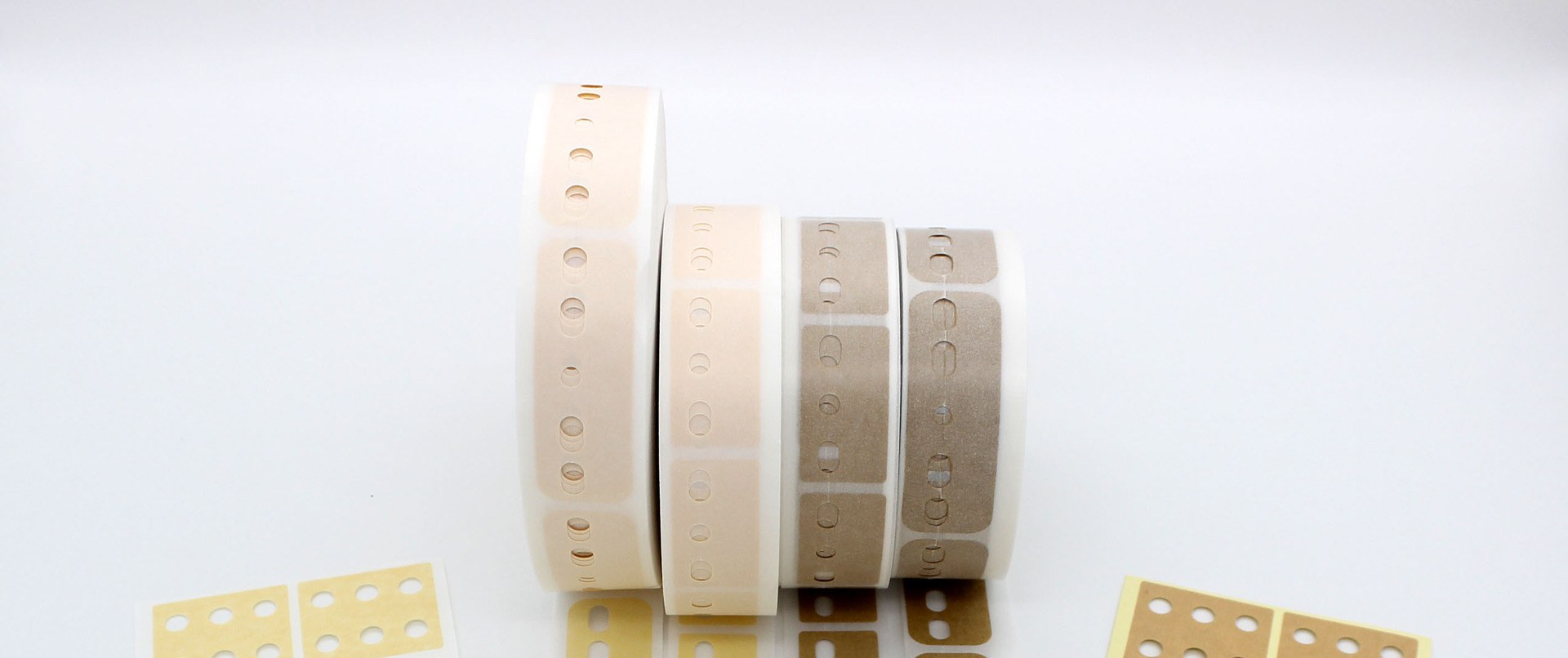
Southern Machinery's AI splice tape is engineered specifically for axial and radial component lead tape on auto insertion machines. It's not a repurposed office supply — it's a production consumable designed to the exact tolerances your machines demand:
Crepe Paper Base with 300 N/m Adhesion
The polyurethane adhesive bonds firmly to lead tape and holds under feeder tension without lifting. At 0.15–0.5 mm thickness, the splice passes through the feeder mechanism cleanly.
Three-Hole and Five-Hole Formats
Two distinct hole patterns cover the axial and radial insertion machine families. Send your machine model and we confirm the correct format before you order.
150 °C Short-Term Heat Tolerance
The heat-rated variant withstands 150 °C short-term and 100 °C long-term exposure — stable through preheat zones and near wave solder entry points.
Kiss-Cut 60-Yard Rolls
Each splice piece separates cleanly at regular intervals for fast, consistent application. Predictable consumption means steady line-side supply without overstocking.
The result: your insertion machine keeps inserting, board after board, shift after shift.
Real-World Impact: What Changes When Splice Failures Drop to Zero
Consider a typical axial insertion line running 8 hours per shift:
| Metric | Before | After AI Splice Tape |
|--------|--------|---------------------|
| Splice-related stops per shift | 4–6 | 0–1 |
| Average downtime per stop | 8–12 min | — |
| Lost insertion time per shift | 32–72 min | 0–12 min |
| Annual lost production (250 days) | 133–300 hours | 0–50 hours |
Example calculation based on typical insertion line parameters — actual results depend on your machine configuration, shift pattern, and lead tape type.
If your insertion line generates $2,000/hour in production value, eliminating 200 hours of splice-related downtime annually saves $400,000 in recovered production capacity — not counting the downstream quality savings from fewer missed-component defects.
That's the real ROI of treating splice tape as an engineered consumable, not a commodity.
How to Integrate AI Splice Tape Into Your PCB Assembly Line
AI splice tape sits at the consumable level of your THT insertion line, upstream of wave soldering:
Component Reel → Lead Tape Feeder → [AI Splice Tape Joint] → Insertion Head → Populated PCB → Wave SolderThe splice tape joins the tail of one component lead tape to the head of the next, so the insertion head never runs empty. This integrates directly with your existing feeder setup — no machine modification required.
For complete THT line solutions, Southern Machinery also provides:
- Radial and axial insertion machines — the machines that consume the lead tape
- Wave soldering systems — for post-insertion soldering
- Board handling equipment — conveyors, loaders, and unloaders
One supplier for the complete THT assembly line — from component feeding to finished board.
Key Selection Parameters
Before ordering, confirm these specifications with your Southern Machinery sales engineer:
| Parameter | What to Confirm |
|-----------|-----------------|
| Hole format | Three-hole or five-hole (match your machine drive) |
| Tape width | 22.5 mm or 30 mm standard; other widths available |
| Heat rating | Standard (0–70 °C) or heat-rated (150 °C short-term) |
| Roll length | 60 yards reference; confirm per order |
| Machine models | Axial/radial insertion machine brand and model |
| Lead pitch | Component lead spacing on your tape |
Not specified in source — contact Southern Machinery to confirm exact compatibility with your machines.
Frequently Asked Questions
What is AI splice tape used for?
AI splice tape joins the tail of one component lead tape to the head of the next on axial and radial auto insertion machines. It keeps the lead tape feeding continuously through a change, so the insertion head never runs empty.
What is the difference between three-hole and five-hole tape?
The hole pattern must match the insertion machine's lead-tape drive. Three-hole tape suits one family of machines and five-hole tape suits another. Send the machine model or a sample tape and we confirm the correct format.
Can AI splice tape withstand heat near the soldering process?
Yes. The heat-rated type withstands 150 °C short-term and 100 °C long-term exposure, keeping the splice stable near the soldering side of the line.
How is AI splice tape packed?
Rolls are packed per machine family. Standard formats ship from stock; non-standard widths, hole patterns and heat ratings are confirmed per order with a sample-first process.
What is the reference drawing for radial lead splice tape?
The reference is the SPLICING TAPE RADIAL LEAD drawing, Universal Instruments C24782000, material 3M 2364, kiss-cut at 2.75-inch intervals with 60 yards per roll.
How do I know which format my insertion machine needs?
Send your insertion machine model and lead pitch to Southern Machinery. We confirm the correct hole pattern, heat rating, and width within 24 hours — before you commit to bulk ordering.
Next Step: Send Your Machine Model for a Splice Tape Spec
Tell us your axial or radial insertion machine models and lead pitch, or ship a sample tape. We reply with the matched hole pattern, heat rating, and quotation.
[Email for a Quote](mailto:info@smthelp.com?subject=AI%20Splice%20Tape%20Quote%20Request) | WhatsApp Chat
---
Southern Machinery — Since 2011, serving 237+ global customers with complete SMT and THT automation solutions. From component insertion to wave soldering, we deliver the equipment and consumables your production line needs.
---
Related Reading: [How to Choose the Right Radial Insertion Machine for Your THT Line](#)
Comments