
PCB Strain Measurement Device (SDL-1000) by Southern Machinery: Measure Board Stress Before It Becomes a Field Failure
PCB strain is one of the quietest causes of field failure in modern electronics: a BGA ball or MLCC that cracked during depaneling, press-fit, screw fastening or board handling can pass every SPI and AOI check, then fail months later. The SDL-1000 PCB Strain Measurement Device makes that invisible risk measurable. Southern Machinery supplies the SDL series alongside its SMT, THT, Wave Soldering, board handling, cleaning and inspection equipment, so strain data can be collected where the stress is actually created - on your line, on your boards. This guide explains what the device is used for, where it fits in a complete PCB assembly line, which parameters to confirm before you buy, and how to justify a strain measurement program on quality and ROI.
Sep 27, 2026 · Updated Sep 27, 2026 · Southern Machinery
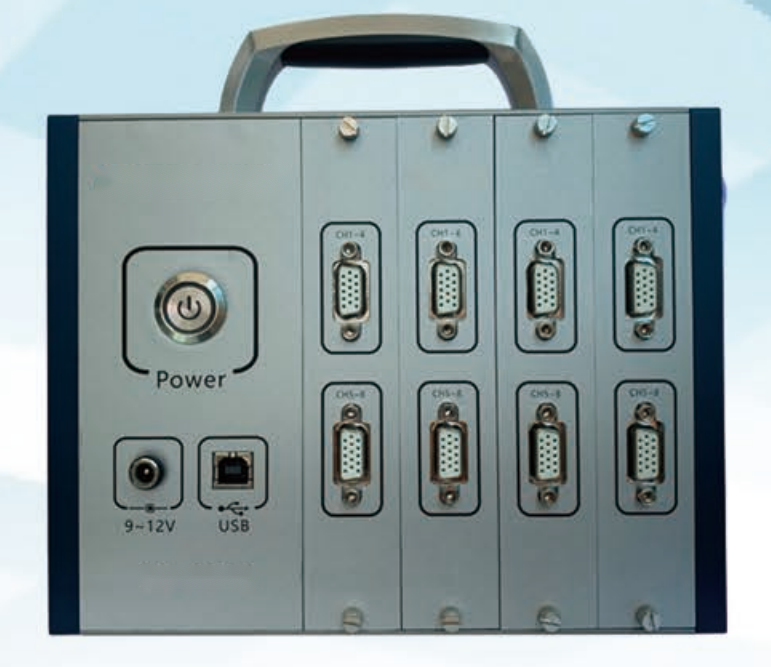
PCB Strain Measurement Device (SDL-1000) by Southern Machinery: Measure Board Stress Before It Becomes a Field Failure
What is this machine used for?
The short answer: the SDL-1000 PCB Strain Measurement Device is a process-support instrument used to measure the mechanical strain and stress a printed circuit board (PCB) experiences during assembly, transportation and operation. It turns an invisible failure driver - board flex, bending, torsion and tension - into data your engineering team can act on.
Southern Machinery publishes the SDL-1000 as part of the SDL series. On the published product page, the SDL series is described as:
- A compact PCB strain measurement device designed to monitor strain and mechanical stress in printed circuit boards.
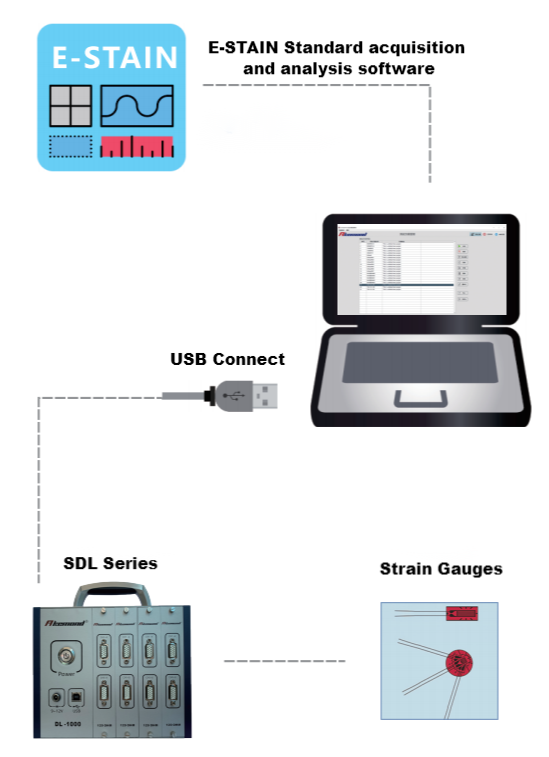
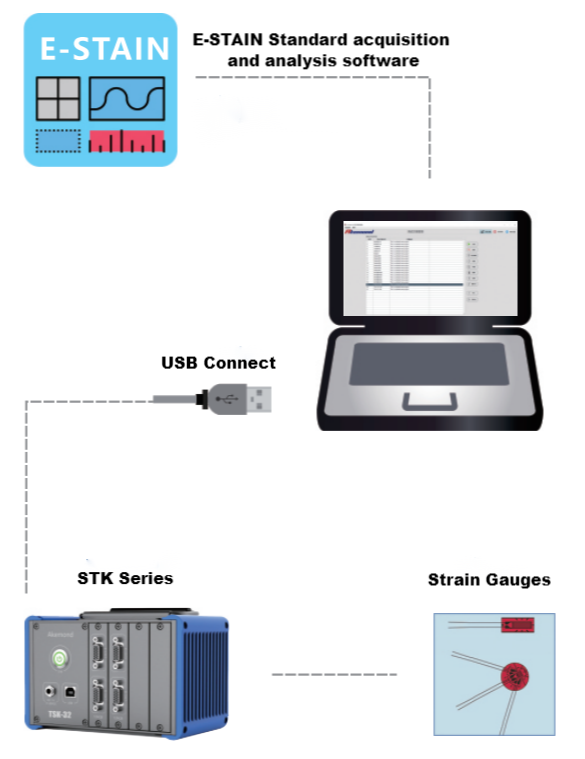
- A system that uses miniaturized strain gauge sensors and a Wheatstone-bridge measurement circuit, so mechanical deformation is converted into a change of resistance and monitored in real time.
- A way to capture strain during prototyping, qualification testing and field use, enabling closed-loop analysis of how a board actually behaves under mechanical load.
- A low-profile, small-footprint arrangement that can be placed close to the components that matter, without disturbing normal board function.
It is listed on smthelp.com under Peripheral equipment, which is the right way to think about it: the SDL-1000 is not a production station. It is a measurement and process-control tool that supports the whole SMT and THT line, in the same equipment family as your SPI, AOI and X-Ray inspection systems.
Where does PCB strain actually come from?
Strain is generated by ordinary, everyday operations:
- Depaneling - router bits, V-cut separators and multi-cutter machines all bend the panel before it separates.
- Connector press-fit and mechanical assembly - press-fit pins, screws, heat-sink and shield-can fastening, and riveting.
- Board handling - magazine loading and unloading, conveyor transfers, board flippers, vacuum loaders and manual rework handling.
- Test and fixturing - bed-of-nails fixtures and pallet systems that clamp an unsupported board.
- Transport and field use - vibration, thermal cycling and final enclosure assembly.
The components most at risk are the ones that are hardest to inspect: BGA and CSP solder joints, MLCCs and other ceramic capacitors, thin-core and large-format boards, and any assembly with a heavy connector near a small package.
Why the failure is invisible until it is expensive
Strain cracks are the classic "passes test, fails in the field" defect.
A micro-crack in a ceramic capacitor, or a partially fractured BGA ball, can survive AOI, survive functional test, ship, and then open up months later under thermal cycling and vibration. By then the cost is not the component - it is the diagnostic time, the rework, the scrap, the return freight, the customer escalation and, in automotive, medical or industrial control programs, the potential recall exposure.
That is the real argument for strain measurement. It is not about buying a tester. It is about moving a quality risk from after shipment to before release, where the fix is cheap: adjust a depaneling parameter, add board support, change a conveyor pitch, re-sequence an assembly step.
Industry practice around this topic is commonly referenced to guidance such as IPC-9704 (Printed Circuit Assembly Strain Gage Test Guideline), the widely used industry framework for strain measurement. That is an industry document, not a Southern Machinery certification, and it is useful context for how strain data is normally collected and interpreted.
Typical application scenarios
1. New product and new process qualification
Before a board is released to mass production, measure the strain it sees through every mechanical step. If a critical BGA sees more strain during depaneling than during press-fit, you have found your process priority.
2. Depaneling stress reduction
Compare router, V-cut and multi-cutter approaches on the same panel. Strain data turns "the V-cut feels gentler" into a measurable comparison, so the depaneling decision is made on evidence.
3. Connector press-fit and mechanical assembly
Press-fit connectors, screw-fastened heat sinks and shield cans are frequent sources of local board flex. Measuring at the connector footprint tells you whether your support strategy is sufficient.
4. Board handling and line integration audit
When a product is stable in the lab but shows intermittent field failures, the transfer path is a common suspect. Strain data lets you separate conveyor, magazine, flipper and loader contributions.
5. Automotive, industrial, medical and aerospace programs
Applications that cannot tolerate latent defects use strain measurement as part of their design-validation and process-validation evidence pack. Southern Machinery cites consumer electronics, automotive, aerospace and industrial applications as the general fit for this device category.
How the SDL-1000 fits into a complete PCB assembly line
Southern Machinery supplies SMT, THT, Wave Soldering, board handling, cleaning and inspection equipment as an integrated line, and that is the context in which strain measurement makes the most sense:
- At line design stage - identify the high-strain operations (depaneling, press-fit, fixturing) and decide where measurement points will be needed.
- At the depaneling station - measure before and after separation to quantify the stress the separator imparts.
- At press-fit and mechanical assembly - measure at the connector or hardware location to validate support tooling.
- Along the board handling path - measure at loaders, unloaders, flippers and transfer points if field failures point at handling.
- At end-of-line and in the qualification lab - keep a strain record for design and process validation files.
- Into process control and MES traceability - feed strain results into the same corrective-action loop as SPI and AOI defect data, so a process change is validated with numbers rather than opinion.
Because the device is a measurement tool rather than an inline production machine, it does not become a takt-time constraint on the line. It is deployed where and when you need the data.
Key selection parameters to confirm before ordering
Southern Machinery's published page for the SDL-1000 does not state numeric specifications. The checklist below therefore lists the parameters a buyer should request and confirm on the quotation - not invented values:
- Measurement range and resolution - the strain range you need to capture, and the smallest increment you can trust.
- Sensor configuration and mounting - how the strain gauge sensors are attached for your board type, and whether an external or off-board configuration is available for boards that cannot carry integrated sensing.
- Number of measurement channels and locations - how many points on the board you need to monitor simultaneously.
- Sampling rate and data logging - whether the tool captures short, fast events such as a router plunge or a press-fit stroke, and how data is stored.
- Data output and analysis software - the file format, the analysis software supplied, and whether strain-versus-time plots can be exported for validation reports.
- Reference to industry guidance - how the supplier maps its measurement method to the industry strain-gage test practice your customer or auditor expects.
- Environmental and operating limits - the temperature and humidity range of the equipment in your facility.
- Compliance documents - the certification and declaration documents required by your market. The published page does not state a certification for this model, so request the document set explicitly.
- Calibration and service - calibration interval, traceability, spare parts availability, and training for your process engineers.
If a supplier can answer all nine items with documents, you are buying a measuring instrument. If any of them is "we will find out", you are buying a risk.
ROI, quality and throughput: how to justify the investment
A strain measurement program is normally justified on failure cost avoided, not on units per hour. The arithmetic a factory should run:
- Rework and scrap - latent strain cracks that surface at final test or in the field are among the most expensive defects to fix, because they are hard to diagnose and often affect already-assembled product.
- Field failure and warranty cost - one escaped BGA or MLCC crack on an automotive, medical or industrial program can cost far more than the measurement equipment.
- Engineering time - a validated strain profile shortens the debate in design reviews and qualification sign-off, because the argument is settled with data.
- Design optimization - measured strain helps engineers avoid over-designing board support and stiffening, which can otherwise add cost and manufacturing complexity.
- Process stability - a one-time measurement at qualification protects a process for years, and periodic re-measurement catches drift before it becomes a recall.
Throughput is unaffected in the normal sense: the tool is used during setup, qualification and troubleshooting, not in the production flow.
What the published page states - and what it does not
Southern Machinery believes buyers should see exactly where documented facts end. For the SDL-1000, the published product page states the device category, the measurement principle (strain gauge sensors and a Wheatstone-bridge circuit), the real-time monitoring and strain-mapping intent, and the intended use across prototyping, qualification and field use. It does not state numeric specifications, certifications, pricing, lead time or throughput figures. Those must be requested and confirmed in writing before purchase.
FAQ
What is a PCB strain measurement device used for?
It measures the mechanical strain and stress a printed circuit board experiences during assembly, transport and operation - bending, torsion and tension - so engineers can find the processes that risk cracking solder joints and ceramic components.
Which assembly steps create the most PCB strain?
In practice, depaneling (router, V-cut, multi-cutter), connector press-fit and mechanical fastening, board handling through loaders, unloaders and flippers, and bed-of-nails test fixturing are the usual suspects. The only reliable way to rank them for your specific product is to measure them.
Can the SDL-1000 be used on a board already in mass production?
Yes - that is one of its documented use cases. The published page describes closed-loop strain analysis during qualification testing and field use, which is exactly what a mid-life process audit or a field-failure investigation needs.
Does this replace SPI, AOI or X-Ray inspection?
No. SPI, AOI and X-Ray detect defects that already exist. Strain measurement targets the physical cause before the defect forms. They work together: strain data prevents the crack, inspection finds the ones you missed.
What should I ask for before ordering the SDL-1000?
Ask for the datasheet (range, resolution, channel count, sampling rate), the sensor mounting method for your board, the analysis software and export format, calibration and traceability documents, and the certification documents your market requires. None of these are published on the product page.
Is the SDL-1000 certified for automotive or medical programs?
No certification is stated on the published page for this model. If your program requires CE, UL, IATF 16949 or similar documentation, request it from Southern Machinery directly and do not assume it exists.
Next step: get a configuration recommendation
Southern Machinery was founded in 2011 in Shenzhen, China, and serves more than 237 customers worldwide with SMT and THT PCB assembly automation equipment. Alongside insertion, Wave Soldering, board handling, cleaning, coating and inspection machines, the company supplies process-support tools for the whole line.
- Ask for the SDL-1000 configuration that matches your boards: contact Jason Wu at jasonwu@smthelp.com or +86 13602562576. Tell us your board size, your highest-risk component (BGA, MLCC, connector) and the process step you suspect, and we will advise on measurement points and the documents you should review.
- Browse the product catalog and PDFs: file.autoinsertion.com
- See machine photos: ph.smthelp.com
- More on the full line: www.smthelp.com
Comments